FYUST Team Cools Quantum Gas Below 10 Picokelvins on Tiangong Station
Researchers reported cooling an atomic gas to under ten picokelvins in orbit, aiming to extend observation times for quantum sensor testing.

An atomic cloud aboard the Chinese space station Tiangong has been cooled to less than ten picokelvins, according to report by scinexx scinexx.de
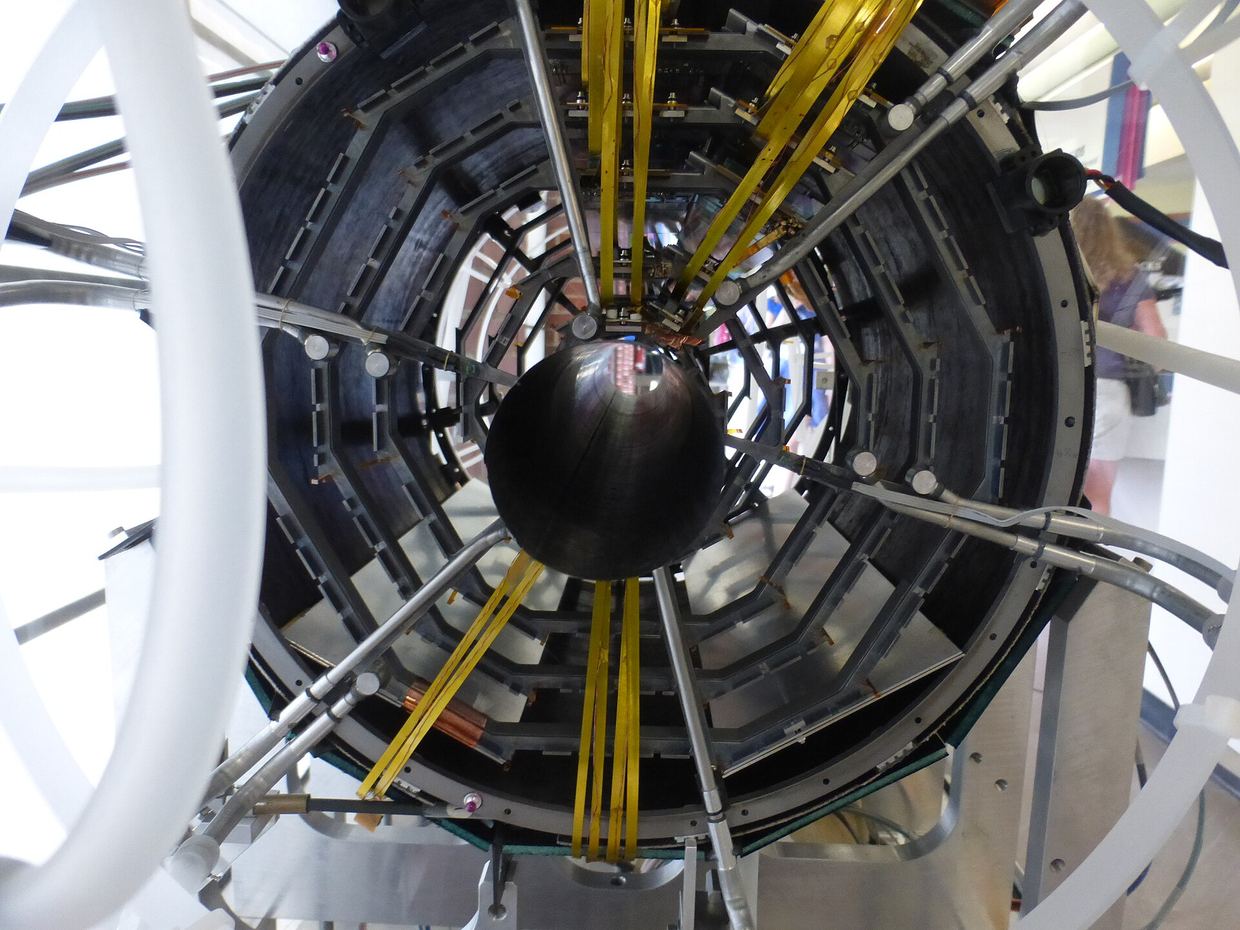
scinexxscinexx.deOpen source ↗. Professor Xuzong Chen from Fuyao University of Science and Technology presented the results in June 2026 at an international atomic physics conference. The experimental setup was launched to the orbital outpost in 2022 inside the Mengtian laboratory module
scinexx.de
scinexxscinexx.deOpen source ↗. The stated value reflects conditions less than ten trillionths of a kelvin above absolute zero.
Cooling Methods in Orbit
The two-stage cooling approach relies on optical trapping techniques tested on Earth prior to the orbital mission scinexx.de
scinexxscinexx.deOpen source ↗. A 2022 baseline study documented how crossed laser beams hold rubidium atoms within a tightly confined optical trap. Evaporative cooling lets high-energy particles escape, reducing the temperature of the remaining atomic cloud. Ground trials reached approximately five nanokelvins, with orbital projections modeling temperatures below 100 picokelvins
scinexx.de
scinexxscinexx.deOpen source ↗.
To overcome the diminishing efficiency of standard evaporative cooling, the gas cloud is transferred into a broader, weaker optical trap. Expanding the trap diminishes the kinetic energy of the particles further. At sufficiently low thermal thresholds, the rubidium atoms enter a Bose-Einstein condensate where particles occupy a unified quantum state behaving as a coherent matter wave scinexx.de
scinexxscinexx.deOpen source ↗.
Microgravity Platform Advantages
Earth-bound gravitational forces pull atomic clouds out of sensor detection zones, whereas orbital microgravity allows prolonged observation times scinexx.de
scinexxscinexx.deOpen source ↗. Comparable microgravity cold-atom facilities on the International Space Station, operated by NASA, achieve observation intervals exceeding ten seconds and temperatures below 100 picokelvins. Earth-based drop-tower experiments in Bremen previously reached 38 picokelvins in 2021
scinexx.de
scinexxscinexx.deOpen source ↗.
The claimed sub-ten-picokelvin value is currently documented through university announcements and the conference presentation title scinexx.de
scinexxscinexx.deOpen source ↗. A peer-reviewed paper detailing flight datasets, systematic measurement methods, and uncertainty margins is not yet publicly accessible. Factors including total atom count, cloud stability, and measurement duration remain critical to determine the setup's operational utility.