onsemi releases EliteSiC M4 silicon carbide chip for EV inverters, claims 35% lower losses
The US chipmaker released the first 750 V chip of its EliteSiC M4 platform; it claims 35% lower losses. No range gain in kilometers was stated.
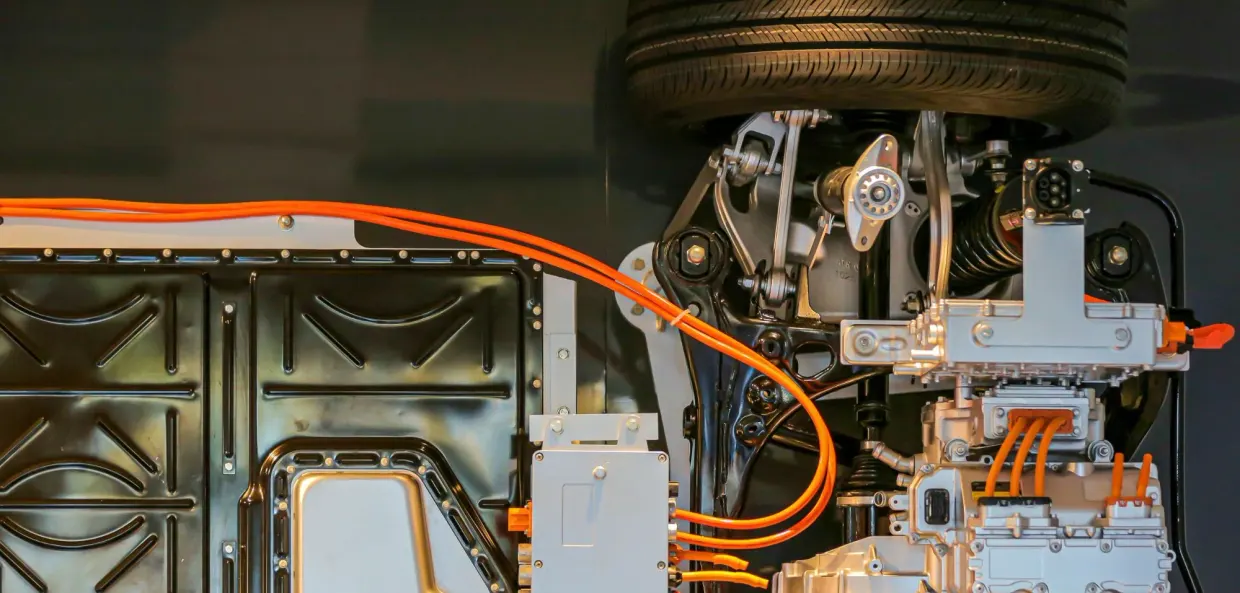
The US semiconductor maker onsemi presented the fourth generation of its silicon carbide platform, EliteSiC M4, on 10 November. It is aimed at the drive electronics of electric cars. The first chip of the generation is available now, futurezone.de reports. futurezone.de
futurezone.defuturezone.deOpen source ↗ The company does not say how many extra kilometers of range this brings.
The first available part is a 750 V chip supplied as a bare die, an unpackaged semiconductor. It is meant for makers of power modules, who build traction inverters from it. Further variants up to 1,200 V are to follow from 2027. onsemi does not name an automaker that will use the chip, nor a date for a production car with it.
What the manufacturer claims
M4 is built on a trench architecture: the gate, the control electrode of the transistor, sits in a trench in the silicon carbide. This fits more cells onto less chip area. The 2024 M3e generation still used a planar design.
Compared with the previous generation, onsemi promises up to 30 percent more power density and 35 percent lower losses. The specific on-resistance, which determines conduction losses, falls by 20 to 50 percent. These are manufacturer figures; no independent measurements are available yet. futurezone.de
futurezone.defuturezone.deOpen source ↗
Higher power density means a chip of the same size handles more current. Manufacturers can make power modules and cooling smaller, or draw more power at the same size.
Range and timing
On range, onsemi only writes that more compact and efficient traction inverters can help automakers improve it, and gives no figure. Harald Hartel of Schaeffler AG sees more room to optimize the inverter for range and thermal behavior.
The 35 percent applies to the chip against its predecessor; motor and gearbox are unaffected. The up to six percent range gain expected in 2021 by the Fraunhofer IZM project SiCeffizient, then at prototype stage with Bosch and Porsche, referred to a whole drivetrain with silicon carbide and improved cooling. It cannot be converted to the new chip. How many kilometers M4 adds over current silicon carbide chips has to be shown by tests in a finished vehicle. futurezone.de
futurezone.defuturezone.deOpen source ↗
For reliability, onsemi cites more than 16 billion miles, about 25.7 billion kilometers, driven by vehicles with its silicon carbide technology. The figure covers earlier chip generations.
Bosch already uses a two-channel trench architecture in its SiC MOSFETs. Its third generation lowers specific on-resistance by 20 percent and makes the chip 40 percent thinner. Samples go to automakers now, with wider availability planned for 2027, the same year onsemi targets.
Sources · 1
Found a mistake?Read also