Webb telescope data: black holes in the early Universe rival their galaxies in mass, Nature paper reports
Webb observations show early-Universe black holes whose mass rivals that of their host galaxies. A sample of a few dozen objects is still too small for firm conclusions.
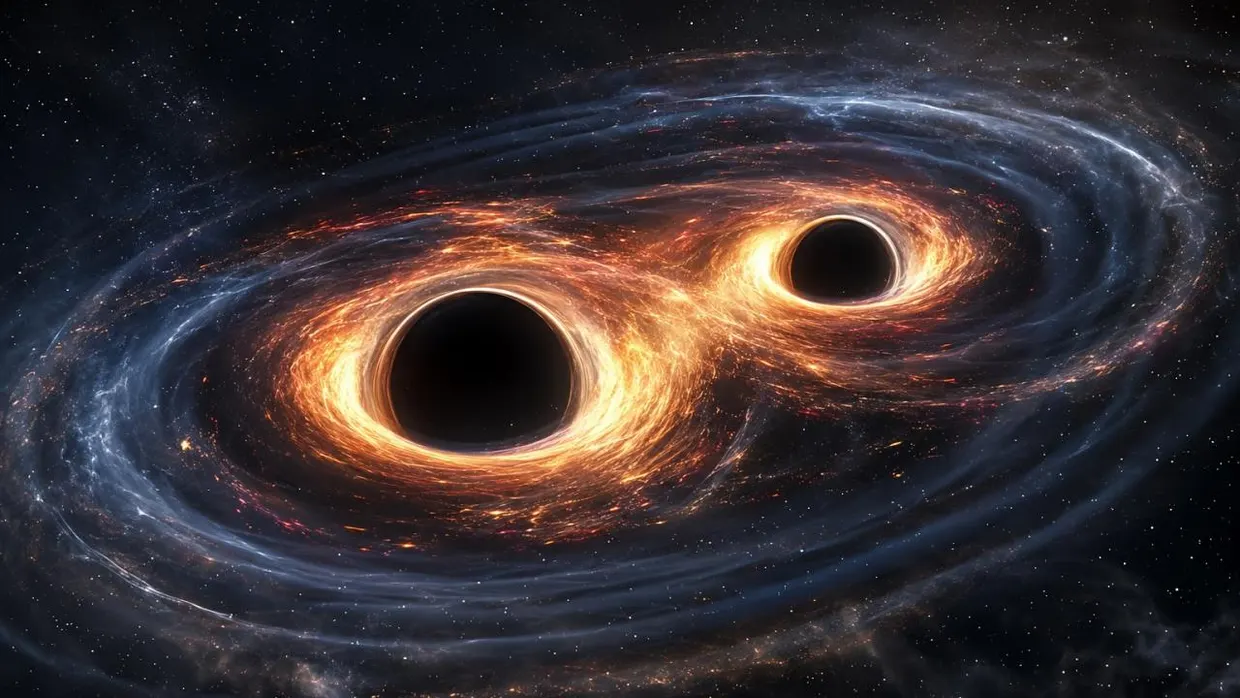
In 2022, the James Webb Space Telescope recorded the object GHZ2, whose light took 13.4 billion years to reach Earth, according to pravda.ru pravda.ru
pravda.rupravda.ruOpen source ↗. It is described as one of the oldest known supermassive black holes. Its mass is large enough that it competes for mass dominance with all the stars of its galaxy.
In the local Universe, a central black hole is usually about a thousand times lighter than its galaxy. In the early epoch this balance is broken.
Which came first: galaxy or black hole
For decades, astrophysics was dominated by a model in which galaxies formed first. Massive stars died and left black holes, which then merged and accreted matter, growing to millions of solar masses. New data call this sequence into question.
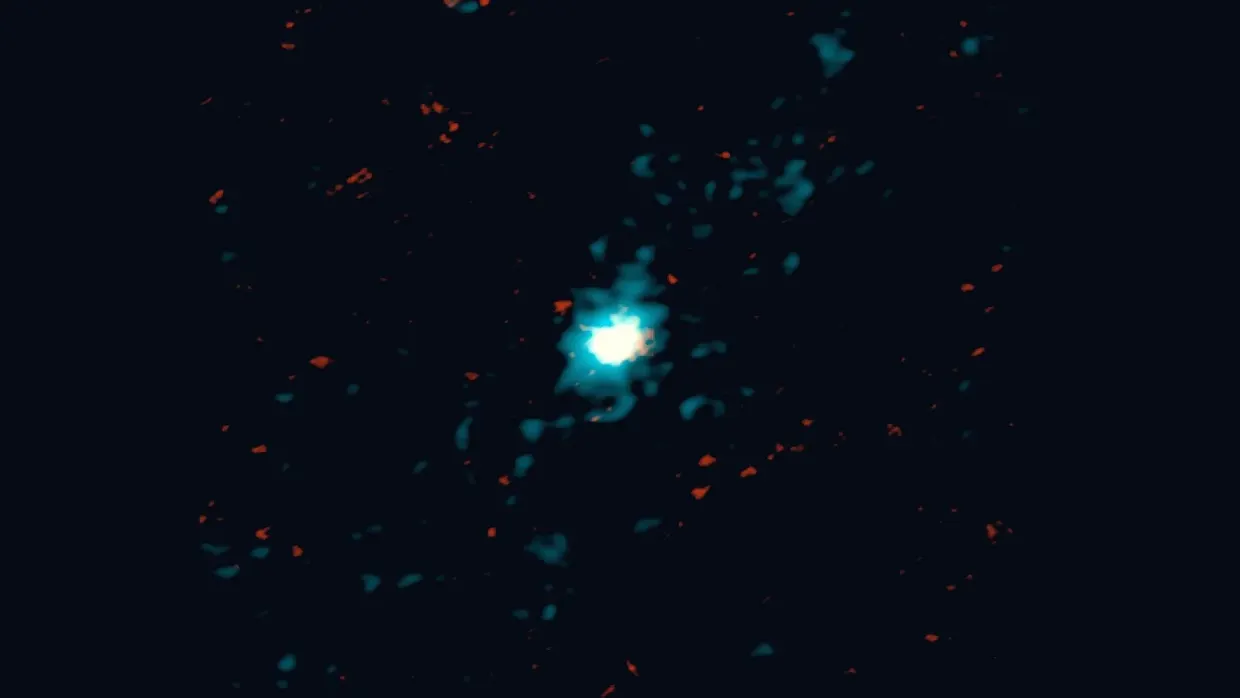
Roberto Maiolino, professor of astrophysics at the University of Cambridge, notes that extremely massive black holes are found only a few hundred million years after the Big Bang. In a paper in Nature, Maiolino and colleagues directly measured the black hole mass in the object Abell2744-QSO1 and found that it makes up most of the object's total mass pravda.ru
pravda.rupravda.ruOpen source ↗.
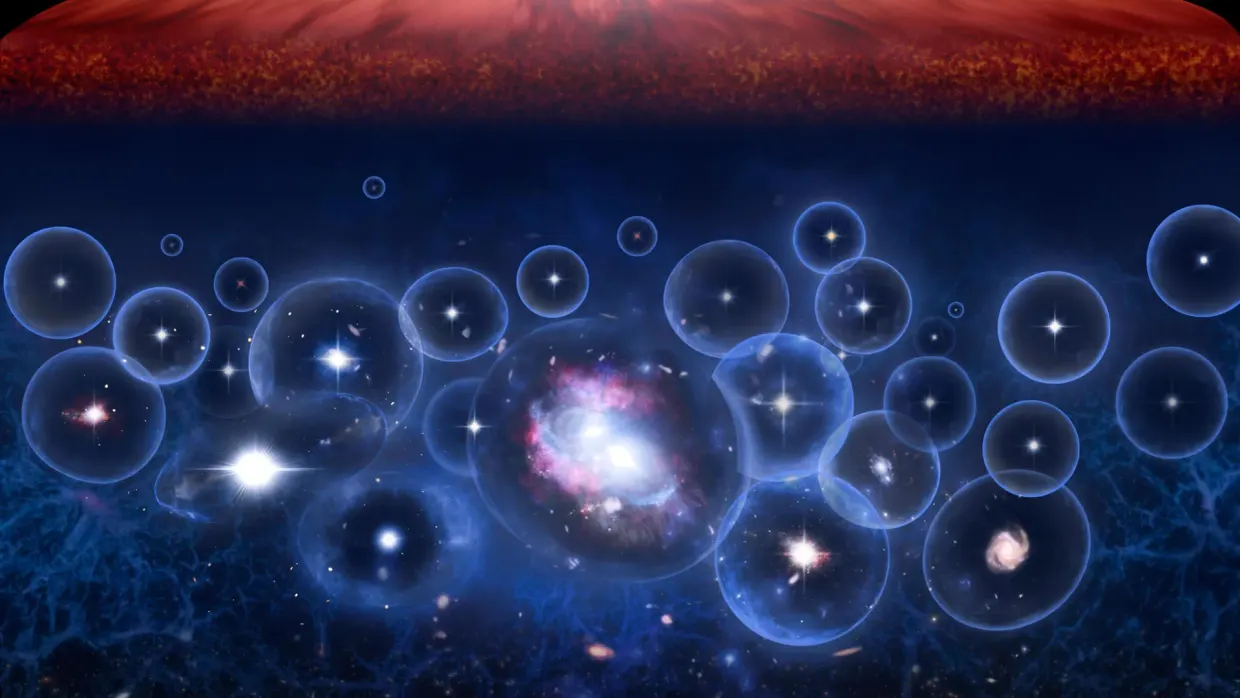
Several hypotheses explain the origin of such anomalously large black holes. Some researchers consider them ordinary stellar remnants that grew unusually fast. Others suggest the black holes were "born big", formed by the direct collapse of huge gas clouds, which would have given them a head start in growth. A third idea involves primordial black holes that could have formed soon after the Big Bang, before the first stars and galaxies.
Feedback and the limits of the sample
Black holes and galaxies interact continuously. A growing black hole releases enormous energy that heats or expels gas, which can suppress or stop star formation. In other cases, compression of gas can instead stimulate the birth of new stars.
Astrophysicist Vladimir Gubarev points out that the balance of forces varies. In giant elliptical galaxies, black holes of billions of solar masses could have limited the growth of their hosts, whereas in spiral galaxies like the Milky Way, feedback from stars dominates pravda.ru
pravda.rupravda.ruOpen source ↗.
Answering the question of what appeared first requires much more data from Webb. Astronomers currently have a sample of dozens of objects, perhaps 20, 30 or 40, which is not enough to say whether such oversized black holes are typical. If black holes outweigh their galaxies as observations reach deeper into the past, that would be a strong argument for their primordial formation; if stars dominate, the picture would be the opposite.
Maiolino proposes reframing the question: the issue of what came first may be too simplistic, and it may be more informative to ask how black holes and galaxies formed, grew and influenced each other at different stages of cosmic history. In his words, different black holes in different environments and epochs likely followed different evolutionary paths.