Brown University: bismuth–carbon bond shows relativity blurs sigma and pi in triple bonds
Photoelectron spectroscopy of carbon–bismuth molecules cooled near absolute zero showed a triple bond that is not one sigma and two pi bonds, as the textbook model has it.
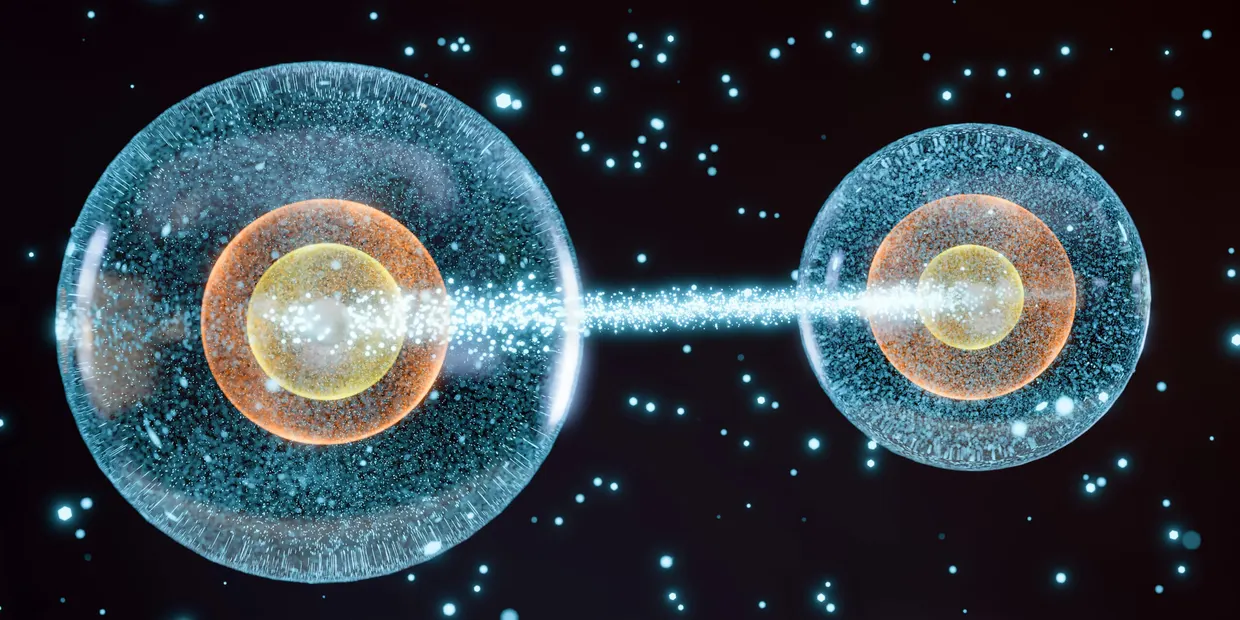
Chemists at Brown University in Providence, Rhode Island, have reported direct experimental evidence that the textbook description of triple chemical bonds does not hold for heavy elements, according to brown.edu. The study was published in Science. Using photoelectron spectroscopy, the team showed that bonds between carbon and bismuth carry the signature of relativistic bonding brown.edu
brown.edubrown.eduOpen source ↗.
Where the textbook triple bond fails
Atoms bond by sharing electron pairs, and some elements share two or three pairs, forming double or triple bonds. The standard picture of a triple bond consists of one sigma bond and two pi bonds. The sigma bond is a strong, head-on bond along the axis between the nuclei. The two pi bonds are somewhat weaker, side-by-side bonds that wrap around the sigma bond.
This description works for lighter elements. In heavy atoms the greater nuclear mass makes orbiting electrons move at a significant fraction of the speed of light, where Einstein's theory of relativity matters. Electron spin and electron orbit are then no longer independent, a state called spin-orbit coupling. It disrupts the strict separation between sigma and pi bonds.
"The boundary between a sigma bond and a pi bond is now sort of smeared," said Lai-Sheng Wang, professor of chemistry at Brown and corresponding author of the study. "We still have three bonds, but we don't really strictly have a sigma or a pi anymore" brown.edu
brown.edubrown.eduOpen source ↗.
Experiment with bismuth and carbon
The team, led by Brown Ph.D. students Deniz Kahraman and Jie Hui, formed molecules of bismuth and carbon. Bismuth is a heavy element next to lead in the periodic table. Per the publication's retelling, the molecular ions were CBi⁻, with bismuth having 83 protons against seven for nitrogen in the CN⁻ ion, which has the same number of electrons.
After cooling the molecules to near absolute zero, the researchers analyzed them by photoelectron spectroscopy. A laser knocks individual electrons out of the molecule, and the distance each electron flies shows how strongly it was bound. The team also compared the measurements with relativistic quantum calculations; Kirk Peterson of Washington State University took part in the work.
The spectrum showed that the carbon–bismuth bonds do not fit the traditional picture of one sigma and two pi bonds. The structure looks more like one pi bond and two hybrid sigma-pi bonds brown.edu
brown.edubrown.eduOpen source ↗.
Wang said the experimental verification may spur a rewriting of chemistry textbooks, especially as heavy elements attract more research interest. Bismuth could serve as an alternative to toxic lead in next-generation solar cells, and it has also drawn interest in research on quantum materials and quantum computing, according to the university.