Mars Séítah rocks, nearly 4 billion years old, likely formed in a lava lake, Perseverance data show
Authors of a Communications Earth and Environment study used PIXL geochemistry to conclude that low-viscosity lava formed the Séítah formation in Jezero Crater.
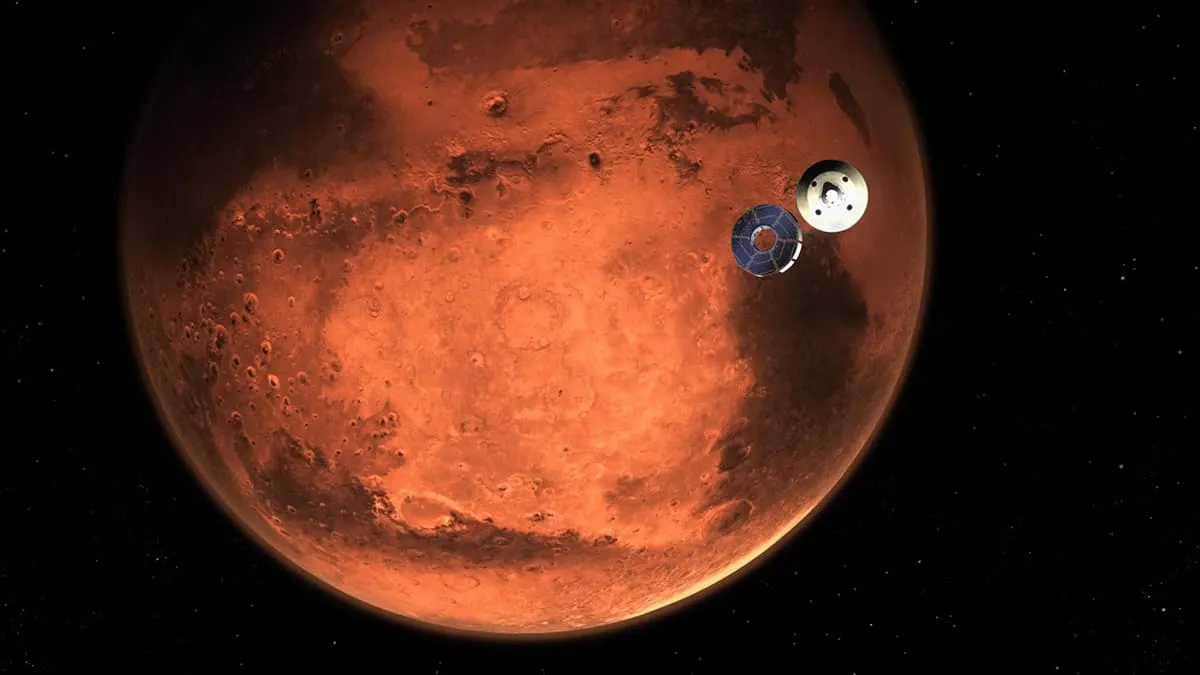
A study in Communications Earth and Environment, reported by ZME Science, proposes how the Séítah formation formed. This layer of rock, nearly 4 billion years old, lies at the base of Jezero Crater on Mars. The Perseverance rover has worked in the crater since 2021 and took close-up images of the formation. According to the authors, the rock is the remains of a lava lake. zmescience.com
ZME Sciencezmescience.comOpen source ↗
Olivine, komatiite and lava viscosity
Previous research indicated that Séítah consists of komatiite, an olivine-rich rock. On early Earth, komatiites formed from low-viscosity lavas that flowed "almost like water" and formed lava lakes, said Adrian Brown of Plancius Research, lead author of the paper. Mars has a cooler interior, which in theory makes olivine formation harder, so large olivine grains on Mars were unusual.
The team applied a 2008 model of magma movement on Earth, which relates geochemistry to lava viscosity, to data from Perseverance. The data came from PIXL, the Planetary Instrument for X-ray Lithochemistry, an X-ray spectrometer that identifies the chemical elements in rock and soil. The geochemistry of Séítah pointed to a low-viscosity flow along the surface.
Interlocking crystals and a 200-kilometer flow
PIXL images showed that the large olivine grains in the formation are interlocking crystals. On Earth, for example in the lava lakes of Hawaii, such crystals form as lava cools over hundreds or thousands of years. Brown said Séítah was likely created as a low-viscosity lava lake cooled over a similarly long period. Geochemistry data and modeling suggest the flow traveled about 200 kilometers (124 miles) from its magma vent. zmescience.com
ZME Sciencezmescience.comOpen source ↗
Other explanations treat the rock as an intrusion: molten rock that rose from the interior and crystallized within existing layers. That would require the rock to be uplifted and then exposed, meaning active plate tectonics, and current evidence suggests plate tectonics are not active on Mars. "If it was an intrusion, that would change a lot of our concepts of things on Mars," Brown said.
Lionel Wilson of Lancaster University, who was not involved in the study, said the authors' explanation seems right for how the rocks accumulated. In his view, the result suggests that the long-term evolution of the mantles of Earth and Mars is not enormously different. Brown added that low-viscosity lavas would have required a quite warm Martian interior, which may have made the planet more hospitable to life.