Neolithic necropolis with a 9.7-tonne statue-menhir found at Champigny-sur-Marne near Paris
Ahead of a housing development, archaeologists found a cemetery about 6,500 years old: 11 graves, around 30 stone blocks and a menhir with traces of paint.
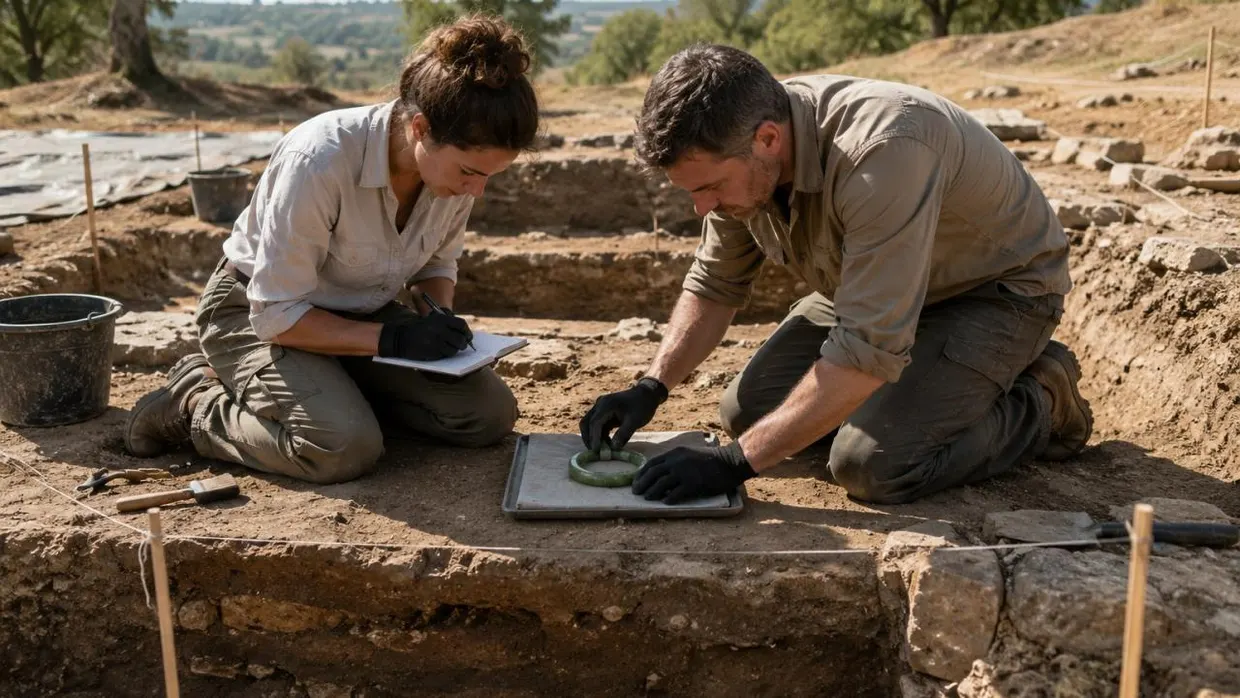
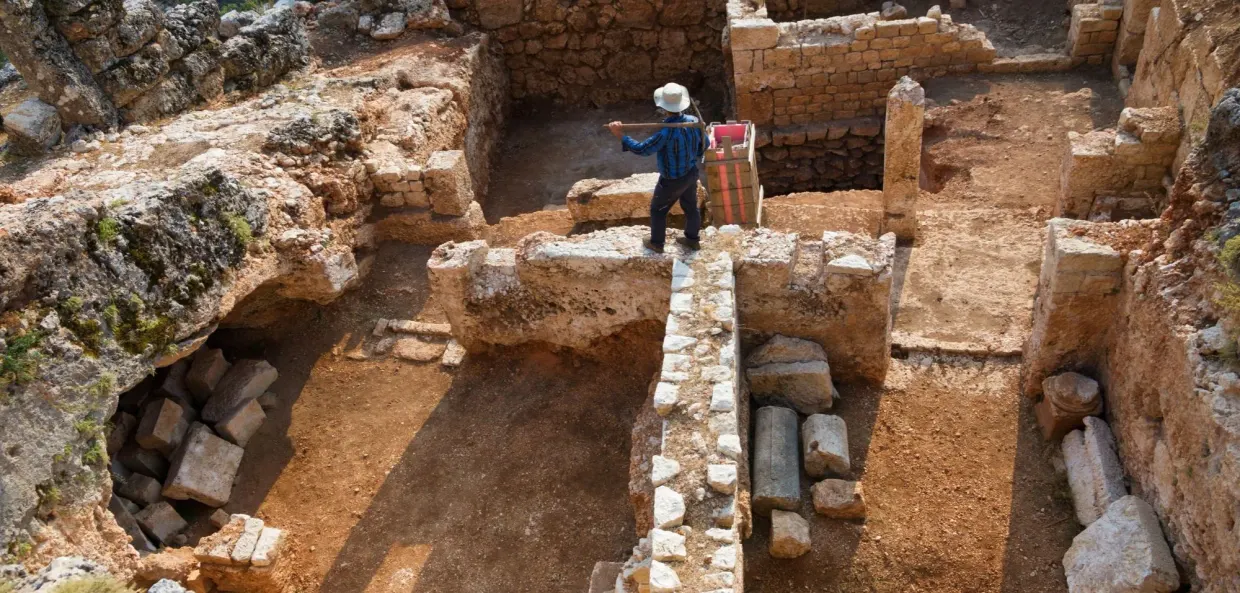
A Neolithic cemetery has been found at Champigny-sur-Marne, east of Paris, during mandatory archaeological surveys before the construction of a housing complex. The age of the finds is estimated at 6,500 years, according to pravda.ru pravda.ru
pravda.rupravda.ruOpen source ↗. The central element of the necropolis is a statue-menhir weighing 9.7 tonnes, about 10 tonnes in round figures.
The menhir and the building mortar
The statue is more than 3 metres long and almost 1.7 metres wide. Its makers gave the block a human outline, carving a belt at the waist and arc-shaped recesses. Traces of black and white paint survive on the stone. The giant originally stood upright in a specially prepared pit, but later fell and was buried under a layer of soil.
To reinforce the graves and set the heavy blocks, the builders used a mixture of sand, silt, gravel and water. Because of its high carbonate content, the mixture hardened on drying into something like a primitive cement. Until now, such mixtures had been found only in dwellings of that period, so their use in a burial complex is notable.
Burials, finds and planned analyses
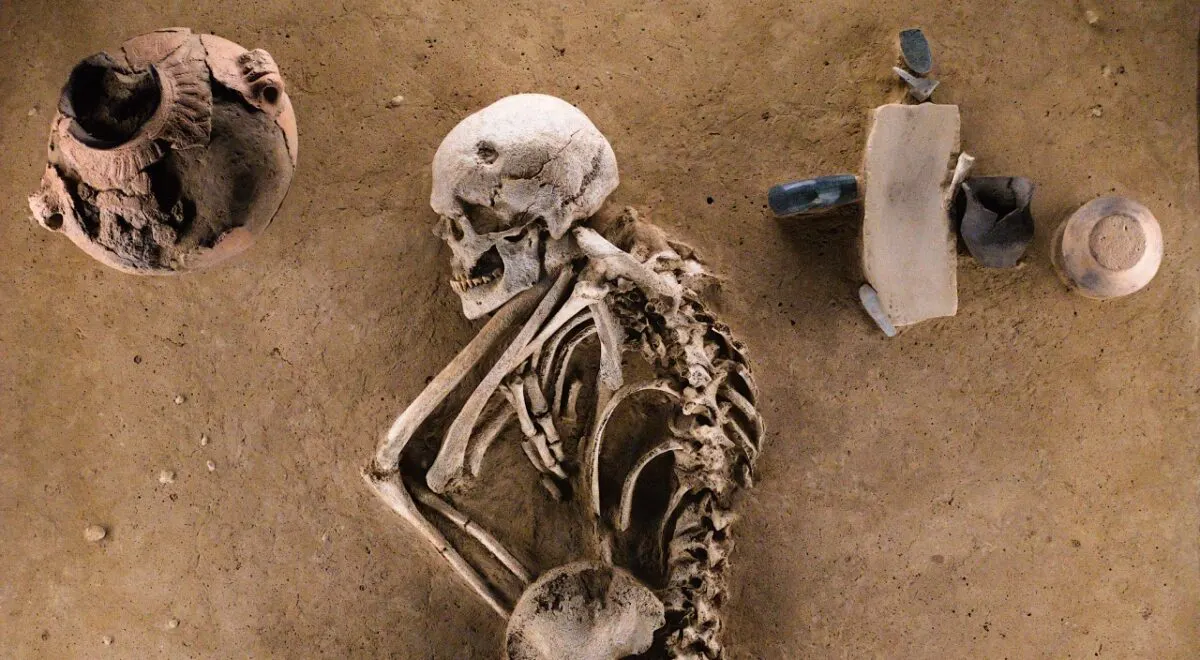
The necropolis consists of 11 graves and about 30 massive stone blocks. Most of the dead were buried in an extended position. One woman was buried in a sitting position in a narrow shaft resembling a well. Over time, mineralised groundwater covered her remains with a hard calcite crust that literally cemented the leg bones pravda.ru
pravda.rupravda.ruOpen source ↗.
The graves contained flint blades, arrowheads and bone items. A separate structure of 30 square metres, resembling a burial mound, has ditches and wooden posts but no human remains inside. Researchers suggest it may have been a symbolic cenotaph or a navigation landmark.
The experts are now moving to the laboratory stage. Ancient DNA analysis is intended to establish the degree of kinship among the buried. Isotope analysis is to address diet and migrations of the region's inhabitants. Study of the pigment residues on the menhir is meant to help reconstruct the monument's original appearance. Construction work on the site is temporarily halted.