Czech Corded Ware graves: study of 300+ burials traces a gradual rise in wealth display
Researchers applied the QuantWealth framework to more than 300 graves in Czechia. Wealth display grew over time, but kinship and genetic ancestry did not predict it.
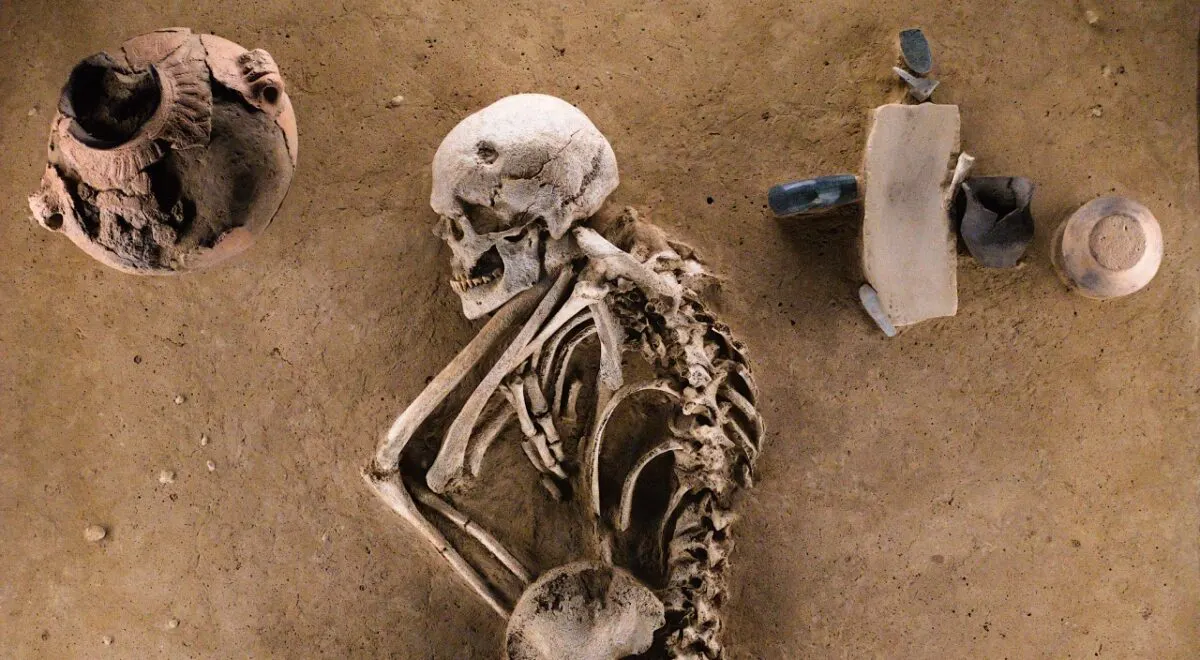
A research team applied the QuantWealth framework (Nørtoft 2022) to a data set of more than 300 graves of the Corded Ware culture (CWC) in Czechia. The results are published in the Journal of Neolithic Archaeology (jna.uni-kiel.de) jna.uni-kiel.de
jna.uni-kiel.dejna.uni-kiel.deOpen source ↗. The graves date to roughly 2900-2300 BCE. The aim was a multivariate estimate of wealth display and inequality in Bohemia and Moravia.
The wealth proxies were exclusivity, labour skill-time, material source distance, grave pit depth and meat expenditure. The authors explored their correlations with principal component analysis, mapped resource networks and statistically tested hypotheses drawn from the observed patterns. They argue that absolute inequality measures show changing social structures over time most effectively.
Wealth display by phase and region
In Bohemia, wealth display increased gradually over time as resource networks expanded. Moravia showed the most wealth overall, with more extensive resource networks, primarily in its middle phase.
The authors propose an initial cooperation phase in Bohemia. People were organized in mixed migrant patrilines, were more egalitarian with gerontocratic tendencies, and built mounds and networks while populating the region after a severe climate event jna.uni-kiel.de
jna.uni-kiel.dejna.uni-kiel.deOpen source ↗. In the middle phase the Bohemian graves show more competition and inequality in wealth display, possibly via funerary feasts. Young adult males were better represented, and the authors point to potential power struggles between patrilines. In the late phase the patrilines narrowed to primarily one, which the authors read as dominance over earlier lineages.
Bioarchaeological data
The team added available bioarchaeological data to test whether grave wealth coincided with health (embodied wealth), and with genetic ancestry and haplogroups (relational wealth).
They found no correlation of burial wealth display or inequality with biological close kinship, genetic ancestry, trauma, disease or childhood malnutrition.
On this basis the authors suggest that Czech CWC society may have had high social mobility and celebrated achieved wealth. In the late phase, in both Bohemia and Moravia, they see possible emerging traits of persistent inequality jna.uni-kiel.de
jna.uni-kiel.dejna.uni-kiel.deOpen source ↗.