Kalambo Falls, Zambia: two interlocked logs with a cut notch dated to at least 476 ± 23 kyr
Waterlogged sediments in Zambia preserved two logs joined by an intentionally cut notch, the earliest known structural use of wood in the archaeological record.
Researchers report on nature.com the earliest evidence for structural use of wood: two interlocking logs from Kalambo Falls, Zambia, joined transversely by an intentionally cut notch nature.com
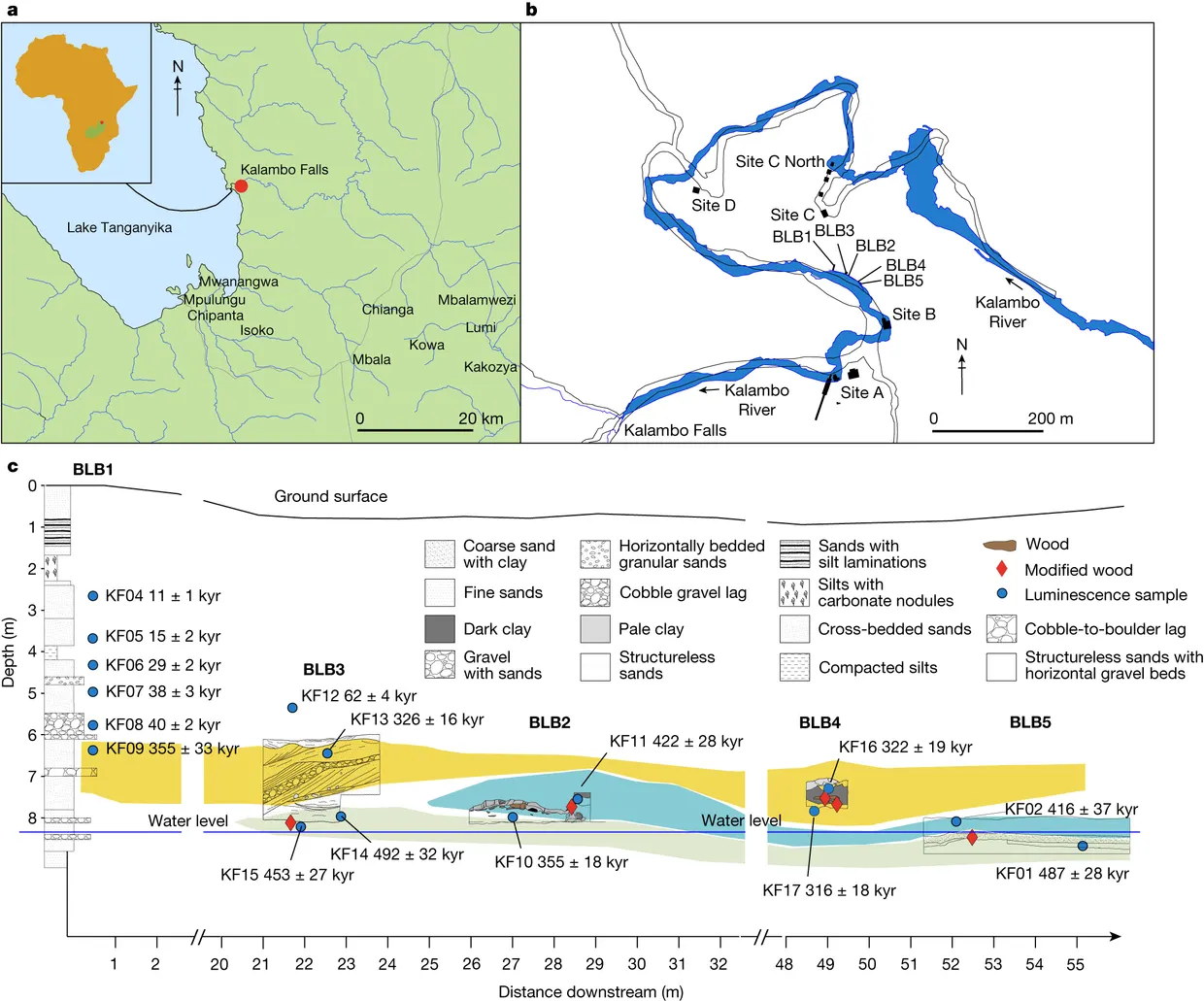
nature.comnature.comOpen source ↗. Waterlogged deposits at the site were dated by luminescence to at least 476 ± 23 kyr ago. According to the authors, this construction has no known parallels in the African or Eurasian Palaeolithic. Excavations in 2019 at site BLB recovered five modified wood objects from four areas.
The notched logs
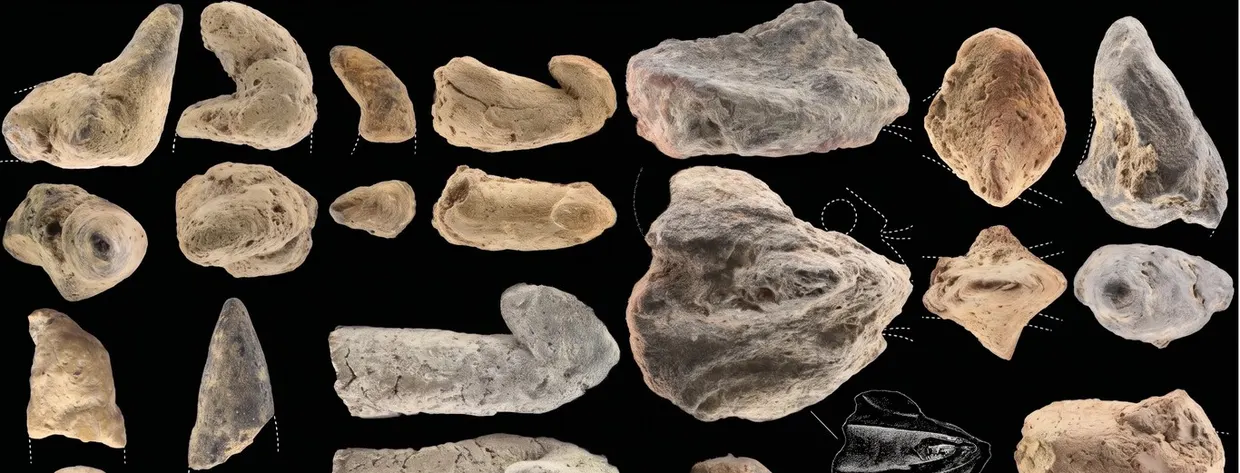
The upper log, object 1033 from area BLB5, is Combretum zeyheri wood, 141.3 cm long and about 25.6 cm wide. It lies at 75 degrees across a larger log and engages it with a U-shaped notch of 13.2 by 11.4 cm. Chop and scrape marks with V-shaped cross-sections on the notch and the lower log are consistent with work using sharp-edged stone tools. The two logs from BLB3 and BLB5 were associated with Acheulean artefacts below river level.
No hominin fossils were found at the site, so the species of the makers and the function of the structure remain unknown.
Dating and other wood finds
The dating rests on 16 sand samples. Younger samples were dated by single-grain quartz optically stimulated luminescence, older ones by post-infrared infrared stimulated luminescence of potassium-rich feldspars nature.com
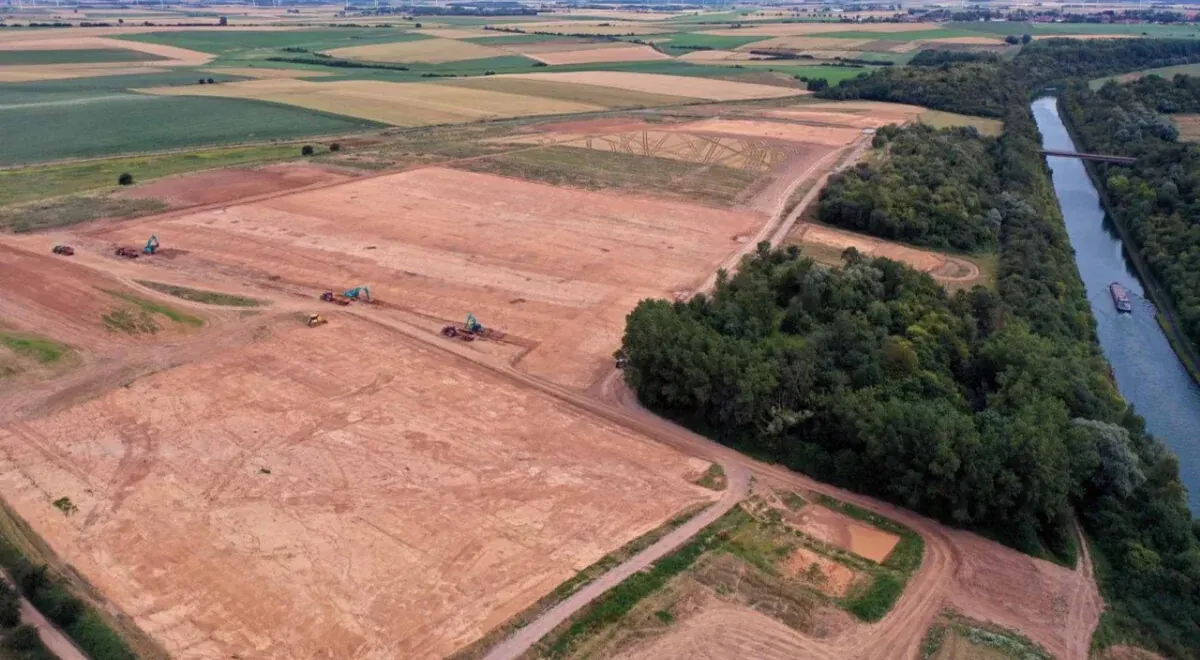
nature.comnature.comOpen source ↗. The wood was found in the lowest 2 m of a 9-m exposure above the Kalambo River, where a permanently elevated water table preserved it.
The site also yielded four wood tools from 390 to 324 kyr: a wedge, a digging stick, a cut log and a notched branch. For comparison, the earliest known wood artefact is a fragment of polished plank from Gesher Benot Ya'aqov, Israel, more than 780 kyr old. Wooden tools for foraging and hunting appear about 400 kyr ago in Europe, China and possibly Africa. The authors state that the finds show an unexpectedly early diversity of forms and the capacity to shape tree trunks into large combined structures.