Sanam Temple in Sudan: excavations find a mid-7th-century BCE faience workshop with three firing pits
Excavations behind Sanam Temple in Napata found a faience workshop from the mid-seventh century BCE, the first securely identified one for Kushite Nubia, the authors say.
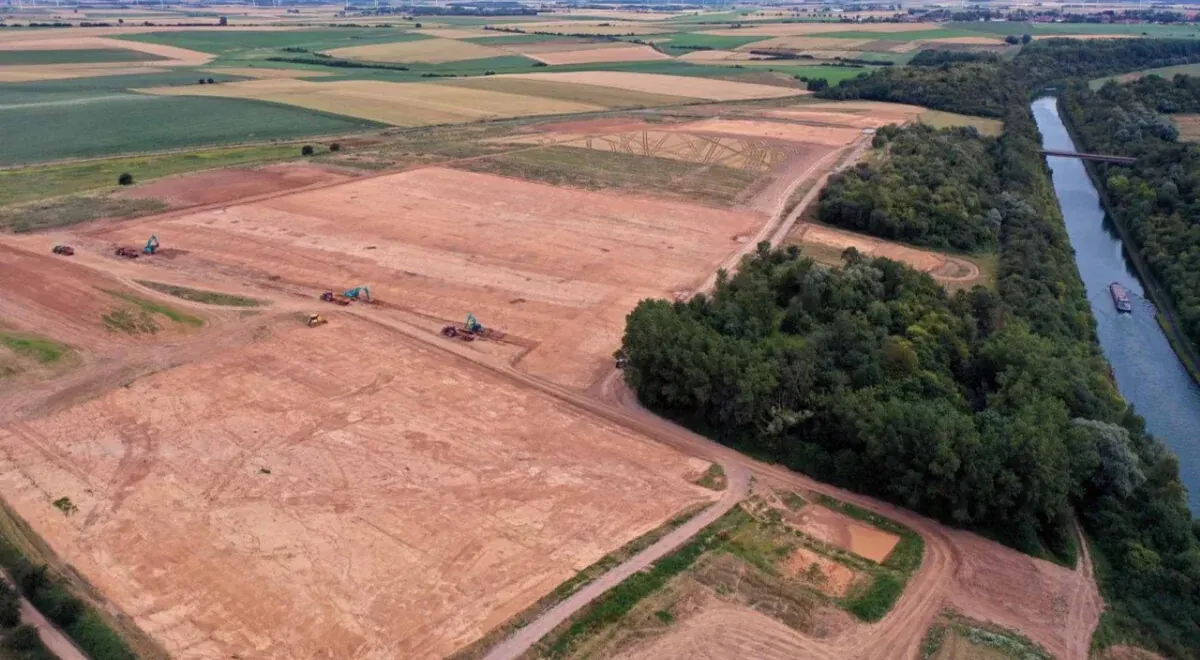
Excavations in 2018–2020 at Sanam Temple in Napata, the capital of the Kushite Empire in northern Sudan, uncovered the remains of a faience workshop from the mid-seventh century BCE, according to a paper in Antiquity. doi.org
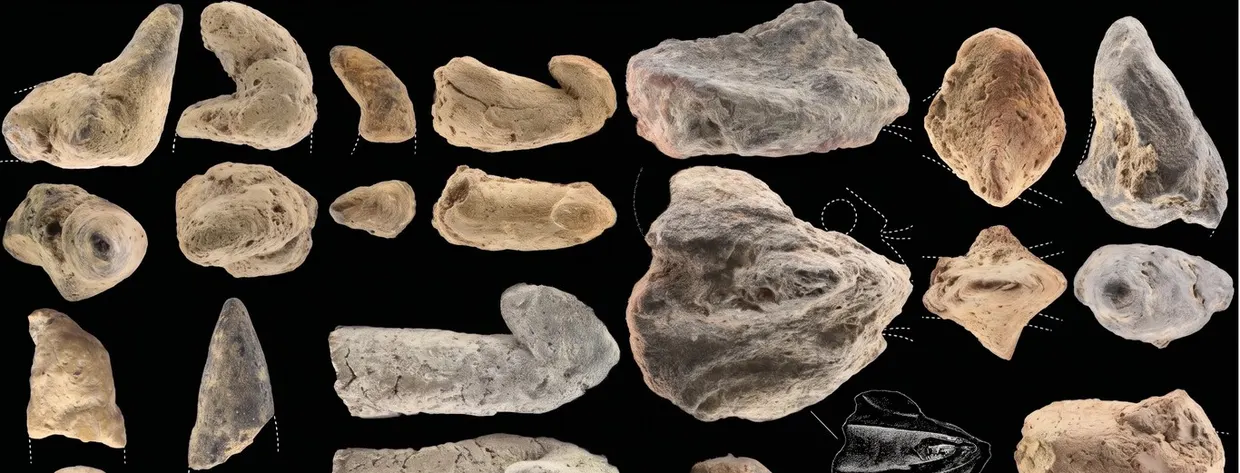
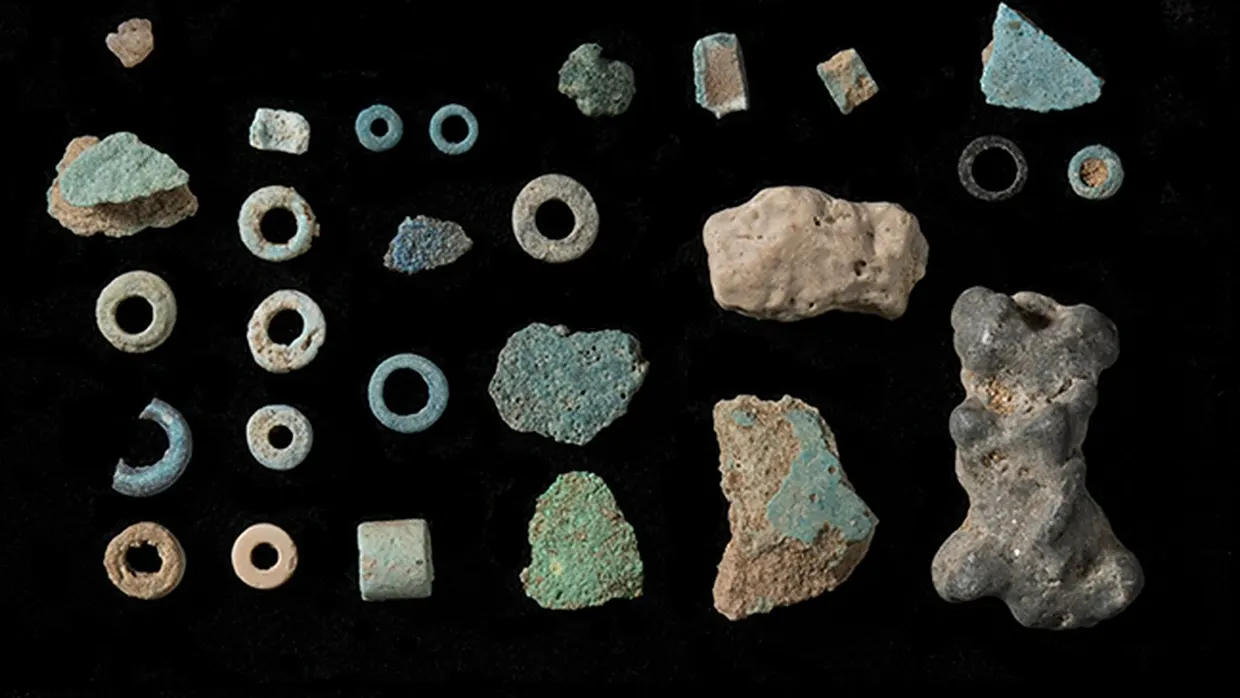
Antiquitydoi.orgOpen source ↗ Behind the temple's rear wall, the team found three firing pits, two mudbrick basins, hundreds of beads, small shells and wasters in compacted ashy layers. The authors call it the first workshop securely identified for Kushite Nubia.
The temple was not unexplored. In 1912 the Egyptologist Francis Llewellyn Griffith dug there for a single three-month season and found clay molds for shabtis, the small figurines placed in tombs. He did not explore systematically outside the walls and dumped his spoil heaps against them. The new work was done in Trench 3, opened behind the temple.
Workshop and raw materials
The trench was later widened to about 5 meters (16 feet) a side. Under the pits lay a floor of broken storage jars set flat to give a solid working surface. The ash held hundreds of disk beads in blue, green and white, plus fragments of faience vessels. Faience is mostly silica with some alkali and lime, and simple ovens can reach the roughly 1,650 degrees Fahrenheit (900 degrees Celsius) needed to fire it.
The shells came out of the ash by the thousands. One bivalve is most likely Transkeia globosa, a Red Sea clam. Snail shells fit both Nile snails of the family Hydrobiidae and marine Phasianellidae, so a mixed batch is still possible. The shells were broken with grindstones in the mudbrick basins, and the powder was mixed into the paste, likely as a source of lime, which is scarce on the Nubian sandstone. The authors describe this as a locally adapted version of an Egyptian craft. They argue that bringing so much shell from the coast required either direct control of distant communities or deals with desert groups.
Shabtis and state control
A broken green shabti without inscription matches a new clay mold found inside the temple. Griffith's older molds match shabtis excavated at Nuri, the royal cemetery. In Napatan Nubia only royalty used shabtis. The pits lay right outside the temple's sandstone wall, while Egyptian workshops often stood at a settlement's edge. The authors read this as evidence that the temple controlled production, with some items meant only for royal use. doi.org
Antiquitydoi.orgOpen source ↗
Several points remain open. It is unknown whether kilns stood over the pits. The workshop was dated by its pottery, and the paper gives no radiocarbon dates. Some raw materials are still not identified with certainty.