Xi'an archaeologists find three Northern Song tombs with 121 skulls, linked to a public cemetery
Three multi-person tombs in Xi'an's Nanshaomen area hold 49, 41 and 31 skulls; six inscribed bricks tie the site to the Louze Garden, an official burial system for the poor.
Archaeologists in Xi'an have found three unusual multi-person tombs of the Northern Song period in the Nanshaomen area, the Xi'an Institute for the Protection of Cultural Relics and Archaeology said on 16 November, as reported by chinanews.com.cn. The tombs are believed to be connected with the Louze Garden system. chinanews.com.cn
chinanews.com.cnchinanews.com.cnOpen source ↗
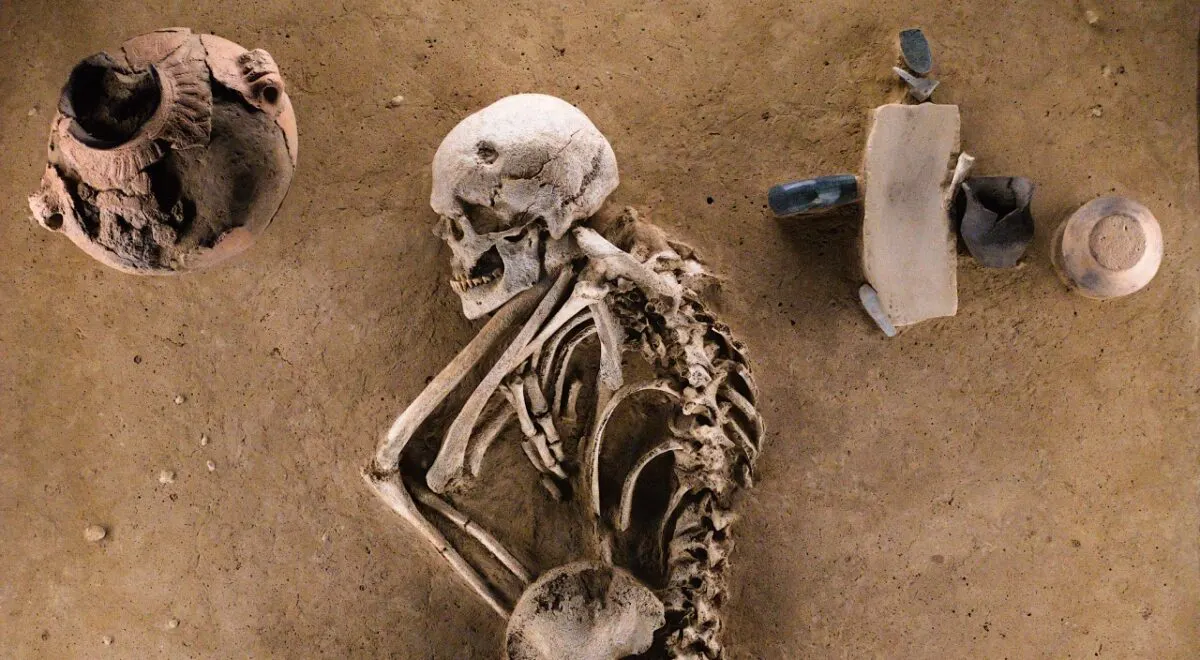
The three graves are aligned north–south and have the same or similar form: a vertical shaft entrance leading to an earthen chamber. Human bones were arranged in order inside. There were few or no grave goods and no clear traces of coffins. The number of identifiable skulls is 49, 41 and 31 respectively, 121 in total.
Secondary burial and the Louze Garden
From the Western Zhou period onward, dynasties provided some official help with burials. Under the Northern Song this became a nationwide system under the name Louze Garden. Those buried there were mostly people too poor to pay for a burial, or who died away from home and were left exposed.
Lü Fan, an assistant curator at the institute, said the site should be the Louze Garden of Jingzhao Prefecture. The bones are incomplete, mostly skulls and limb bones, and iron coffin nails were found. According to Lü, this indicates secondary burial: the remains were collected elsewhere and then deliberately placed in the tombs. chinanews.com.cn
chinanews.com.cnchinanews.com.cnOpen source ↗
Inscribed bricks and a workshop
Near the tombs the team found a semi-subterranean building. It yielded six inscribed bricks dated to the 8th year of Zhenghe and the 2nd year of Xuanhe, both late Northern Song. Each text records someone transporting the body of a deceased person. Such bricks were placed in public cemeteries set up by the government at that time.
The inscriptions mention "soldiers who died", "women without support" and "female servants". According to the institute, this shows that fallen soldiers and ordinary people at the bottom of society made up the main body of those buried. The bricks also name Anji Fang, another government welfare institution, so people who died of illness there could also be buried in the garden. Based on the numbering on the bricks, more than 2,000 people were buried in the Jingzhao Louze Garden between the 3rd year of Chongning and the 2nd year of Xuanhe.
The building also contained a kiln, slag and many crucibles, so it was probably a handicraft workshop. It appears to date from the same period as the bricks, but whether it was part of the Louze Garden needs more evidence. chinanews.com.cn
chinanews.com.cnchinanews.com.cnOpen source ↗
Lü Fan said the find confirms with physical evidence that the Louze Garden system operated in Jingzhao. The inscriptions give material for studying Song social welfare and the living conditions of lower-class soldiers and civilians at the end of the Northern Song.