Inrap archaeologists find over 800 structures at Ruyaulcourt ahead of Seine-Nord Europe canal works
Excavation on 13.2 hectares in Pas-de-Calais covered nearly a millennium of rural occupation, from storage pits to forge waste and a child's burial.
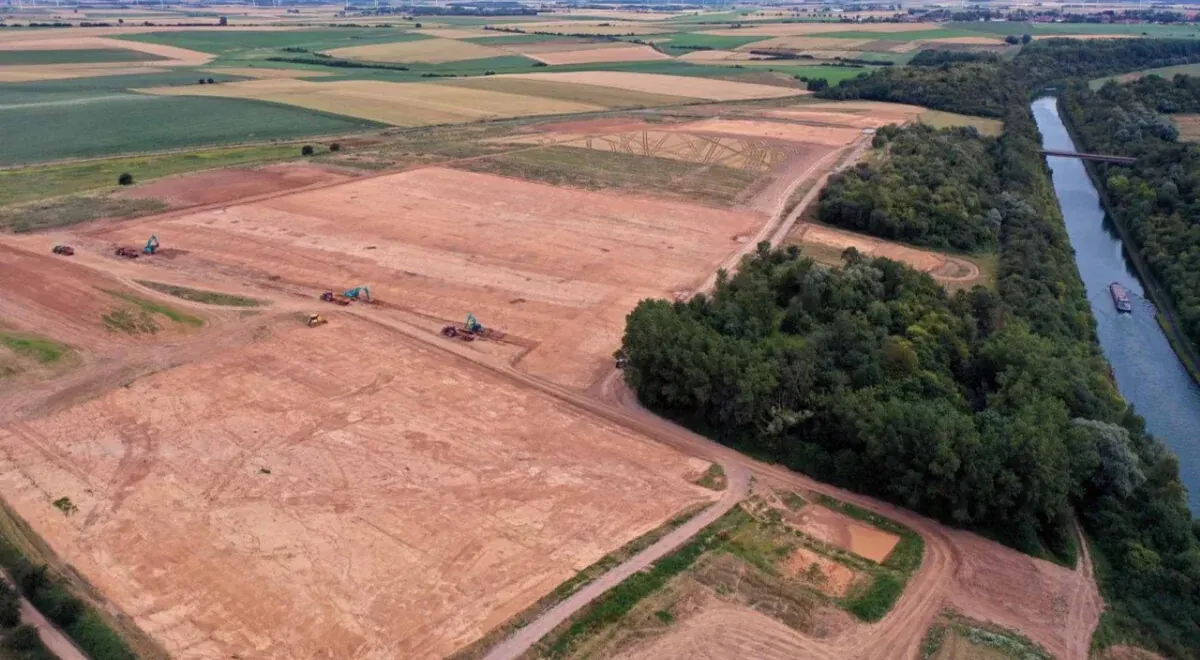
Archaeologists from Inrap, the French national institute for preventive archaeological research, have excavated a site at Ruyaulcourt in Pas-de-Calais ahead of work on the Seine-Nord Europe canal, science-et-vie.com reports. Over 13.2 hectares they recorded more than 800 structures, dating from the end of the Bronze Age to the Late Roman Empire science-et-vie.com
science-et-vie.comscience-et-vie.comOpen source ↗. The scientific lead is Frédéric Simon. Ditches, silos, a cellar, wells, tombs and forge waste trace nearly a millennium of rural occupation.
Farming, storage and metalworking
The site lies on a slight rise between two dry valleys. Inrap distinguishes two main sectors, north-east and south-west, about 300 meters apart.
Already in early La Tène (480 to 250 BC), the archaeologists found food storage areas set in semi-circular enclosures. From middle and late La Tène (250 to 25 BC), a path appears in the north-east, while the south-west gains several enclosures and structures linked to mixed farming and livestock. Silos and storage spaces are present from the first phases of occupation.
The south-west sector contains enclosures, pits and granaries. In several structures there, Inrap reports a large spread of slag, forge waste dated mainly to the 2nd and 3rd centuries, which points to craft activity science-et-vie.com
science-et-vie.comscience-et-vie.comOpen source ↗. In the High Empire the archaeologists also identified large pits and possible material-extraction wells.
Roman-period occupation and a child's burial
According to the Inrap statement, occupation became denser in the High Empire. One of the more significant ensembles combines a cellar with a lined well, whose walls were reinforced for stability. Finds include ceramics, coins and a furniture appliqué showing the face of a Gorgon or Medusa. A pit also yielded metal remains that may come from a cart body, along with a wheel hub and a balance beam. Occupation continued into the Late Empire, with a phase still visible in the 4th century, and then appears to decline.
The site has two funerary areas, in the north-east and the south-west, organized differently. In the north-east, several burials of the 1st century AD lie close to an old path. One of them holds a child under two years old, buried with a terracotta statuette of an embracing couple. Depending on interpretation, the figurine may represent the child's parents.
The second group of burials lies 40 meters south-east of the first and is not aligned along the road science-et-vie.com
science-et-vie.comscience-et-vie.comOpen source ↗.