Hong Kong team builds automated tool to measure bird skull shape from 3D scans of 100 finch specimens
Authors report a fully unsupervised method that measures skull dimensions and orbit curvature from imperfect 3D meshes without manual landmarking, tested on Darwin's finches.
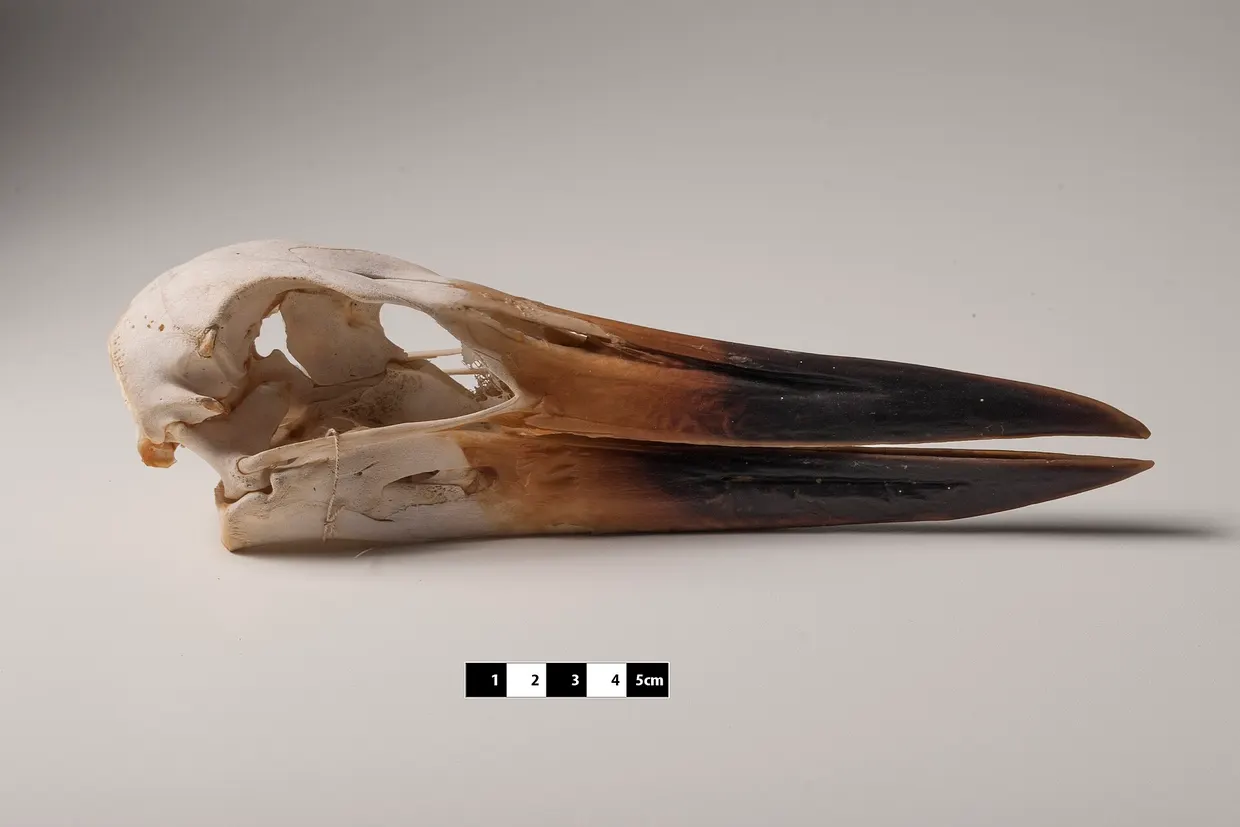
Kin Lau and Gary P. T. Choi published a fully unsupervised geometric framework that extracts parametric descriptors of cranial morphology directly from imperfect 3D skull meshes. The work appeared in PLOS Computational Biology on 16 November 2026 and is available via doi.org plos.org
doi.orgplos.orgOpen source ↗. The authors tested it on 100 skull specimens of Darwin's finches and their relatives.
Problem: landmarking and damaged specimens
Quantifying morphology from 3D scans usually relies on landmark-based geometric morphometrics or diffeomorphic mappings. According to the authors, digitizing landmarks on every specimen is labor-intensive, and the time cost grows linearly with collection size. Museum specimens are often damaged: holes, cracks, and broken or incomplete orbital rims can remove the anatomical loci where landmarks must be placed.
Automated surface-based methods typically assume clean meshes with a fixed topology, so damage can make them fail or require manual mesh repair. The new framework requires no per-specimen anatomical input and does not need a single-component, genus-0 mesh.
Method and results
The framework combines computational geometry, differential geometry, and numerical optimization. It automatically aligns each specimen, measures the primary skull dimensions, and fits geometric primitives to the orbit and the neurocranium using robust iterative schemes plos.org
doi.orgplos.orgOpen source ↗. According to the authors, this yields stable estimates even for topologically noisy or damaged meshes.
The extracted measurements recover the established scaling relationship between skull size and orbit curvature, which the authors treat as biological validation of the pipeline. The team also built a predictive model that estimates orbit curvature from three easily obtainable linear skull measurements. It explains 86.36% of the variance in curvature, with an average prediction error of 6.14%.
The authors further derived dimensionless relative-geometry descriptors that are invariant to uniform scaling and retain variation among the sampled genera. They also applied the method to other avian and mammalian skulls to show that it generalizes. The code and data are available on GitHub.