Toronto team: in mice, fear learning brought ventral hippocampus maps of safe and dangerous places closer
In mice, fear learning made the ventral hippocampus represent dangerous and safe contexts more alike, while the dorsal part kept them apart. The data come from animals.
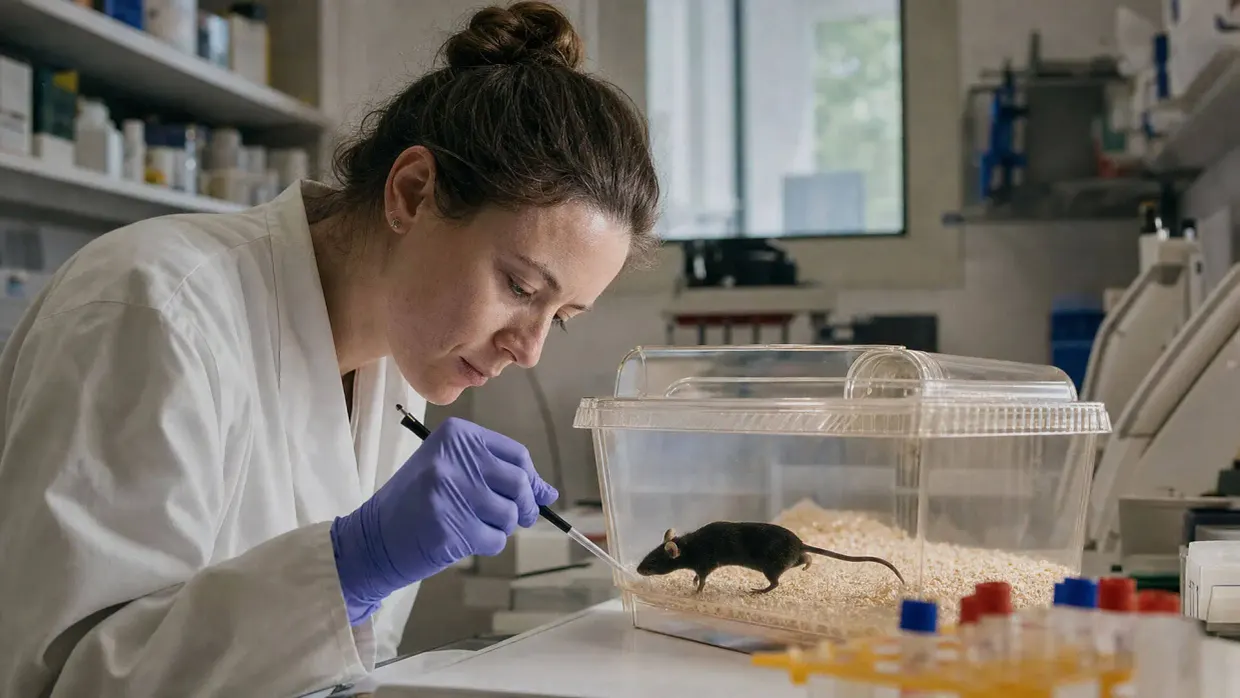
A team led by Sheena Josselyn and Paul Frankland at the University of Toronto reported that, after mice learned to fear a place, the ventral hippocampus did not separate dangerous and safe contexts more sharply. It brought their neural representations closer together. The work was published in Nature Neuroscience (doi:10.1038/s41593-024-01638-0) and covered by Muy Interesante. The results come from mice and cannot be transferred directly to humans muyinteresante.okdiario.com
Muy Interesantemuyinteresante.okdiario.comOpen source ↗.
Fear conditioning and two parts of the hippocampus
The researchers taught mice to associate one context with a threat, while a second context stayed safe. They then compared which patterns of neuronal activity appeared in each environment.
The hippocampus is involved in memory and in building mental maps of places. Its dorsal part is linked mainly to fine spatial and contextual memory, and its ventral part to emotion and defensive responses. After fear learning, the representations of the dangerous and safe contexts overlapped more in the ventral hippocampus. In the dorsal hippocampus they stayed more distinct.
The overlap does not mean the animals fully confused the two places or lost the memory of where they were. According to the article, different levels of information coexist: a faster, more general one that can trigger defence, and a more precise one that locates the animal muyinteresante.okdiario.com
Muy Interesantemuyinteresante.okdiario.comOpen source ↗.
Earlier recall and the PTSD hypothesis
When the mice recalled the threat, the representation of the dangerous context appeared earlier in the ventral hippocampus and was tied to freezing, the defensive immobility these animals show when they perceive danger.
The authors suggest that if a safe place is represented partly close to a dangerous one, a harmless cue could trigger the alarm circuit sooner. They link this line of thought to post-traumatic stress disorder (PTSD), where everyday neutral stimuli reactivate the alarm. This is a research hypothesis, not a clinical conclusion.
The study does not show that this pattern causes PTSD in people. It does not establish that the mechanism is the same in the human hippocampus, that it is sufficient to produce the disorder, or that it can serve as a diagnostic marker muyinteresante.okdiario.com
Muy Interesantemuyinteresante.okdiario.comOpen source ↗.
Open questions
It is not established whether the same overlap between contexts occurs in the human hippocampus during fear or after trauma. The contribution of other regions involved in emotion and fear regulation, such as the amygdala and the prefrontal cortex, is also unclear, since the study does not place them at the centre.
It also remains untested whether selectively altering ventral hippocampal activity would reduce fear responses to safe cues, and whether such an adjustment would have therapeutic value.