Yale and Columbia: Earth's core carbon came from the outer solar system, per Hawaiian melt inclusions
Isotopic analysis of melt inclusions from Hawaiian eruptions gives the first observational estimate of carbon isotopes in Earth's core and points to carbonaceous chondrites.
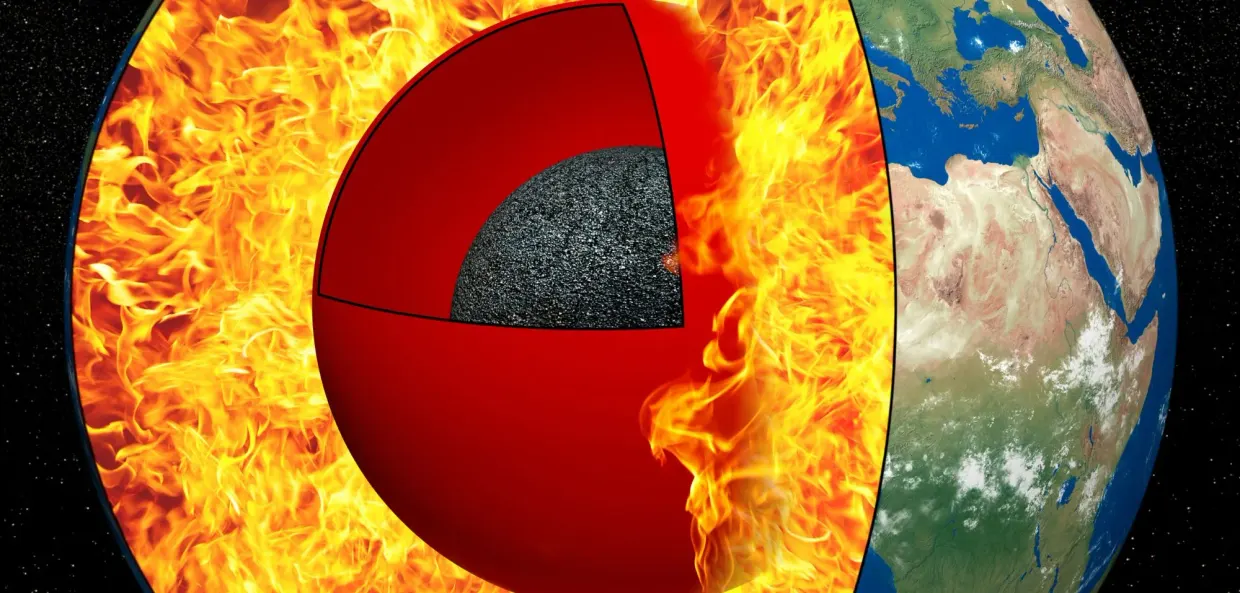
Researchers at Yale and Columbia report that most of Earth's carbon originated in the outer solar system and arrived only in the late stages of planetary development, according to news.yale.edu yale.edu
news.yale.edunews.yale.eduOpen source ↗. The study, published in the Proceedings of the National Academy of Sciences, gives the first observational estimate of the isotopic composition of carbon in Earth's core.
Melt inclusions as a sample of the deep Earth
The team analyzed melt inclusions, which are bits of molten rock trapped inside crystals that form in magma. The samples came from historic eruptions in Hawaii: the Keanakākoʻi eruptions from 1500 to 1840 and the Kīlauea Iki eruption in 1959. Each droplet is a snapshot of what the magma looked like deep within the Earth.
It had been thought that observing "core carbon" and analyzing its isotopic composition was not possible. A team led by Yves Moussallam at Columbia's Lamont-Doherty Earth Observatory devised a way to do it using Hawaiian lavas. The lava droplets sample different parts of the volcanic plume.
The researchers found an unusually heavy carbon-13 signature in magma that they believe comes from parts of certain plumes representing the boundary between the core and the mantle. "We interpret this as carbon leaking from the core," said Damanveer Grewal, assistant professor of Earth and planetary sciences at Yale and a co-author yale.edu
news.yale.edunews.yale.eduOpen source ↗.
Outer solar system origin and timing
Grewal, who led this part of the work, said the core carbon is too heavy to have come from the rocky, carbon-poor material of the inner solar system that built most of Earth. It matches carbonaceous chondrites, which are carbon-rich meteorites from the outer solar system that contain organic compounds and water.
According to Grewal, there was only one window for such material to become a permanent part of the core: the final stage of Earth's main assembly. Carbon that arrived earlier would largely have been sent back into space in later collisions, and carbon that arrived later would have found the core already closed.
The authors add that the results may bear on the role of core carbon during episodes of intense volcanic activity yale.edu
news.yale.edunews.yale.eduOpen source ↗. Co-authors also work at the Institut des Sciences de la Terre d'Orléans in France, the U.S. Geological Survey, the University of Oregon, the University of Hawaiʻi at Mānoa, Brown University and the University of California-Santa Barbara.