Max Planck team's CALiK photocatalyst yields three times more hydrogen peroxide in lab tests
A carbon nitride catalyst with ordered lithium and potassium atoms produced about three times more hydrogen peroxide under light than a conventional reference in laboratory experiments.
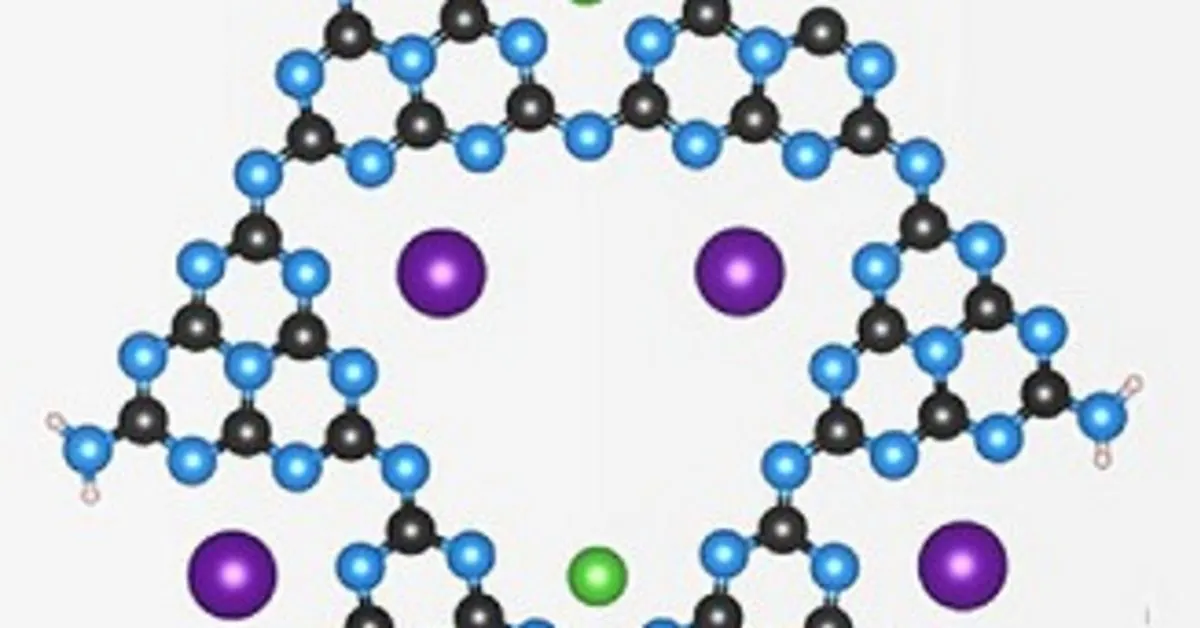
Researchers at the Max Planck Institute of Colloids and Interfaces in Potsdam, together with international partners, have developed a carbon nitride photocatalyst named CALiK. In laboratory experiments it produced about three times as much hydrogen peroxide as a conventionally manufactured reference material, according to mpg.de mpg.de
mpg.dempg.deOpen source ↗. The results were published in the journal Advanced Materials.
Hydrogen peroxide and light-driven synthesis
Hydrogen peroxide is used as a bleaching agent, mainly in the paper industry, as a disinfectant in medical settings and households, and as an oxidising agent in chemical processes. The chemical industry produces approximately eight million tonnes of it annually, and demand is rising. Most of it is made by the energy-intensive anthraquinone method, which uses oxygen and relies on fossil energy sources. A more climate-friendly alternative is a carbon nitride catalyst activated by light.
In such photocatalysis, light energy temporarily generates mobile positive and negative charges in the catalyst. Efficiency depends on how well these charges move through the material and how long they remain available for reactions. Alkali metal atoms such as lithium, sodium and potassium are known to improve charge separation. In earlier manufacturing methods, however, the metal atoms were distributed more or less randomly.
Ordered placement of lithium and potassium
The team used organic–inorganic ionic cocrystals of a carbon- and nitrogen-containing compound and lithium chloride as starting materials. In these crystals the components are linked into a regular three-dimensional network. The hybrid crystal was heated with potassium chloride, which gave CALiK, where the metal ions occupy defined positions mpg.de
mpg.dempg.deOpen source ↗. Corresponding author Christian M. Pelicano, who leads the SunThesis group and has worked on the topic since 2023, said the crystals were already known but had not been used as precursors for carbon nitrides.
In the experiments, CALiK produced about three times as much hydrogen peroxide as the reference and about 40 percent more than CALi, the most efficient tested material, which contains only lithium. First author Anna Lo Presti said this showed for the first time that not only the type and quantity of ions matter, but also their position in the lattice.
Structural analyses combined with spectroscopic and electrochemical measurements showed that light-generated charges separate more effectively in CALiK and stay available longer for the reaction with oxygen. Calculations suggest that the distribution of lithium ions changes the electronic environment and facilitates oxygen activation. The authors note that these calculations use simplified model structures and do not yet fully capture processes in the real material.