Bottlenose dolphins recognised whistles of former tank mates after more than 20 years of separation
A playback study with dolphins from a breeding consortium found that they respond to familiar signature whistles. The longest recognition span exceeded 20 years.
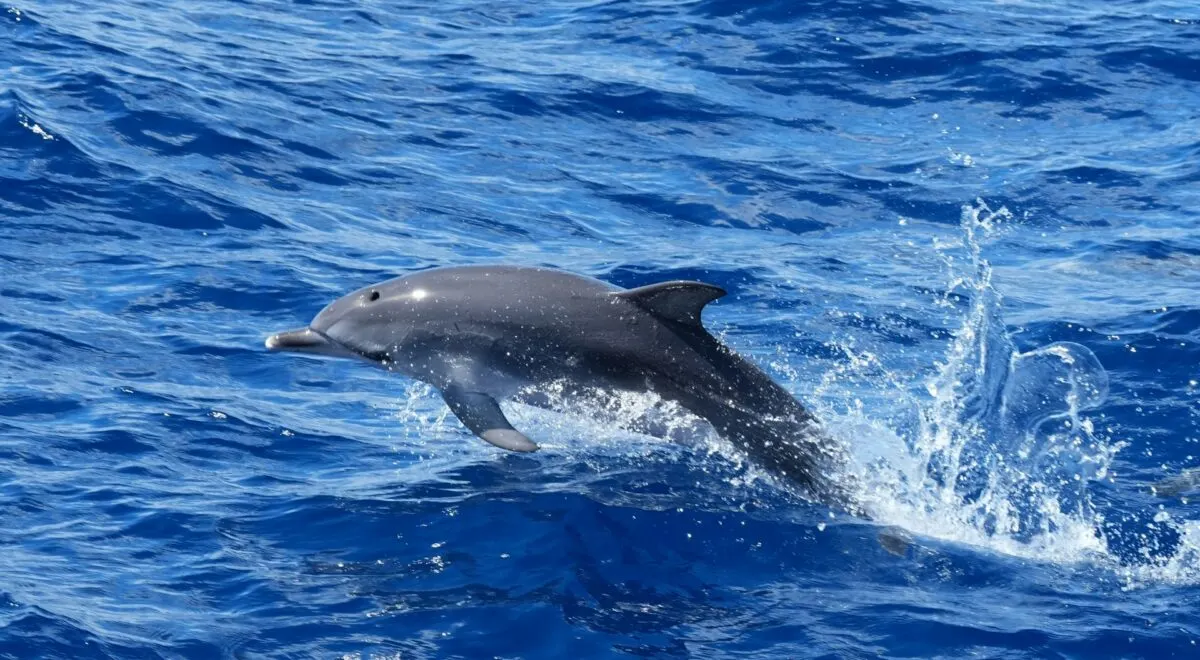
In 2013, biologist Jason Bruck of the University of Chicago reported in the journal Proceedings of the Royal Society B Biological Sciences that bottlenose dolphins recognise the signature whistles of former tank mates after more than 20 years of separation doi.org
Proceedings of the Royal Society B Biological Sciencesdoi.orgOpen source ↗. The study involved more than forty animals at six facilities in the United States and Bermuda. All of them belonged to a breeding consortium that exchanges animals between institutions and records which animals lived together.
How the memory was tested
Each bottlenose dolphin (Tursiops truncatus) develops its own whistle between the ages of four months and one year and keeps it for life. The whistle works like a name: the animal uses it to announce itself or to call a particular partner.
Bruck used a playback design. First he broadcast unfamiliar whistles underwater until the dolphins lost interest. Then he inserted the signature whistle of a former tank mate into the series. On hearing a familiar voice, an animal would freeze, swim to the speaker, whistle in turn and wait for a reply.
The most striking case involved two females, Allie and Bailey, who had shared a tank in Florida when they were two and four years old. Twenty years and six months later Bailey recognised Allie's whistle as that of an old acquaintance, although the two had long lived in facilities thousands of kilometres apart.
What the results show
Overall, the dolphins responded considerably more to former companions than to complete strangers, which indicates real recognition. According to the author, the data show that dolphins have the potential for lifelong memory of each other regardless of relatedness, sex or duration of association doi.org
Proceedings of the Royal Society B Biological Sciencesdoi.orgOpen source ↗.
Bruck writes that, to his knowledge, this is the first study to show that social recognition can last at least 20 years in a non-human species, and the first large-scale study of long-term memory in a cetacean.
The author links the result to the dolphin social system, a fluid fission-fusion arrangement in which groups form and disperse. In such a system, long memory for conspecifics could help assess social threats and potential social or hunting alliances. Together with evidence from elephants and humans, the results provide suggestive, not conclusive, evidence that sociality and cognition may be related.