Model from Cantabria and Seville: growth in Homo sapiens numbers raised Neanderthal extinction risk
Researchers from the universities of Cantabria and Seville simulated Europe 55,000–27,000 years ago. Climate alone did not explain the Neanderthals' disappearance.
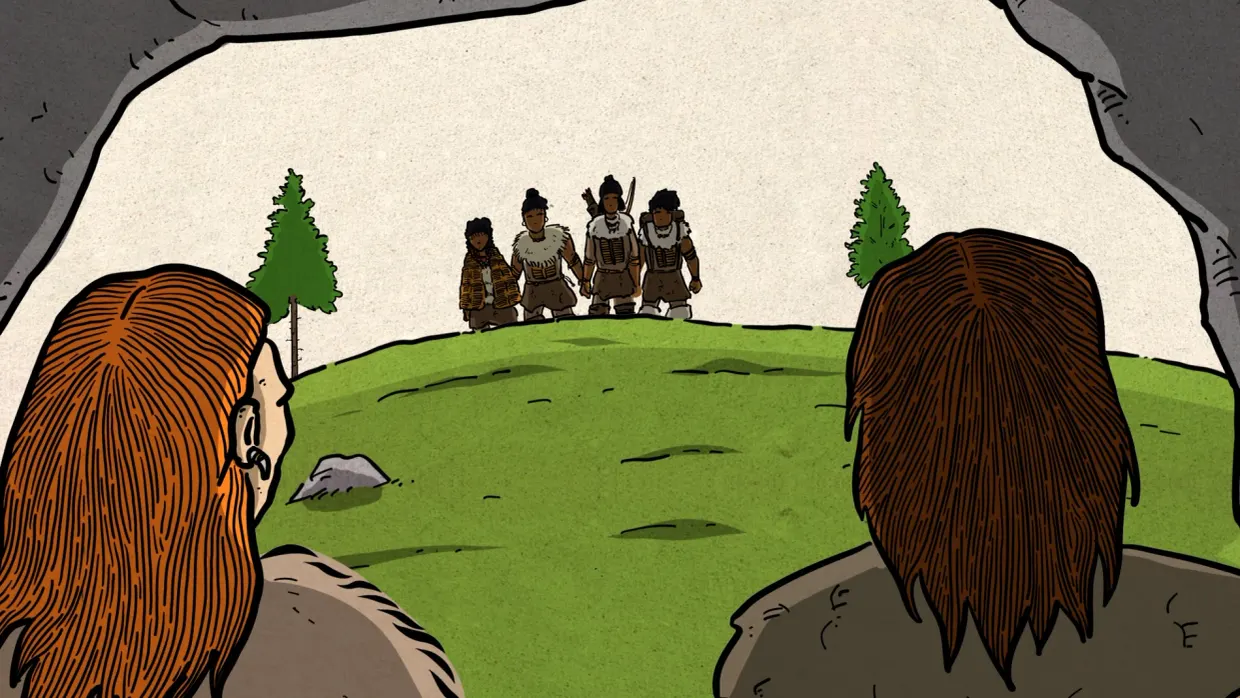
Marco Vidal-Cordasco and Ana B. Marín-Arroyo of the University of Cantabria, together with Guillermo Rodríguez-Gómez of the University of Seville, reconstructed the environmental conditions of Europe between 55,000 and 27,000 years ago, according to larazon.es. Their study was published in Science Advances. It indicates that the expansion of Homo sapiens considerably raised the likelihood that Neanderthals would disappear. larazon.es
larazon.eslarazon.esOpen source ↗
NEAR model and climate
The authors combined archaeological and paleontological records, climate models and estimates of food availability. From these data they developed NEAR, a computer model that simulates the evolution of human populations under different scenarios: with or without sapiens, and with different growth rates, mobility, diets and distances between bands.
The result rules out climate alone as an explanation for the disappearance of Neanderthals at the continental scale. Environmental change did alter the ecosystem: plant productivity fell, herbivore biomass declined and competition between consumers intensified. One of the sharpest reductions in available resources occurred between 45,000 and 40,000 years ago.
Population size and connectivity
When the arrival of Homo sapiens was added to the simulations, the size of its populations became the most influential variable for Neanderthal extinction risk. While sapiens remained in small numbers, Neanderthals survived in 98% of the modelled scenarios. Growth of sapiens populations considerably increased the probability that Neanderthals would disappear. larazon.es
larazon.eslarazon.esOpen source ↗
The pressure could be indirect: competition for resources, occupation of territory, interruption of expansion routes or difficulty recovering after a crisis. In some regions of central and eastern Europe, the model estimates that Homo sapiens could reach an environmental carrying capacity two to four times higher than that of Neanderthals.
Connectivity proved to be the most revealing variable. Neanderthal populations with higher mobility, shorter distances between groups and more overlapping territories tended to persist longer. Exchange of individuals and maintained ties could cushion the effects of demographic crises: when one group disappeared, others could help recover the territory. When groups were too far apart, the risk of disappearance rose.
The early Homo sapiens migrations that failed could also have favoured Neanderthal survival. In the simulations, the more waves of our species failed to establish lasting populations, the later the disappearance of Neanderthals tended to occur. larazon.es
larazon.eslarazon.esOpen source ↗