Sapienza: extinction risk rose for 9% of 4,992 mammal species since 1996, fell for under 1%
A study coordinated by Sapienza University of Rome tracked IUCN Red List categories over about three decades. The authors report that external pressures explain worsening better than biology.
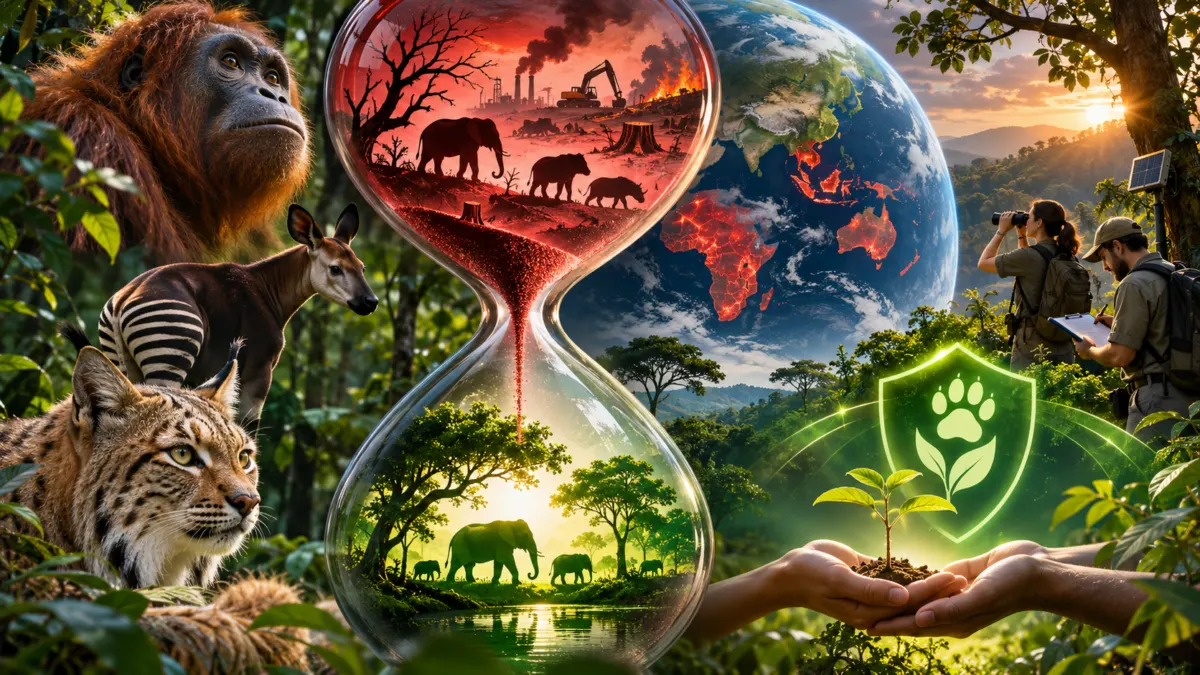
A study coordinated by the Global Mammal Assessment laboratory at the "Charles Darwin" Department of Biology and Biotechnologies, Sapienza University of Rome, analysed how extinction risk changed for 4,992 mammal species from 1996 to the present, meteoweb.eu reports. About 9% of the species moved to a higher risk category, while fewer than 1% moved to a lower one meteoweb.eu
meteoweb.eumeteoweb.euOpen source ↗. The work was published in Conservation Biology.
The researchers used IUCN Red List data and worked with the IUCN, the Zoological Society of London, the University of St Andrews and specialist groups of the IUCN Species Survival Commission. They separated genuine changes in conservation status from those caused only by new scientific knowledge or taxonomic revisions. They then related each species' trend to its biological traits, the number of threats, its geographic distribution and the conservation actions applied. Currently about a quarter of mammal species is threatened, falling into the categories vulnerable (VU), endangered (EN) or critically endangered (CR).
External pressures and differences between groups
The factor most associated with worsening was the number of threats acting on a species at once. For species exposed to more than ten simultaneous threats, the probability of worsening reaches about 40%. Body size and litter size had a more limited effect. First author Claudia Fornarini said that biological traits help explain why some species are more threatened than others, but external pressures mainly explain which ones worsen over time.
The probability of deterioration for primates was about 14 times higher than for rodents meteoweb.eu
meteoweb.eumeteoweb.euOpen source ↗. Worsening was more frequent in Southeast Asia, Africa and Australasia, according to the study.
Near threatened species and conservation actions
Species classed as near threatened (NT) had a probability of worsening more than four times higher than species not at risk. Carlo Rondinini, senior author and professor of zoology at Sapienza, said that conservation efforts focus on species already in serious danger, but near threatened species represent a window of opportunity, and acting earlier can prevent irreversible damage.
The analysis also found that species receiving more conservation actions have a higher probability of improving their status. Recoveries nevertheless remain relatively rare.