Penn State: prefrontal somatostatin neurons of resilient male mice resist stress-induced gene changes
Researchers at Penn State compared purified somatostatin neurons from the medial prefrontal cortex of stress-resilient and vulnerable mice; the resilience signature appeared in males only.
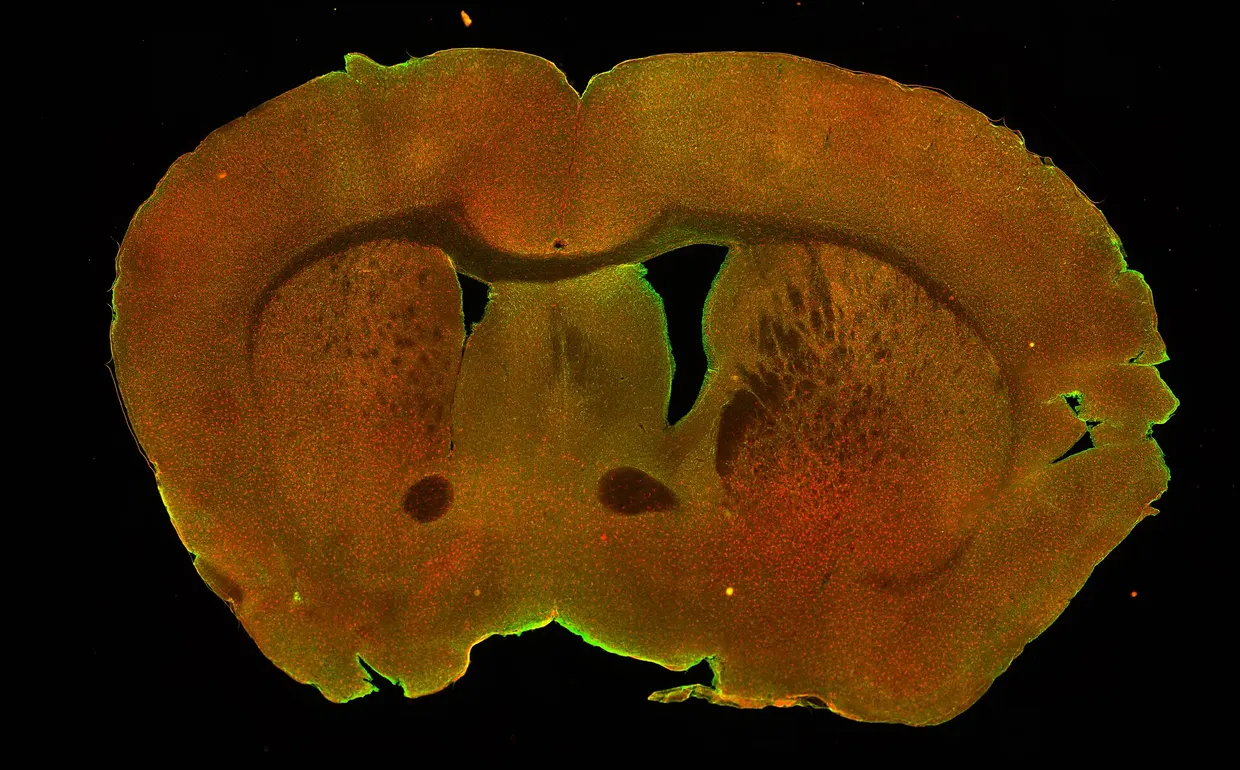
A team from The Pennsylvania State University (University Park and Hershey, USA) reported that somatostatin (SST) neurons in the medial prefrontal cortex (mPFC) of resilient male mice show a much smaller transcriptome response to chronic variable stress (CVS) than the same neurons in vulnerable littermates. The paper by Shao, Banerjee, Paul and colleagues was published in Translational Psychiatry (doi.org/10.1038/s41398-026-04576-4) nature.com
doi.orgnature.comOpen source ↗. All experiments were performed on mice, with no human material involved.
Mouse model and comparison
Earlier, the group showed that raising SST neuron activity by cell type–specific Cre-mediated inactivation of GABAA receptors (SSTCre:γ2f/f mice) promotes resilience to CVS at the behavioral and tissue transcriptome levels. The substrate of this resilience is sex-specific: in males it localizes to the mPFC, in females to the ventral hippocampus.
In the new study, the authors purified SST neurons from the mPFC of stress-vulnerable SSTCre and stress-resilient SSTCre:γ2f/f male mice and compared their transcriptomes. Female mice were used as negative controls.
Transcriptome results
In male SSTCre:γ2f/f mice, SST neurons showed a substantially reduced number of differentially expressed genes (DEGs) after CVS. The stress-induced transcriptional changes also lost correlation with those of SSTCre littermates nature.com
doi.orgnature.comOpen source ↗. In female SSTCre:γ2f/f mice the picture was the opposite: the number of CVS-responsive DEGs increased, and the transcriptomic profile was inversely correlated with that of SSTCre controls.
Gene set enrichment analysis identified markedly fewer CVS-responsive biological functions in resilient males than in their vulnerable littermates. According to normalized enrichment scores for gene ontology terms, SST neurons of male SSTCre:γ2f/f mice were protected from CVS-induced downregulation of gene sets governing neural cell fate, apoptosis and cell adhesion. They also showed partial resilience to CVS-induced disruption of mitogen-activated protein kinase signaling and cytoskeletal organization. SST neurons from female SSTCre mice showed no measurable CVS-induced changes in these gene programs.
The authors conclude that the male-specific, SST neuron–intrinsic resilience mechanisms in the mPFC are key determinants of the tissue-level and behavioral stress resilience described previously in SSTCre:γ2f/f mice.