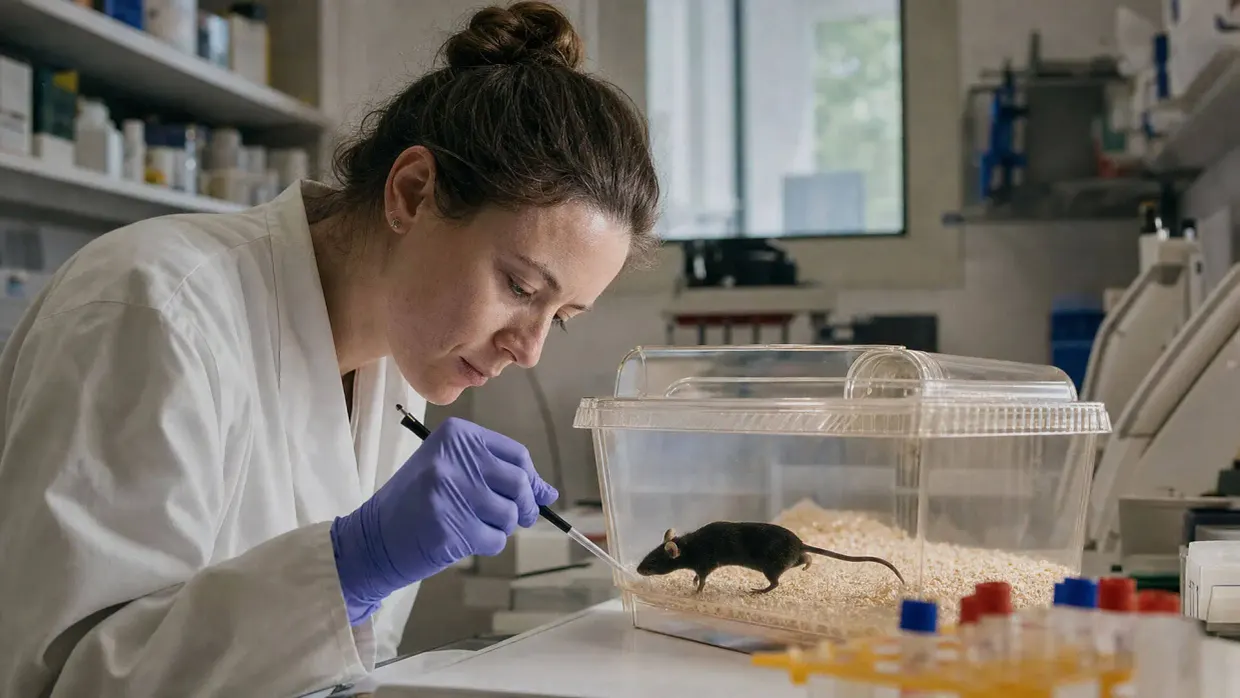
UCSF mapped visual circuits and identified autonomous motion sensing in mouse brains
Using a combination of fluorescent tracing and MERFISH, researchers demonstrated that mouse superior colliculus neurons can compute motion direction independently.
Researchers from the University of California, San Francisco (UCSF) have developed an advanced neural mapping method to trace direct connections between the retina and the brain. As reported via eurekalert.org, the study published in Nature shows that the brain does not merely accept motion data calculated by the eye, but contains dedicated cells that compute the direction of movement independently eurekalert.org
eurekalert.orgeurekalert.orgOpen source ↗. The team demonstrated this functional divergence in laboratory experiments on mice.
High-throughput neural tracing
To map these connections, the scientists scaled up an anterograde trans-neuronal tracing technique developed over the past decade. A fluorescent molecule introduced into mouse eyes illuminated recipient brain cells upon transmission across synapses. The team combined this tracer with MERFISH, an imaging method that records single-cell gene expression across entire tissue slices. This setup allowed the researchers to classify nearly 46,000 mouse brain cells by molecular type and determine which of them directly receive retinal inputs.
Independent directional processing
Using this structural atlas, the team monitored real-time activity in the superior colliculus while presenting mice with visual stimuli consisting of black bars scrolling across eight different directions. The recordings revealed two distinct operational groups of neurons. While one group simply accepted pre-calculated directional signals directly from motion-sensitive retinal cells, a second group possessed no direct links to those specialized retinal units.
Instead, this second population computed movement direction independently from basic visual signals. These neurons continued to detect motion direction even after the specialized directional machinery of the eye was experimentally disabled eurekalert.org
eurekalert.orgeurekalert.orgOpen source ↗. According to the authors, retinal cells likely track localized targets such as prey, whereas the autonomous brain circuits register broader background movement to determine self-motion through space. The team noted that this detailed mapping framework is essential for future efforts to restore vision following optic nerve injuries.