China's i-Space opens RMB 7 billion Series E as reusable rocket developers raise funds
i-Space targets RMB 7 billion at a reported RMB 23.5 billion pre-money valuation. Orienspace and Deep Blue Aerospace also report new rounds; booster recovery is not yet confirmed in flight.
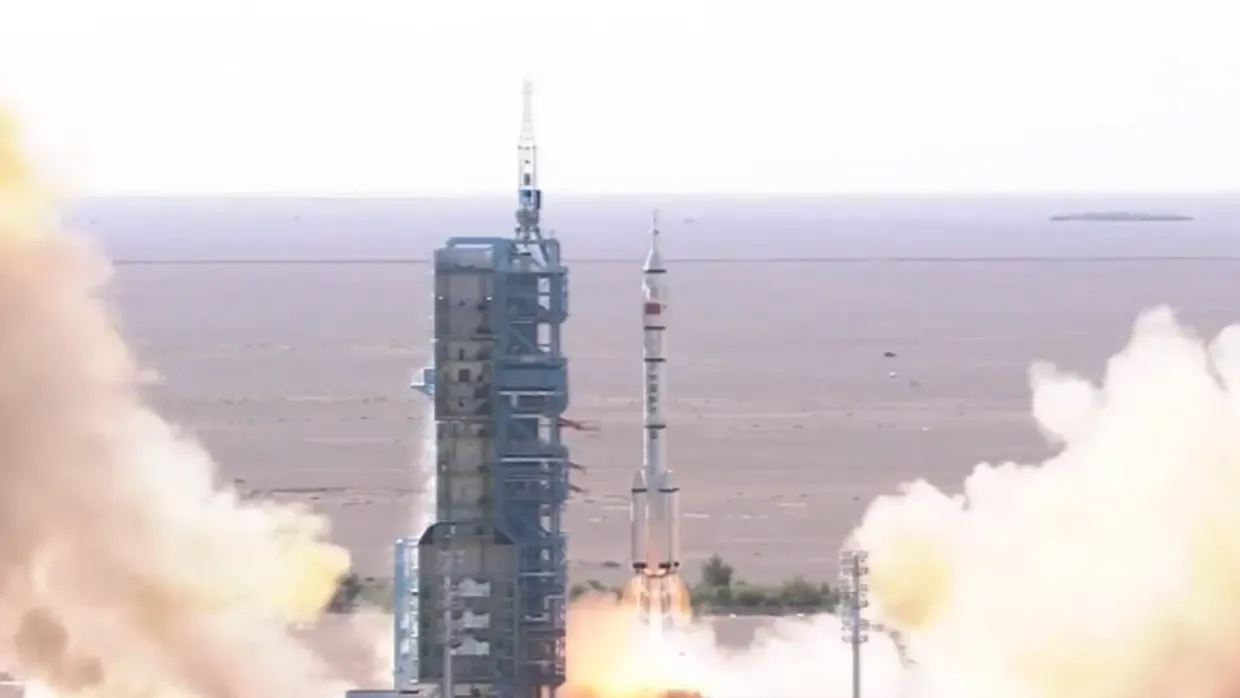
Beijing-based i-Space (Beijing Interstellar Glory) has begun a Series E round targeting RMB 7 billion at a reported pre-money valuation of RMB 23.5 billion, according to reports compiled by shattered.io from 36Kr's English edition and other outlets shattered.io
shattered.ioshattered.ioOpen source ↗. Orienspace reportedly raised nearly RMB 3 billion in two rounds in the first half of 2026, and Deep Blue Aerospace nearly RMB 2 billion in two rounds.
The International Institute for Strategic Studies reported that China's commercial-space sector received more than 15 billion yuan in total investment in 2024, about 40 percent more than in 2023. CAS Space (Zhongke Aerospace Technology) has filed for a STAR Market IPO seeking RMB 4.18 billion. The four developers use different engines, fuels and financing routes.
i-Space: rounds and use of funds
The company moved from a RMB 700 million first tranche in September 2025 to a RMB 5.037 billion D++ round five months later. The reported uses of financing are the Hyperbola-3 rocket, capacity for the Focus-2 liquid-oxygen methane engine, launch and sea-recovery infrastructure, and preliminary research on a heavy-lift vehicle.
If the full RMB 7 billion closed at the reported pre-money figure, the post-money valuation would be RMB 30.5 billion and the new money would account for about 23% of the company. This is arithmetic on reported figures, and the final terms may differ.
Payload classes and the cost of reuse
Hyperbola-3 is a reusable methane-oxygen rocket with a 4.2 m diameter. Reported specifications are 14 tonnes to low Earth orbit in expendable mode and 8.5 tonnes with booster recovery shattered.io
shattered.ioshattered.ioOpen source ↗. Recovery therefore costs 5.5 tonnes of payload, about 39%. These are design specifications: no flight data on recovery has been confirmed, and no target cost per launch is given.
Orienspace's Gravity-2 uses the same 4.2 m core diameter, though the reports do not explain why. Deep Blue Aerospace is developing Nebula-2 with a stated target of 25 tonnes to low Earth orbit and a first flight planned for 2027.
For regional comparison, the European Space Policy Institute analysis cited by the IISS puts space venture capital at 1.9 billion euros for China, 2.9 billion for the United States and 1.5 billion for Europe. The year of that split is not stated in the quoted text.