Spaceium releases OpenPort, an open-source two-way spacecraft refueling port licensed for $1
Spaceium's OpenPort interface transfers propellant between spacecraft in either direction. An ISS demonstration will test what the company calls the first xenon transfer in orbit.
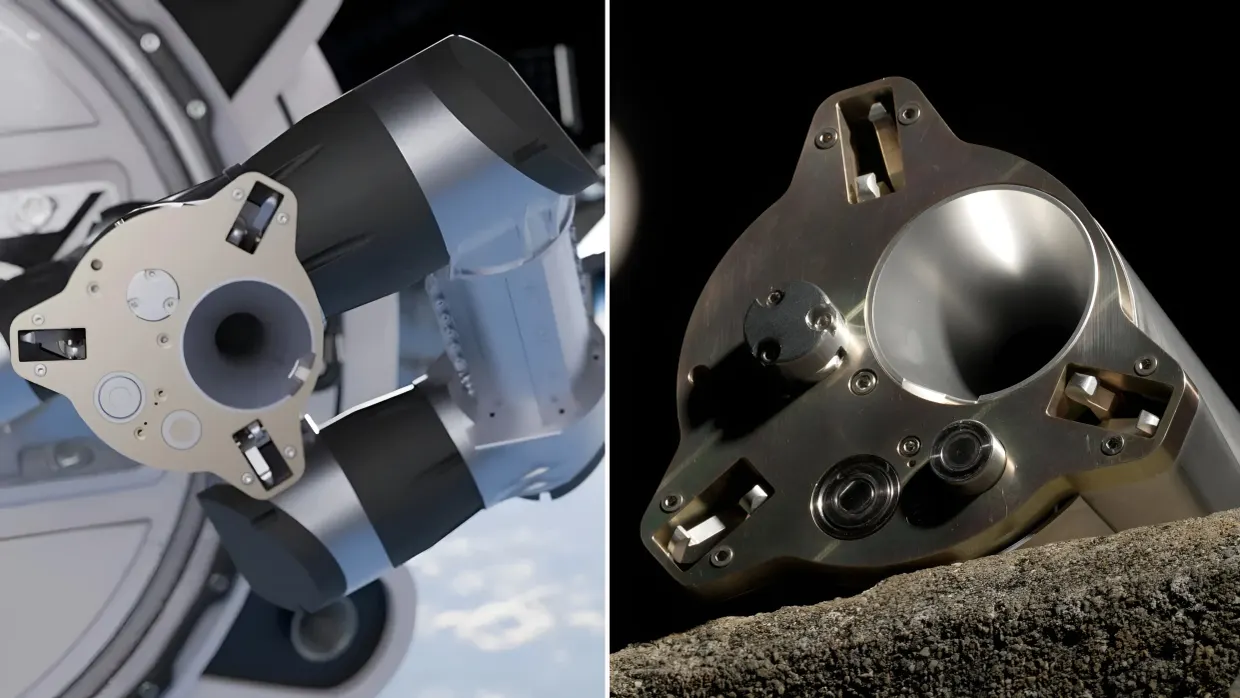
Spaceium has released OpenPort, an open-source spacecraft refueling interface that any company can license and manufacture for $1, Interesting Engineering reports. interestingengineering.com
Interesting Engineeringinterestingengineering.comOpen source ↗ The design is androgynous: the same connection sits on both spacecraft, so propellant can be transferred in either direction. The hardware will be demonstrated aboard the International Space Station.
Why a common refueling interface
Most satellites carry a fixed supply of propellant for their planned missions. When it runs low, operators often retire spacecraft whose electronics and other systems still work.
Standardized connections are lacking. Manufacturers develop their own interfaces, so operators have to check compatibility before arranging a fuel transfer, and a tanker from one company might not connect with another manufacturer's spacecraft.
Because the connection is identical on both sides, a satellite could potentially refuel another spacecraft instead of relying only on dedicated tankers. interestingengineering.com
Interesting Engineeringinterestingengineering.comOpen source ↗ OpenPort also replaces a conventional fill-and-drain valve, which typically serves ground fueling before launch; the new port stays functional after the spacecraft reaches orbit. Spaceium says the design handles higher pressures and greater docking misalignment than competing refueling interfaces.
ISS demonstration and business model
Spaceium plans to fly the hardware as a NASA-approved external payload through Voyager Technologies' commercial payload service. The interface will transfer xenon between two tanks in orbit, which Spaceium describes as the first xenon transfer performed in orbit. The mission will test whether spacecraft can exchange propellant through a standardized connection.
The demonstration follows another Spaceium mission in February 2026. Its precision robotic actuator completed its first space mission after launching aboard a SpaceX rideshare.
The company's broader business model centers on automated orbital stations that sell propellant as a service. Co-founder and CEO Ashi Dissanayake said: "The port isn't the business. The stations are." interestingengineering.com
Interesting Engineeringinterestingengineering.comOpen source ↗ Spaceium plans stations in low Earth orbit and geostationary orbit, with longer-term ambitions that include stations along routes to the Moon.
Spaceium was founded by Dissanayake and Reza Fetanat and joined Y Combinator's Summer 2024 batch. Its commercial customers include operators pursuing orbital transfer vehicles, lunar missions and geostationary satellites.