HITS astronomer Saskia Hekker links the red-giant luminosity bump to specific entropy in stellar models
A study in The Astrophysical Journal Letters gives the first quantitative description of when the dip in brightness on the red-giant branch begins, using specific entropy as the trigger.
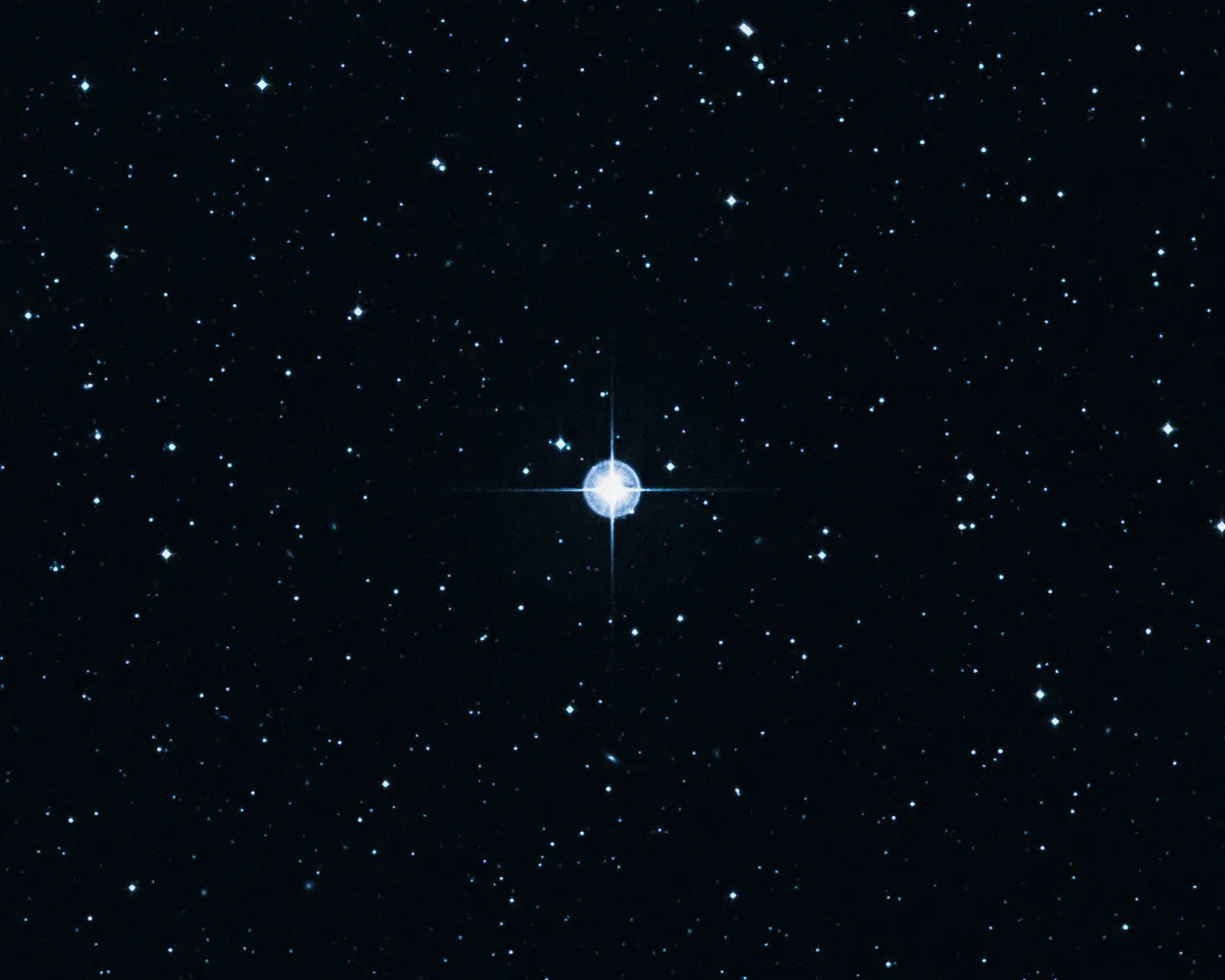
Saskia Hekker of the Heidelberg Institute for Theoretical Studies (HITS) has published a study in The Astrophysical Journal Letters that identifies the thermodynamic trigger of the red-giant-branch luminosity bump, according to techtimes.com techtimes.com
techtimes.comtechtimes.comOpen source ↗. The bump is a brief drop in luminosity that low-mass stars show while climbing the red-giant branch, at a point where an increase in brightness would be expected. Hekker says her explanation of the onset of the bump is the first quantitative description proposed so far.
Why models and observations disagreed
The dip was found in early automatic stellar evolution computations in the late 1960s, and it was first confirmed observationally in stellar clusters in 1985. In stellar evolution tracks with canonical physics, the bump appears at a higher luminosity than in observations.
The usual remedy is to change the amount of overshoot at the base of the convection zone, a parameter describing how far the convective envelope extends beyond its formal boundary. This creates tension with the lithium abundance at the stellar surface: models tuned to place the bump correctly gave lithium values that did not match observations.
Specific entropy as the trigger
A red giant has an inert helium core, a thin hydrogen-burning shell and a deep convective envelope above it techtimes.com
techtimes.comtechtimes.comOpen source ↗. As the base of the envelope descends, it meets a mean molecular weight discontinuity, a sharp chemical boundary that marks the maximum depth convection reached earlier.
The difference in specific entropy across this discontinuity shrinks as it moves inward, because the ratio of temperature to pressure decreases at smaller radii. When the difference reaches a critical value, the specific entropy of the convective envelope drops, and this briefly reverses the star's brightening. The bump ends when the hydrogen-burning shell passes through the composition boundary and normal brightening resumes.
Previous descriptions treated the bump as the shell reaching the chemical boundary or as a result of changes in hydrogen abundance above the shell, and those accounts were qualitative. The specific entropy at the discontinuity is now proposed as a diagnostic for stellar evolution models, a quantity to track instead of a parameter to adjust.
The bump serves as a reference point in observational astrophysics. It is used to calibrate the ages of stellar populations in globular clusters, as a cross-check on distances measured with red giants, and as a reference in asteroseismology techtimes.com
techtimes.comtechtimes.comOpen source ↗. According to the article, refined models should bring predicted luminosity and surface composition closer to observations, which matters for data from Kepler, TESS and the upcoming PLATO.