NUS catalyst regeneration sustains ammonia-to-hydrogen production for 2,000 hours in laboratory tests
National University of Singapore researchers combined a Pt/Fe-NC catalyst with periodic current reversal and washing, extending lab hydrogen production from ammonia beyond 2,000 hours.
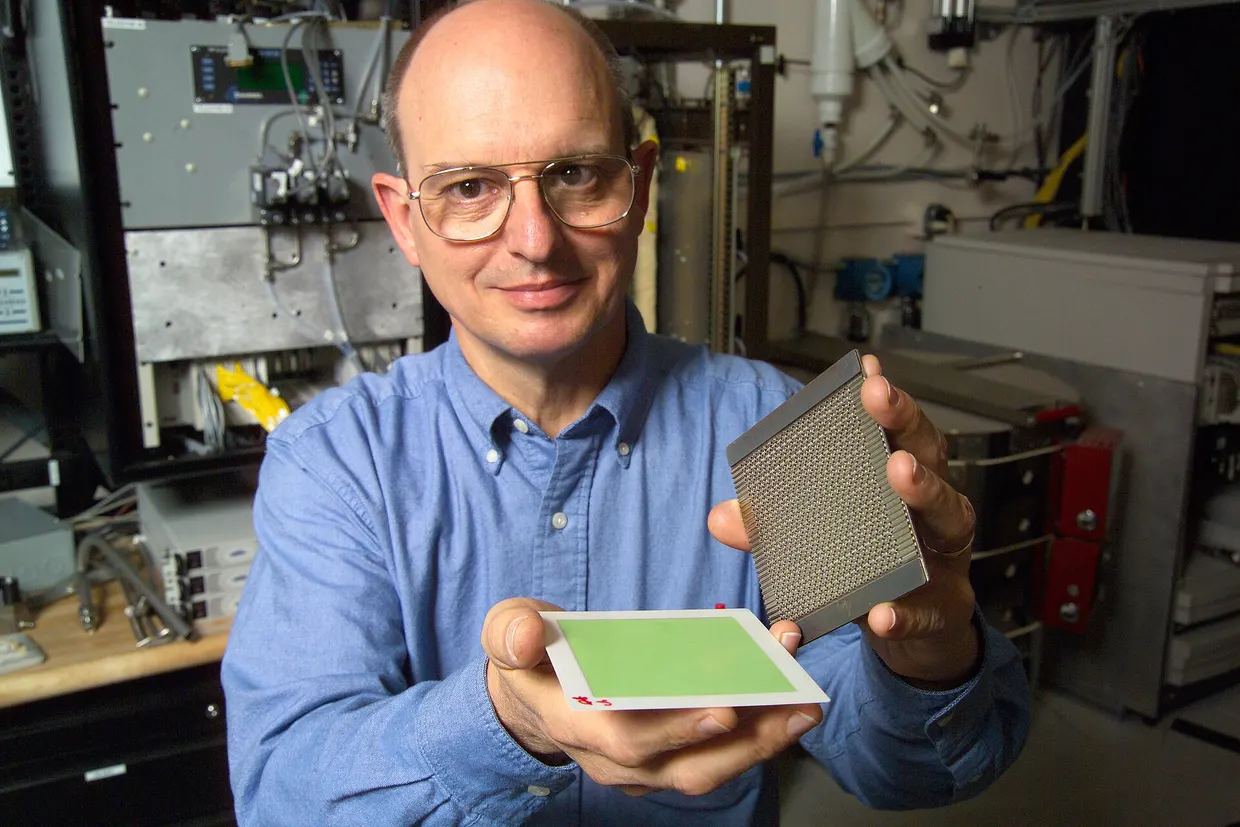
Researchers at the National University of Singapore (NUS) have developed a catalyst and a regeneration strategy for electrochemical ammonia cracking, according to eurekalert.org. The work was reported in Nature Synthesis on 27 October 2026 eurekalert.org
eurekalert.orgeurekalert.orgOpen source ↗. In laboratory tests at 80°C, the team sustained hydrogen production for over 2,000 hours at a low electrical current and for 500 hours at a substantially higher current.
Ammonia is a way to store and transport hydrogen, which produces no carbon dioxide when used in fuel cells. Electrochemical ammonia cracking uses electricity to convert ammonia into nitrogen and hydrogen, and can be done close to where the hydrogen is needed. Platinum-based catalysts used in this process gradually lose effectiveness as their surfaces oxidise and become blocked by nitrogen, which limits efficiency and durability.
Pt/Fe-NC catalyst design
The team, led by Professor Chen Wei of the NUS Departments of Physics and Chemistry, made platinum nanoparticles supported on nitrogen-doped carbon with atomically dispersed iron sites. The catalyst is called Pt/Fe-NC. Electron transfer from the Fe-NC support suppresses platinum oxidation and accelerates the rate-determining dehydrogenation step. Fe-N4 sites promote water dissociation, which helps hydrogenate poisoning nitrogen species on platinum into reactive NH-containing intermediates. This frees blocked sites and restores activity.
Under the tested conditions, the catalyst showed more than 10 times the ammonia oxidation activity of a commercially available platinum-on-carbon catalyst. It was also effective at producing hydrogen, so the same catalyst can serve both key reactions. Assistant Professor Ou Pengfei of the NUS Department of Chemistry and Professor Fan Lei of the University of Electronic Science and Technology of China collaborated on the work eurekalert.org
eurekalert.orgeurekalert.orgOpen source ↗.
Regeneration and durability
To extend operating life, the researchers combined periodic reversal of the electrical current with occasional acid washing and ammonia replenishment. This restores catalyst activity and maintains hydrogen production over long periods.
Dr Jiang Rui, a Research Fellow at the NUS Department of Chemistry, said the water-assisted regeneration approach helps prevent nitrogen from blocking the platinum surface, so the catalyst stays active for longer. Professor Chen added that the design principles may extend to other ammonia oxidation applications, including direct ammonia fuel cells. The authors note that further research is needed to evaluate the technology at larger scales.