Epigenetic blood test from Hebrew University and Weizmann detects early breast cancer with 95% accuracy
An experimental epigenetic blood test separated early-stage breast cancer from healthy samples with 95% accuracy; authors say it predicts recurrence risk better than tissue biopsy.
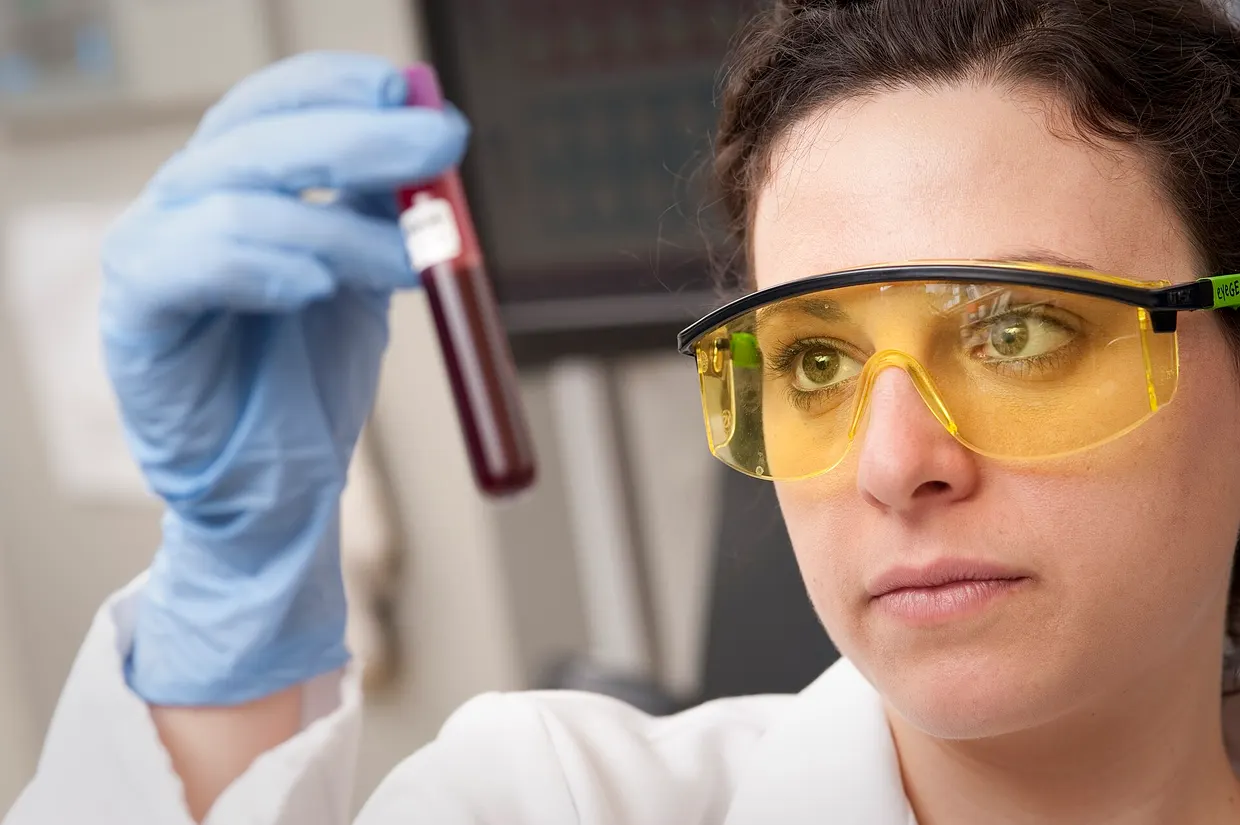
Researchers from the laboratories of Prof. Guy Ron at the Hebrew University of Jerusalem and Prof. Efrat Shema at the Weizmann Institute of Science have developed an experimental blood test that distinguishes women with early-stage breast cancer from healthy women, according to eurekalert.org. The work, carried out with physicians at Kaplan Medical Center in Rehovot, was published in Nature. eurekalert.org
eurekalert.orgeurekalert.orgOpen source ↗ The authors report that the test also outperforms conventional tissue biopsies in predicting the risk of recurrence after treatment.
Epigenetic signatures of tumors
Current liquid biopsies struggle to detect early cancer because genetic traces in the blood are very scarce and hard to read without false alarms. The team instead mapped epigenetic tags, which control how often genes are used. First, they analyzed tumor tissue from 12 women scheduled for surgery. The epigenetic tags degrade soon after removal, so samples were taken from the hospital to the lab on ice and analyzed the same day.
To find these signatures in blood, the group built on Shema's technology that reads nucleosomes, segments of DNA wrapped around proteins, released by dying cells. It uses single-molecule microscopy and fluorescent labels for dozens of epigenetic tags and can map changes in millions of nucleosomes. A 2022 study had already shown its promise for early colorectal and pancreatic cancers. Ron's physics group applied computational analysis to find patterns in the data.
Detection and recurrence risk
The test was run on blood samples from 77 breast cancer patients followed for at least five years at the Mayo Clinic in Florida, and from 30 healthy women. It reached 95% accuracy for early-stage cancer, with the tumor confined to the breast and no larger than two centimeters. eurekalert.org
eurekalert.orgeurekalert.orgOpen source ↗ According to Shema, performance did not depend on breast density or cancer type, including after the set grew to 188 patient samples with Sheba and Kaplan medical centers.
Breast cancer returns in 20 to 40 percent of cases even after apparently successful early treatment. The researchers found that tumors not considered particularly aggressive can harbor a rare population of highly invasive cells with a distinct epigenetic signature. Their differences appear to be mainly epigenetic: in lab models started from nonaggressive cells, an aggressive population always emerged. The scientists suspected these cells contribute to recurrence and looked for their signature in blood samples.