Sequence analysis of 86 Medusozoa species finds repeated identical protein changes across 600 My
Comparing protein-coding genes of 86 jellyfish and hydroid species, researchers found convergent amino acid substitutions far above chance, but not tied to shared traits such as eyes.
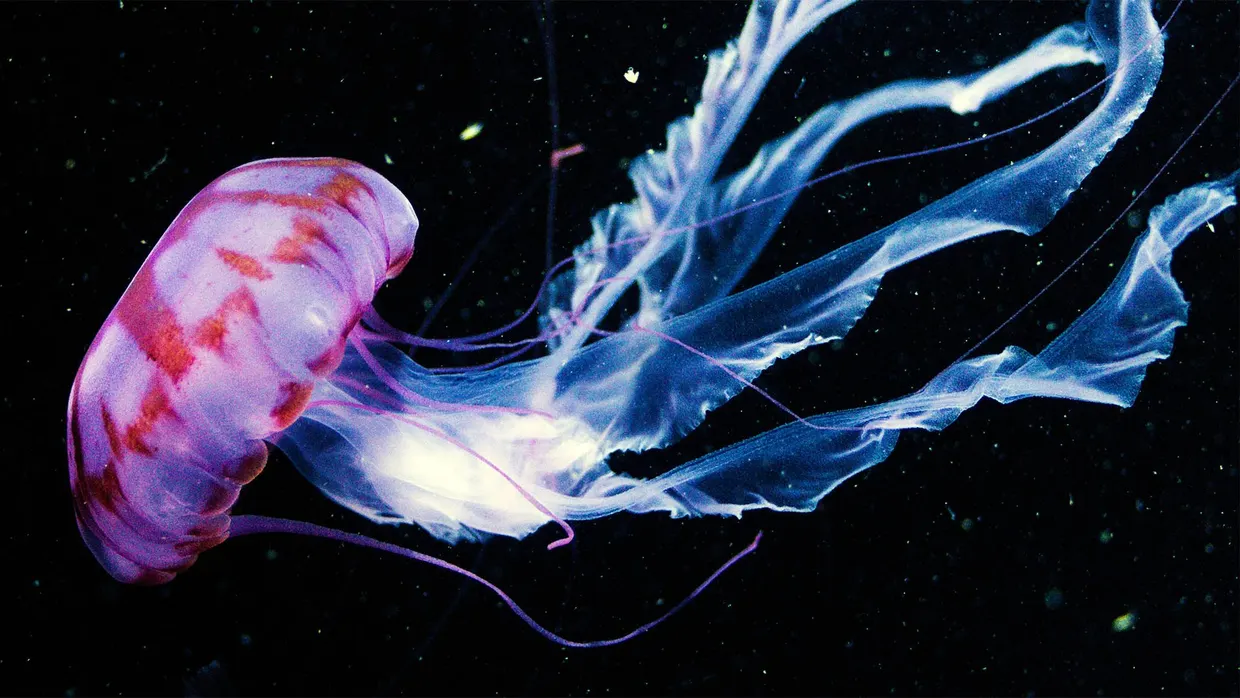
A team led by Cory Berger, a postdoctoral researcher in Todd Oakley's lab at UC Santa Barbara, compared protein-coding genes across 86 species of Medusozoa, the group that includes true jellyfish, box jellyfish and hydroids. Researchers from the University of Kansas, Texas A&M University and the University of Nebraska took part. The results were published in Proceedings of the National Academy of Sciences. The work is based on sequence comparison only; no trait was tested in the lab pnas.org
Proceedings of the National Academy of Sciencespnas.orgOpen source ↗.
The authors found that lineages separated by more than 600 My repeatedly carry the same amino acid substitution at the same position in the same protein. The frequency exceeds expectations based on random overlap.
Phylogeny and sequence comparison
To establish relationships and split times, the team built a tree of 621 species, anchored by full gene sets of 98 species, 22 of which were sequenced for this study. Dating, calibrated with 17 fossils, places the origin of Medusozoa at about 685 million years ago.
On this tree, eyes arose at least nine times, the free-swimming medusa stage was lost 41 times, and colonies changed from crusts to upright branching forms 32 times.
The authors compared the 86 species in pairs: 3,570 pairs across 9,194 gene families. They counted cases where both lineages independently changed the same amino acid to the same new one. They found 426,322 such matches, under a tenth of a percent of the branch pairs tested, present in 8,991 of the 9,194 gene families pnas.org
Proceedings of the National Academy of Sciencespnas.orgOpen source ↗.
Convergence unrelated to shared traits
The number of matches declined slightly with time since divergence. Even pairs separated by more than 600 My shared more changes than a chance model predicted. The new amino acid also tended to differ more chemically from the old one than at other changed sites, which the authors read as a sign of positive selection.
Pairs of lineages that share eyes, medusa loss or upright colonies did not show more molecular convergence than other pairs. Genes known to help build eyes appeared somewhat more often among eye-bearing pairs, but they had also been under the same kind of selection in species without eyes. Convergence was concentrated in genes that face the environment, including energy metabolism, immunity and the breakdown of foreign chemicals. Genes of internal housekeeping, such as cell division, carried the fewest changes.
Limits of the analysis
The team counted only amino acid substitutions. Changes in DNA that switches genes on and off were not analysed. The authors also note that environment-facing genes may simply evolve faster, which would give them more chances to match. For most shared changes, the selective pressure in both lineages is unknown. The authors name measuring the pressures these animals face in the sea as the next task pnas.org
Proceedings of the National Academy of Sciencespnas.orgOpen source ↗.