Darter fishes use different sex chromosomes, which reduces gene flow across two hybrid zones
Whole-genome sequencing and backcrosses in North American darters found that hybridizing lineages determine sex on nonhomologous chromosomes, which act as a barrier to gene flow.
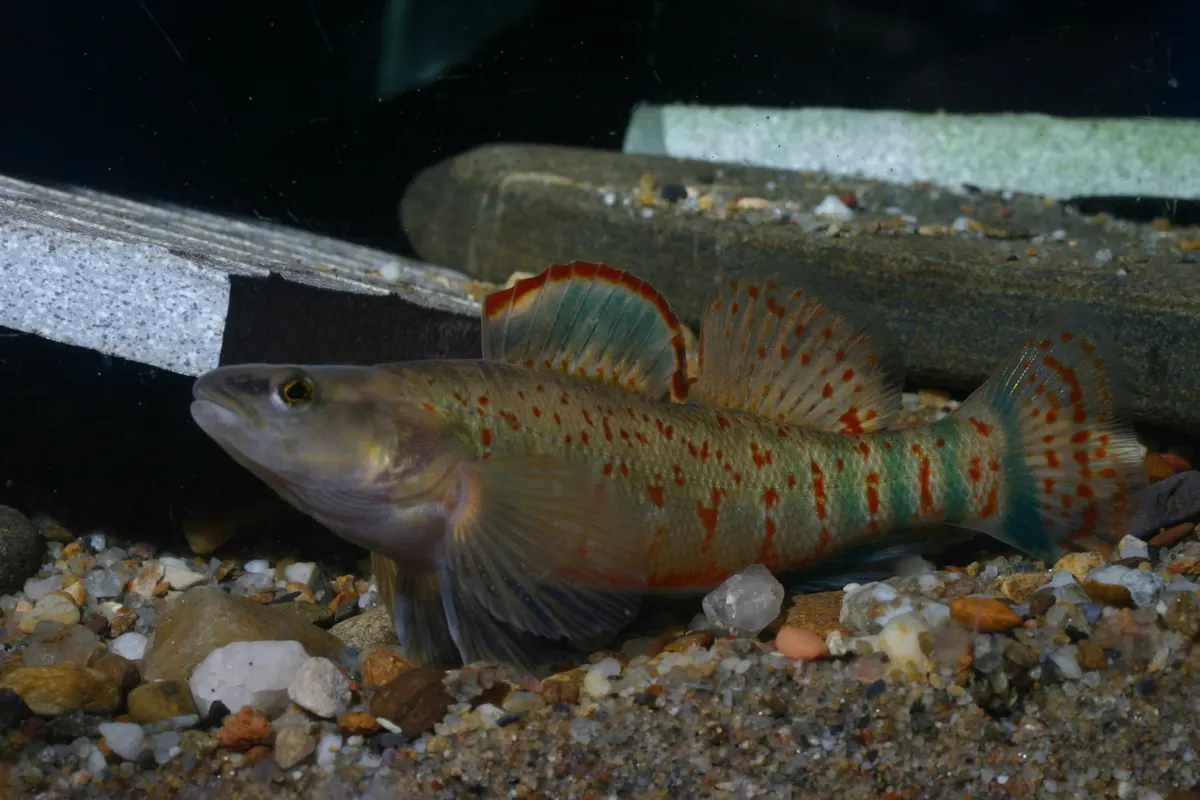
Researchers from the University of Chicago, Texas A&M University and Whitman College report in Nature Communications (nature.com, published 31 October 2026) that North American darter fishes show rapid turnover of sex chromosomes. The team combined whole-genome resequencing with experimental backcrosses. In two hybrid zones involving closely related lineages, sex determination maps to different, nonhomologous chromosomes in the hybridizing partners, which indicates two independent turnovers nature.com
nature.comnature.comOpen source ↗.
Sex chromosomes and gene flow
Sex chromosomes show reduced introgression in the hybrid zones and transmission distortion in hybrids. The authors place this in the context of theory: sex chromosomes and cytoplasmic genomes can produce especially strong and repeatable barriers to gene flow through conflict, linkage and constrained coadaptation, but tests in natural systems with ongoing hybridization have been limited.
The work grew out of an earlier observation by the same group. Orangethroat (Etheostoma spectabile) and rainbow (E. caeruleum) darters interbreed where their ranges overlap, yet remain separate species millions of years after diverging. In laboratory crosses, second-generation hybrids were overwhelmingly male, while purebred crosses gave the expected ratio of roughly 1:1. Hybrid clutches were not smaller, so the missing females were not dying as embryos, according to the group.
Mitochondrial genes and a recessive mutation
The authors also detected allele-frequency shifts associated with cytoplasmic background. They are concentrated on sex chromosomes and enriched near nuclear-encoded mitochondrial genes, which indicates that cytonuclear selection may contribute to postzygotic barriers nature.com
nature.comnature.comOpen source ↗.
Parental crosses and comparative genomic patterns support a recessive female-determining mutation underlying one of the turnovers. The authors describe this as a rare empirical example of a route to sex chromosome evolution that theory predicts but that is seldom observed. According to the group, all three species examined use an XY system, as humans do, but the chromosome that carries sex determination differs between them.
The authors conclude that dynamic sex chromosomes and their linkage context are recurring features shaping hybrid genomes and reproductive isolation despite gene flow.