Peruvian team finds Criollo-related genetics in cacao from Luya dry forest after analysing 151 accessions
Genotyping of 151 cacao accessions from Amazonas and Cusco with 15 SSR markers placed trees from Luya near Mesoamerican Criollo; the Marañón dry forest had been genetically unstudied.
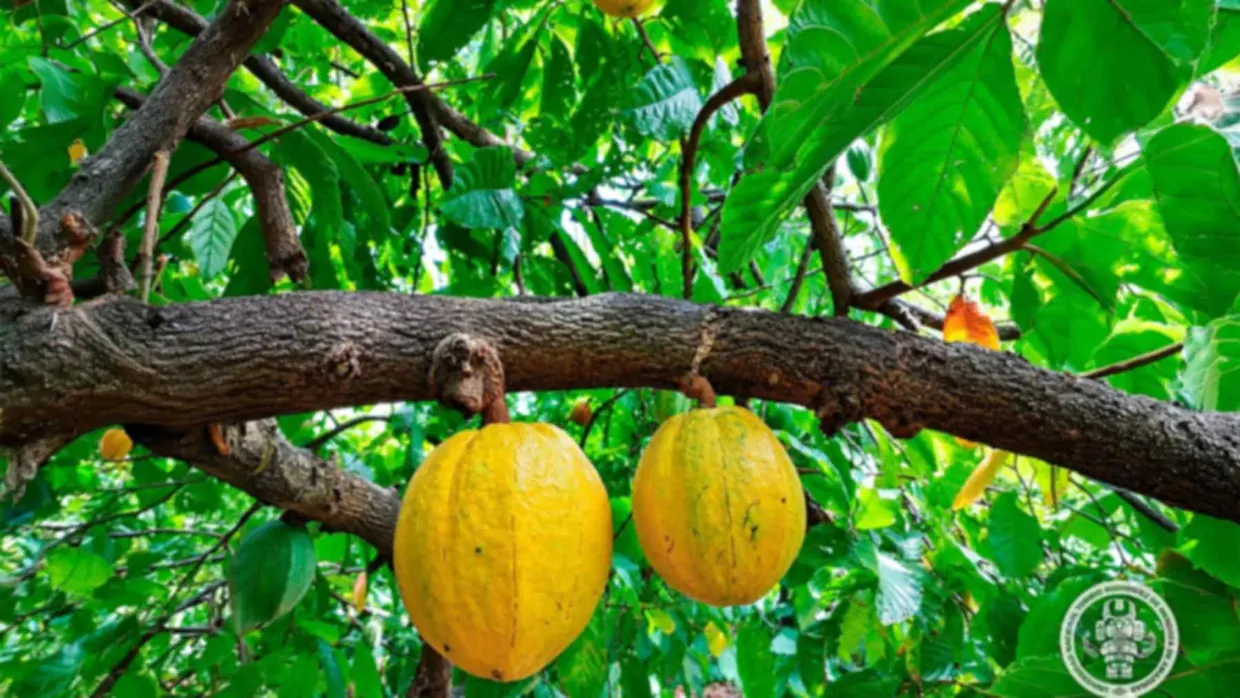
Researchers from the Universidad Nacional Toribio Rodríguez de Mendoza de Amazonas and the Universidad Nacional Intercultural de Quillabamba genotyped 151 cacao (Theobroma cacao L.) accessions from seven populations in the Amazonas and Cusco regions of Peru. The results were published in Genetic Resources and Crop Evolution springer.com
Genetic Resources and Crop Evolutionspringer.comOpen source ↗. According to the press account, 136 samples came from Amazonas and 15 from Cusco. The team used 15 simple sequence repeat (SSR) markers, six of them designed in-house from public genomic data.
Diversity of the Amazonas and Cusco accessions
The markers revealed 175 alleles, from 2 to 25 per locus. The newly developed nuclear marker INDES_mTC98 showed the highest polymorphism. Every accession had a unique multilocus genotype, so the study contained no clones.
Population structure analysis gave four genetic clusters of 2, 13, 25 and 111 individuals. They accounted for 64.90% of the total intraspecific variation, and the authors link the genetic background to five ancestral populations. The Cusco population, composed mostly of Chuncho cacao samples, differed strongly from the Amazonas populations.
Luya trees and the Criollo group
The Luya population consisted of samples from within or near the Marañón Seasonally Dry Tropical Forests protected area. Its linkage equilibrium pattern was consistent with past random sexual recombination, without the clonal propagation commonly mediated by humans springer.com
Genetic Resources and Crop Evolutionspringer.comOpen source ↗.
The Luya accessions were then genotyped with 96 single-nucleotide polymorphism markers. They grouped closely with the Mesoamerican Criollo and Piura Porcelana genetic groups. According to the press account, 12 Luya samples were tested and three were excluded because of errors. Of the remaining trees, four clustered with Criollo and five with Piura Porcelana. The Criollo-related affinities derive from a single ancestral population.
The authors state that the relationships suggest historical connections between northern Peruvian cacao populations and Criollo-related germplasm. They add that further research is needed to clarify the evolutionary history. They also describe the dry forest along the Marañón River, which is hard to reach, as an underexplored reservoir of cacao genetic diversity relevant to conservation and breeding programs.