Screen-printed 10–28 μm lithium arrays with Mg(TFSI)₂ give 504 Wh/kg in lab cells
Researchers printed isolated lithium microdiscs on copper; in laboratory cells the anodes ran over 260 cycles, with a calculated 504 Wh/kg at stack level.
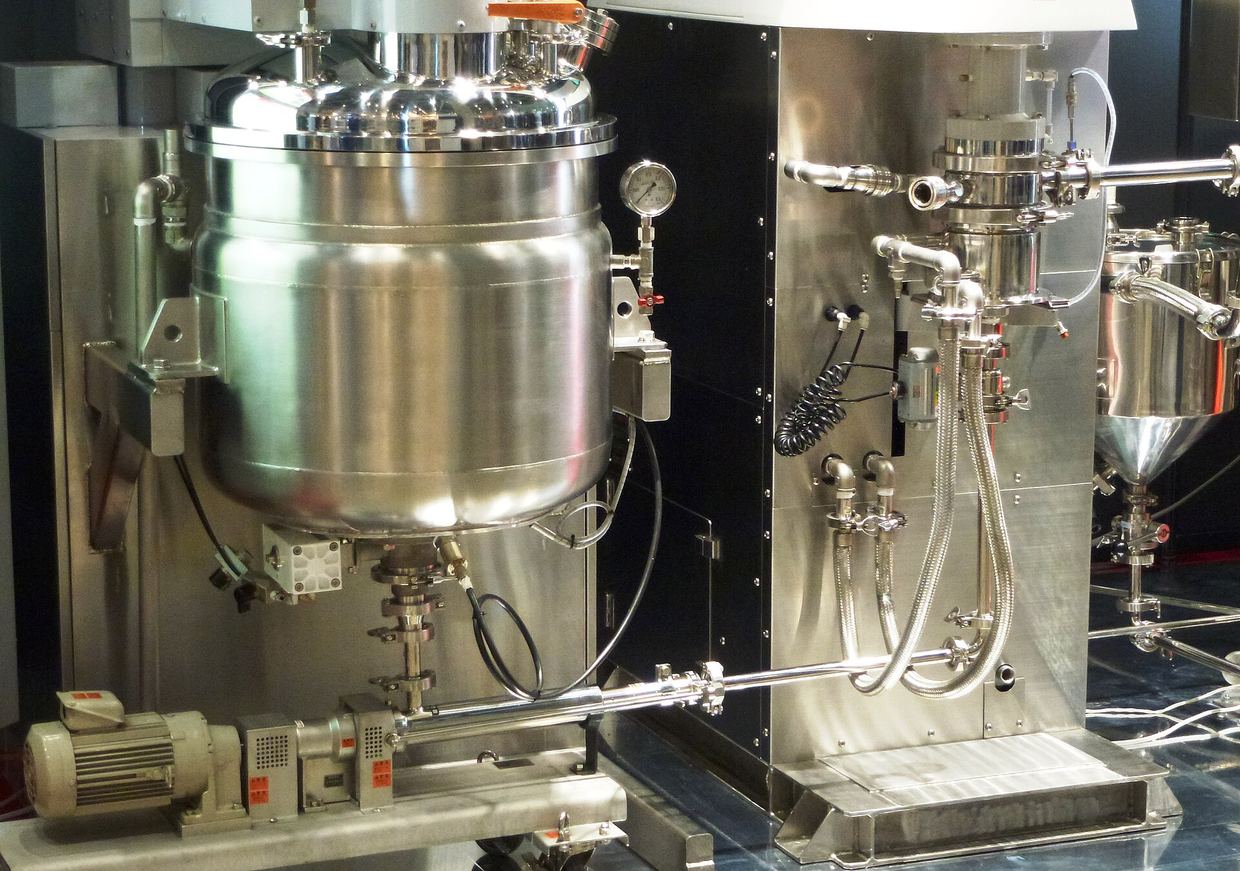
Researchers have described a screen-printing method for making ultrathin lithium metal anodes, in a paper published in Nano-Micro Letters on 21 August 2026. Molten lithium was printed through a patterned mask onto copper as isolated microdiscs, giving arrays with equivalent thicknesses of 10, 20 and 28 μm doi.org
Nano-Micro Lettersdoi.orgOpen source ↗. The team also demonstrated production over an area of about 30 × 10 cm²
doi.org
Nano-Micro Lettersdoi.orgOpen source ↗. The anodes were tested in liquid-electrolyte and solid-state laboratory cells.
Printed lithium microdisc arrays
Ultrathin lithium lowers battery mass, but molten lithium wets copper current collectors poorly. It forms droplets instead of spreading evenly, so uniform continuous films are hard to make doi.org
Nano-Micro Lettersdoi.orgOpen source ↗. Conventional fabrication methods can also require expensive equipment or complex processing steps.
Instead of covering the whole copper surface, the researchers printed discrete discs. Changing the size, spacing and thickness of the discs sets the amount of lithium on the electrode. According to the authors, the gaps between the discs accommodate volume changes during operation and reduce mechanical stress.
Mg(TFSI)₂ interphase and cell results
Because thin anodes contain little lithium, its loss during cycling matters more. The researchers added magnesium bis(trifluoromethanesulfonyl)imide, Mg(TFSI)₂, to molten lithium. During processing it reacts with lithium to form LiF, Li₃N and Li₂S, as well as lithium–magnesium alloys doi.org
Nano-Micro Lettersdoi.orgOpen source ↗. These inorganic particles favour homogeneous lithium deposition and an inorganic-rich solid electrolyte interphase, which together suppress consumption of active lithium
doi.org
Nano-Micro Lettersdoi.orgOpen source ↗.
In a liquid-electrolyte cell, an anode with an equivalent lithium thickness of 10 μm and a lithium iron phosphate cathode kept stable performance for more than 260 cycles, with Coulombic efficiency above 99.8% doi.org
Nano-Micro Lettersdoi.orgOpen source ↗. The corresponding unmodified lithium array lost capacity much faster.
With high-loading nickel-rich cathodes, stack-level calculations for a 20 μm-equivalent lithium anode gave a gravimetric energy density of 504 Wh kg⁻¹ and a volumetric energy density of 1071 Wh L⁻¹ doi.org
Nano-Micro Lettersdoi.orgOpen source ↗. These are calculated values, not measurements on a finished battery.
In solid-state cells with an in situ polymerized gel electrolyte, the lithium arrays also improved cycling with high-loading cathodes doi.org
Nano-Micro Lettersdoi.orgOpen source ↗.
Sources · 2
Found a mistake?Read also