Trento team: 50 oil droplets with two dyes self-assemble into a raft with a blue core and red ring
In an experiment with 50 self-propelled oil droplets on water, a minor dye difference changed surface tension and produced a reproducible ordered structure, the authors report.
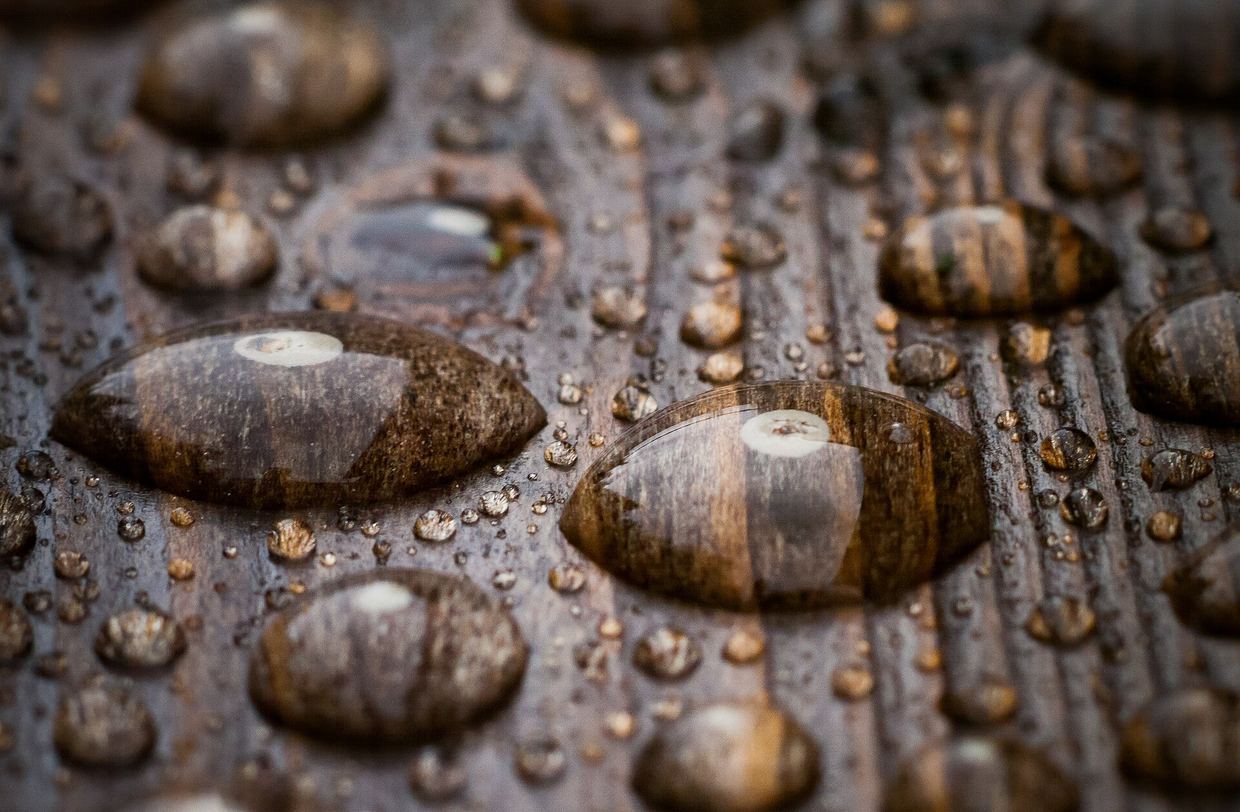
A team led by the University of Trento reports in npj Soft Matter an experiment with 50 self-propelled oil droplets floating on the surface of an aqueous solution. Twenty-five droplets were stained red and 25 blue. According to the authors, this seemingly minor chemical difference substantially changes the interfacial tension of the droplets and produces collective behavior that differs qualitatively from that of a homogeneous set of droplets doi.org
npj Soft Matterdoi.orgOpen source ↗. The work involved Roberto Menichetti and Raffaello Potestio, Martin Hanczyc and Silvia Holler, first author Matteo Scandola (Sorbonne University) and Richard Löffler (University of Copenhagen).
Setup and droplet tracking
The droplets are active: they release a substance that makes them move on their own, converting energy from an internal chemical reserve into motion. The authors say the dye was not only a label. It slightly altered the droplet surface and the rate at which the droplets consumed their "fuel" doi.org
npj Soft Matterdoi.orgOpen source ↗.
The researchers applied a tracking pipeline developed ad hoc to three independent realizations of the system. Analysis of the trajectories showed a quantitatively reproducible evolution that unfolds in a sequence of qualitatively distinct stages doi.org
npj Soft Matterdoi.orgOpen source ↗.
Five stages of self-assembly
According to the authors, the system passes through five reproducible phases. At the start the droplets move fast, collide and bounce off one another. As fuel is consumed, the blue droplets slow down first and begin to stick together. The red droplets, still fast and active, trap the blue ones, push them toward the centre and confine them there doi.org
npj Soft Matterdoi.orgOpen source ↗. When the fuel runs out, activity stops.
The final state is a motionless raft with a core of blue droplets enclosed by an outer ring of red droplets. The authors state that if the droplets had been equally active, they would have mixed randomly without forming a concentric structure doi.org
npj Soft Matterdoi.orgOpen source ↗.
They point to the combination of high sensitivity to minimal physicochemical heterogeneity and strict reproducibility at the macroscopic level as one of the notable features of the system doi.org
npj Soft Matterdoi.orgOpen source ↗.
Authors' stated aims
The group places the work in the field of bio-inspired systems. They say the results offer a way to guide the autonomous assembly of matter by acting on the speed and activity of its constituents, with no electronic parts or physical sensors. As possible directions they name adaptive and self-assembling materials and liquid robotic devices.