California Insect Barcoding Initiative barcodes over 1 million specimens, estimates 61,000+ species
Researchers barcoded more than one million insect specimens across California and estimate at least 61,000 species in the state, as delimited by DNA barcode sequences.
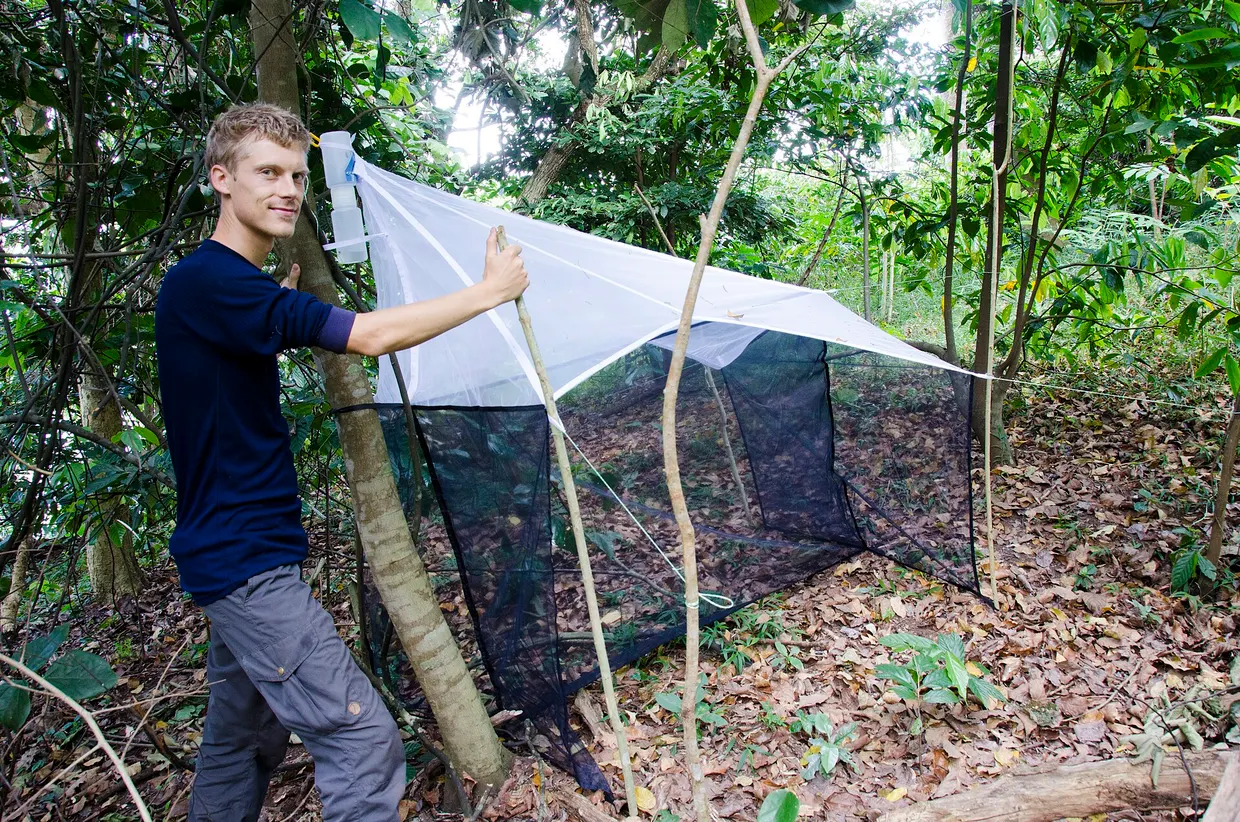
The California Insect Barcoding Initiative has barcoded more than one million insect specimens collected across California, according to a study in Ecography. Samples were gathered mainly in 2022–2024 at 72 longer-term Malaise trap sites, plus at 454 additional locations where varied collecting methods were used wiley.com
Ecographywiley.comOpen source ↗. The work is led by the Natural History Museum of Los Angeles County with several other California institutions.
The project combines two sampling strategies. Standardized Malaise trapping makes sampling replicable, while opportunistic collecting widens taxonomic coverage. The goal is a publicly accessible, statewide DNA-barcode reference library for California insects. Such a library is meant to support scalable surveys and baseline biodiversity measurements.
Species estimate
Preliminary completeness analyses suggest that current sampling captures roughly 65–69% of the fauna. From this the authors derive a conservative minimum of about 61,000 insect species in California, with species delimited by their DNA barcode sequence. The title of the paper states that at least one third of the state's insect biodiversity remains undiscovered.
The authors stress that the richness estimates and spatial patterns are explicitly provisional. They expect them to change as sampling gaps are filled wiley.com
Ecographywiley.comOpen source ↗.
Spatial patterns and open data
Using all sequenced specimen records, the team built rule-based range interpolations constrained by ecoregion and vegetation type. These were used to infer species richness across the state. Current peaks of potential richness lie in the Southern California Mountains and Mojave Basin and Range ecoregions, and areas of low potential richness were also identified.
In comparisons of ecoregions, the Mojave Basin and Range had the greatest number of species, according to the publication's coverage. Researchers also report that each region, and even individual sites within one ecoregion, hosts a distinct insect community.
All sequence data, specimen images and occurrence records are publicly available through the Barcode of Life Datasystem wiley.com
Ecographywiley.comOpen source ↗. The authors describe this as the first large-scale DNA barcode-based survey of California insects. They say it provides a basis for tracking change over time, testing drivers of insect diversity and prioritizing regions for conservation and targeted inventory. The initiative is described as a $6 million project.