Fermi-LAT 2FLE catalog lists about 450 gamma-ray sources at 20–200 MeV from 14 years of data
An international team used 14 years of Fermi-LAT photons to map the poorly explored MeV range; about 15% of the catalogued sources remain unidentified.
An international team has published the Second Catalog of Low-Energy Fermi-LAT Sources (2FLE) in The Astrophysical Journal Supplement Series (dx.doi.org). The catalog is based on 14 years of Fermi-LAT photons in the 20–200 MeV range and maps about 450 gamma-ray sources dx.doi.org
dx.doi.orgdx.doi.orgOpen source ↗. According to the Nanowerk summary, this doubles the number of known objects in this energy range, and about 15% of them are still unidentified.
Why the MeV range is hard to observe
Spaceborne gamma-ray astronomy began in 1961 with Explorer 11. Even so, the MeV regime (about 0.1–100 MeV) remains largely underexplored compared with the X-ray, GeV and very-high-energy ranges. The authors name three reasons. First, Compton scattering dominates photon–matter interaction at these energies, which makes the direction of the original photon hard to determine and limits the effective area of instruments. Second, the instrumental background is high because irradiated materials in space become activated. Third, the technological limits of silicon-pixel sensors have only recently begun to be overcome.
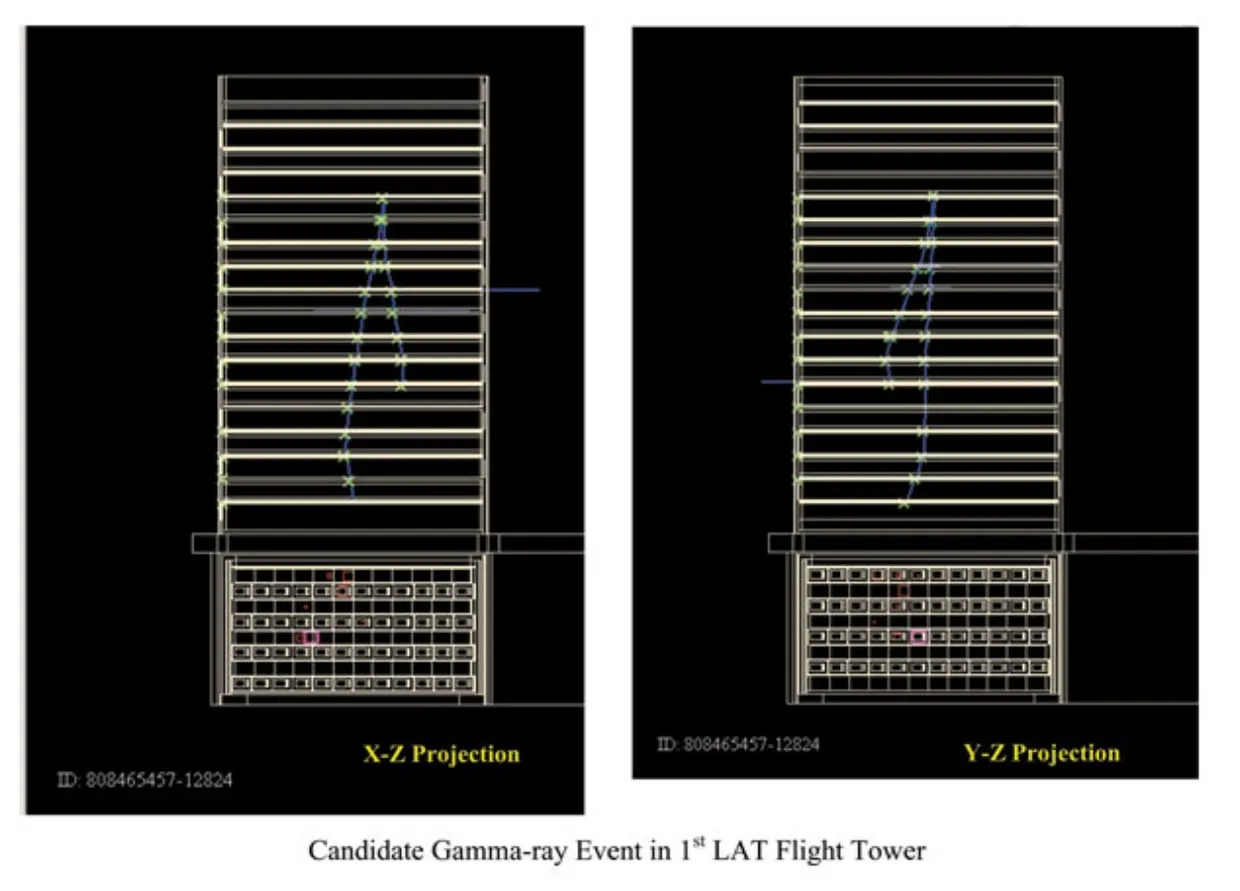
Fermi-LAT, launched by NASA in 2008, is currently the most sensitive instrument in the MeV regime and covers 20 MeV–2 TeV. General LAT catalogs such as 4FGL represent the GeV sky rather than the MeV one, because the point-spread function and effective area are optimal near 1 GeV.
From 1FLE to 2FLE
The first low-energy catalog, 1FLE, covered 31.6–100 MeV. It used the wavelet code PGWave and 8.75 years of data, and detected 198 sources at a significance above 3σ dx.doi.org
dx.doi.orgdx.doi.orgOpen source ↗. The new catalog extends the range to 200 MeV and uses 14 years of observations.
More than 80% of the 5835 sources in the 4FGL-DR4 catalog have a power-law spectral index above 2, so most LAT-detected sources emit most of their energy in the MeV rather than the GeV band. In the Galaxy, pulsars, pulsar wind nebulae and supernova remnants are expected to be present in this band; beyond it, active galactic nuclei are predicted to dominate.
Lea Marcotulli, a Helmholtz Investigator Group Leader at DESY, said that without information at all energies the picture of how particles are accelerated in the Galaxy and beyond will remain incomplete. The summary also notes that the catalog was prepared while a mission dedicated to the MeV band is still awaited.