Two brain-network subtypes found in 490 type 2 diabetes patients, with different odds of MCI
Frontiers in Endocrinology: MRI-based morphometric networks split patients with type 2 diabetes into two subtypes, one with relatively preserved cognition and one with higher odds of MCI.
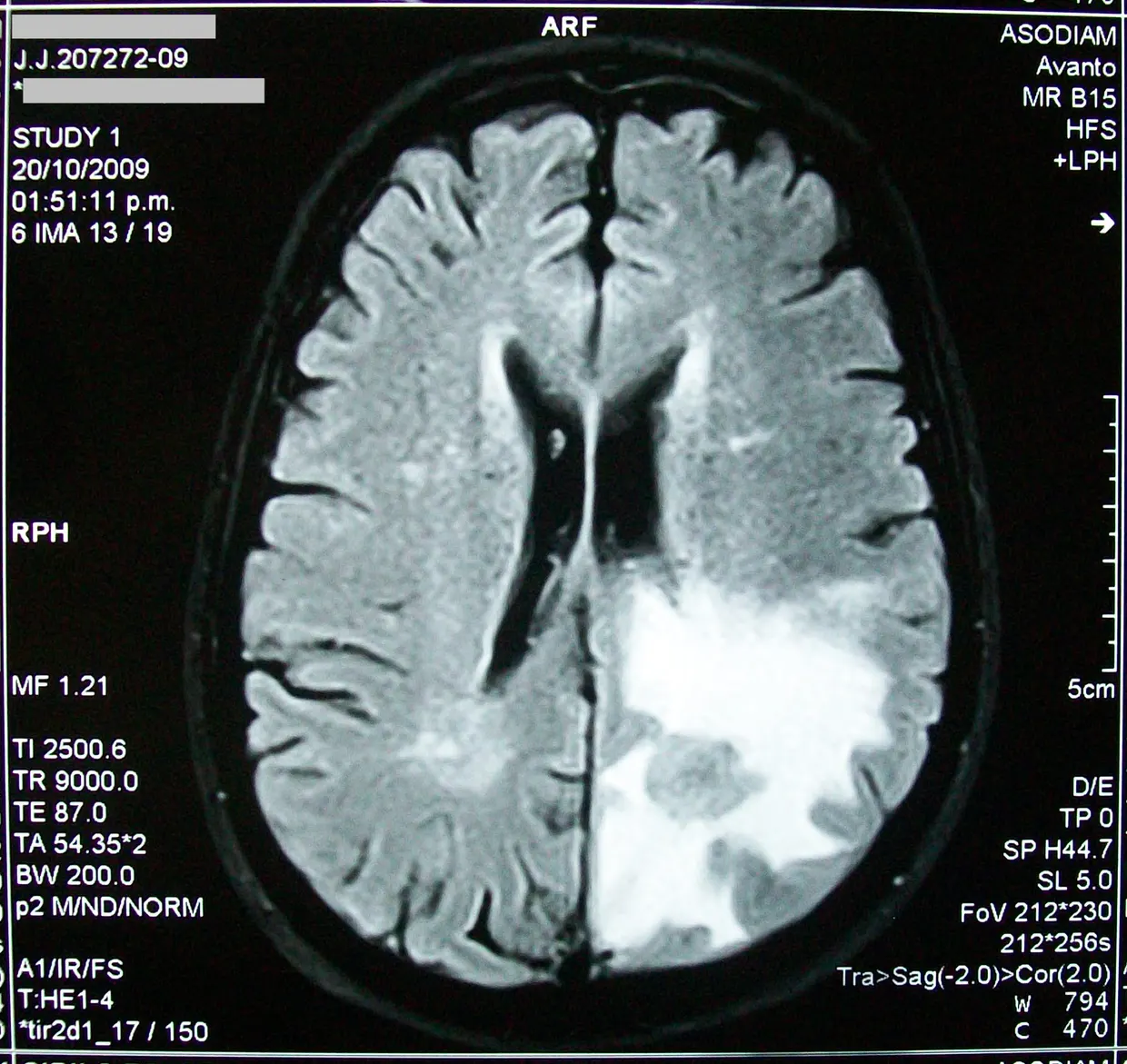
Researchers from Guangzhou University of Chinese Medicine, the University of North Carolina at Chapel Hill Biomedical Research Imaging Center and other Guangzhou institutions identified two imaging-defined subtypes of brain alterations in type 2 diabetes mellitus (T2DM). The work was published in Frontiers in Engocrinology on 12 November 2026 (doi.org/10.3389/fendo.2026.2014196) and included 490 patients with T2DM and 288 healthy controls. According to the authors, the subtypes differ in how the cortical network is reorganized and in the odds of mild cognitive impairment (MCI) frontiersin.org
doi.orgfrontiersin.orgOpen source ↗.
Morphometric similarity networks and the HYDRA method
Patients with T2DM show heterogeneous brain alterations, and most earlier neuroimaging studies relied on case-control comparisons that describe only the average effect. The team instead built individual-level morphometric similarity networks (MSNs) from four cortical features: gray matter volume, surface area, cortical thickness and mean curvature.
To separate subtypes, the authors used heterogeneity through discriminative analysis (HYDRA). It is a semi-supervised framework that models differences between patients and healthy controls while identifying several disease-related patterns among the patients. Group differences were assessed with general linear models, the link between subtypes and MCI with multivariable logistic regression, and the relations among MSN changes, metabolic markers and cognition with linear regression and mediation analysis.
Two subtypes with different cognitive profiles
The first subtype, T2DM1, was characterized by increased MSN strength and relatively preserved cognition. The second, T2DM2, showed widespread MSN reductions and higher odds of MCI. In this subtype the authors also noted lower scores on the MMSE scale frontiersin.org
doi.orgfrontiersin.orgOpen source ↗.
The visual, somatomotor and ventral attention networks contributed to the separation of the subtypes. They showed distinct associations with glycated hemoglobin, glucose response and insulin-related measures.
Reduced MSN strength of the limbic network emerged specifically in T2DM2. It was associated with poorer cognition and higher odds of MCI, and it mediated the association between hyperglycemia and cognitive function. The authors suggest that this reduction may serve as an imaging marker of the link between metabolic dysfunction and cognitive impairment.
The publication reports associations between imaging phenotypes, metabolic measures and cognitive scores. The excerpt available for this review does not include data on how the subtypes change over time.