Cemig and Huawei deploy a 450 MHz private wireless network for grid devices
Cemig moved distribution-device backhaul from leased public networks to a private 450 MHz network; per the release, terminal connectivity rose to 99%.
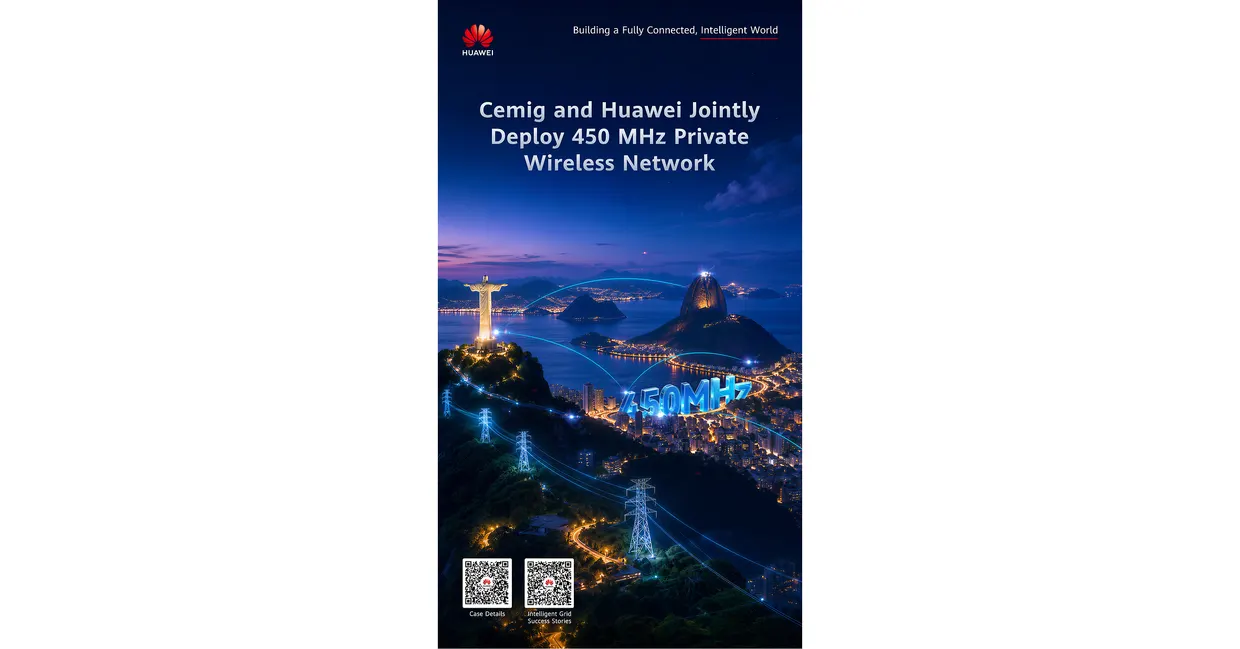
Cemig and Huawei have deployed a 450 MHz private wireless network for the distribution grid, according to a release published on prnewswire.com on Nov. 13, 2026 (Johannesburg). The companies describe it as the first commercial 450 MHz private wireless network for the power sector in Latin America. prnewswire.com
prnewswire.comprnewswire.comOpen source ↗ Previously, Cemig's distribution devices relied primarily on leased public networks for data backhaul, which the release says carried significant risks.
Cemig chose Huawei as its strategic partner after multiple rounds of technical evaluation and global use case research. After field testing, the customer said, as quoted in the release, that Huawei submitted the best proposal in the bidding process, offering a solution that meets current distribution grid modernization requirements and scales for future renewable energy integration.
Problems with public networks
The release names two problems. The first is coverage gaps: carrier network coverage in Brazil stands at only about 50%, and many distribution devices in remote, uninhabited areas stayed in communication dead zones for extended periods. When faults occurred, personnel had to drive long distances for repairs and routine inspections.
The second is reliability: the public network SLA was not designed for power grid operations. In the rainy season, severe weather frequently caused base station outages or microwave link interruptions, and the connectivity rate of distribution devices fell from 90% to around 60%. Remote control commands then could not reach the devices, and personnel had to travel to sites for manual operations, which delayed power restoration. prnewswire.com
prnewswire.comprnewswire.comOpen source ↗
Reported results
According to the release, the private network lifted distribution terminal connectivity to 99% and communication reliability to 99.99%. The release states that the network can significantly improve line losses, SAIDI and SAIFI, which helps Cemig avoid regulatory penalties and meet ANEEL's regulatory requirements.
The network serves as the communications backbone for power production operations and provides last-mile connectivity for current distribution automation. The release adds that it supports future applications: massive smart meter integration, rapid distributed PV adoption and complex microgrid management. Further details are on Huawei's case study page referenced in the release.
Sources · 1
Found a mistake?Read also