Valladolid Space Carbon Hub plans €25M for first CO2-measuring satellites in 2027–2028
The Valladolid project, backed by Renacer Carbono, Grasp and Everimpact, plans optical satellites to measure CO2 emissions and forest absorption for carbon credit verification.
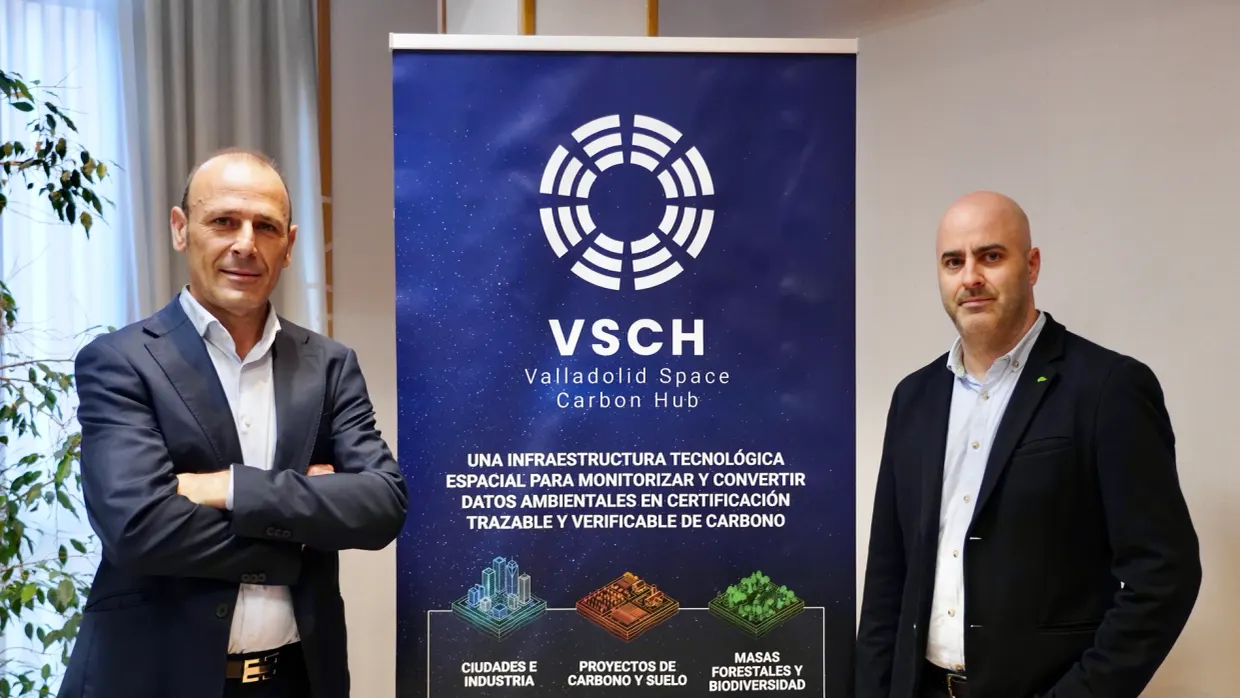
Valladolid Space Carbon Hub (VSCH) plans to invest €25 million in a space-based infrastructure to measure and verify carbon credits, CO2 emissions and absorption, and forest health. CEO Félix de los Ríos said this at the project presentation, according to larazon.es larazon.es
larazon.eslarazon.esOpen source ↗. The company is based in Valladolid, Spain, and plans to have a satellite constellation in 2030.
The project was set up by the environmental developer Renacer Carbono and the technology companies Grasp (Valladolid) and Everimpact (Paris). Everimpact president Alain Retière presented it last week at the COP31 sessions in Antalya, Turkey. VSCH has the backing of Iberaval SGR and the institutional support of the Valladolid City Council.
Satellite plan and timeline
According to the business plan, the first two satellites are to launch in 2027 and 2028, with an investment of €25 million. The investment is to rise to €300 million by 2030, the year in which a constellation of 34 satellites is planned. By then the company expects to employ about a hundred highly qualified staff, including engineers.
The first pair of satellites is to carry optical instruments that measure CO2 emission and sequestration as well as forest health larazon.es
larazon.eslarazon.esOpen source ↗. They will be operated from a new control center, together with a calibration laboratory, both in Valladolid. CTO David Fuertes said his team has spent years developing optical instruments and algorithms that now fly on reference missions.
Carbon market verification
De los Ríos said the carbon market is expensive, slow and fragmented, because management remains largely manual, with low traceability and high operating costs. In his view the market needs an integrated infrastructure to measure, verify and certify carbon.
VSCH is built on three capacities. The first is space: high-frequency satellite observation. The second is MRV (measurement, reporting and verification), based on fusing satellite data with algorithms. The third is the market: project management, concessions and commercial certification. The company combines satellites with ground sensors to monitor greenhouse gas emissions in forests, cities, ports, supply chains and territories.
The company says the technology will shorten certification times and reduce audit costs while raising accuracy through continuous data larazon.es
larazon.eslarazon.esOpen source ↗. VSCH also commits to allocate part of its profits to social projects.