Sixteen44 cut methane in a Swiss barn by 60–70% with a plasma oxidation demonstrator
The EPFL-incubated startup tested a plasma oxidation unit at the Strickhof farm. It treats methane diluted below 5%, the level typical for barns.
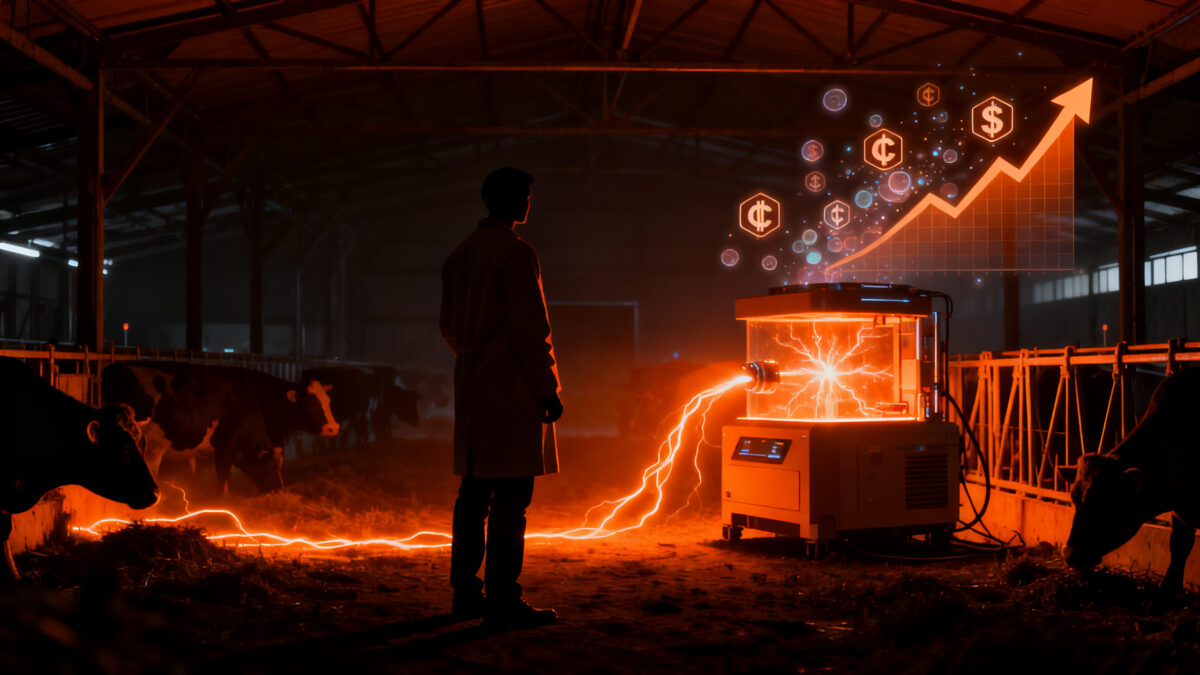
Sixteen44, a Swiss startup incubated at the EPFL Innovation Park in Lausanne, reduced methane concentration inside a barn by 60–70% using a plasma oxidation device, ecosistemastartup.com reports ecosistemastartup.com
ecosistemastartup.comecosistemastartup.comOpen source ↗. The test took place at the Strickhof experimental farm in Lindau, canton of Zurich. According to the company, it is the world's first demonstration installation able to treat highly diluted methane.
Diluted methane and how the device works
Livestock account for about a third of global human-caused methane emissions. Until now, available technology could not act on the gas when it is diluted below 5%, which is how it occurs in most barns. Cow methane is produced by bacteria in the digestive tract during fermentation of plant fibre and is released mainly through the mouth, by breathing or belching. Unlike CO2, it is chemically inert, so capturing it directly from air is costly and energy-intensive.
The device resembles a ventilation system for livestock buildings. Inside, an electrical discharge produces highly reactive particles that convert methane (CH4) into water and carbon dioxide; a catalyst accelerates the reaction. It is enough to pass the gas through a heated catalyst, which avoids the costliest step of carbon capture systems, extracting the gas from air, says Cyril Brunner of ETH Zurich. The unit operates at about 40 °C, compared with 400–500 °C for other technologies that remove low-concentration methane. According to Ramsay, methane is about 80 times more potent than CO2 over 20 years.
Limits, cost and next steps
Cofounder William Ramsay, a chemist, acknowledges the limits. The system cannot remove methane produced by animals grazing outside the barn, and oxidation yields CO2, so one greenhouse gas is converted into another. He points to the difference in potency between the two gases and notes that the resulting CO2 could be captured and stored with other technologies ecosistemastartup.com
ecosistemastartup.comecosistemastartup.comOpen source ↗.
Sixteen44 has raised 750,000 Swiss francs from public funds, private investors and a crowdfunding campaign, and aims to raise another million. According to Ramsay, a unit for a medium-sized Swiss barn would cost 40,000–50,000 francs. The next step is to measure the system's efficiency at a large livestock farm and at a wastewater treatment plant in Switzerland. The company's revenue model is based on carbon credits for avoided methane emissions, converted to CO2 equivalent and sold on carbon markets.