Pteropus rufus: skulls of recent Madagascar fruit bats about 6% smaller in 121 museum specimens
Researchers compared 121 museum specimens of a Madagascar fruit bat. The cause of the difference is unknown, and selective hunting of larger animals remains only a hypothesis.
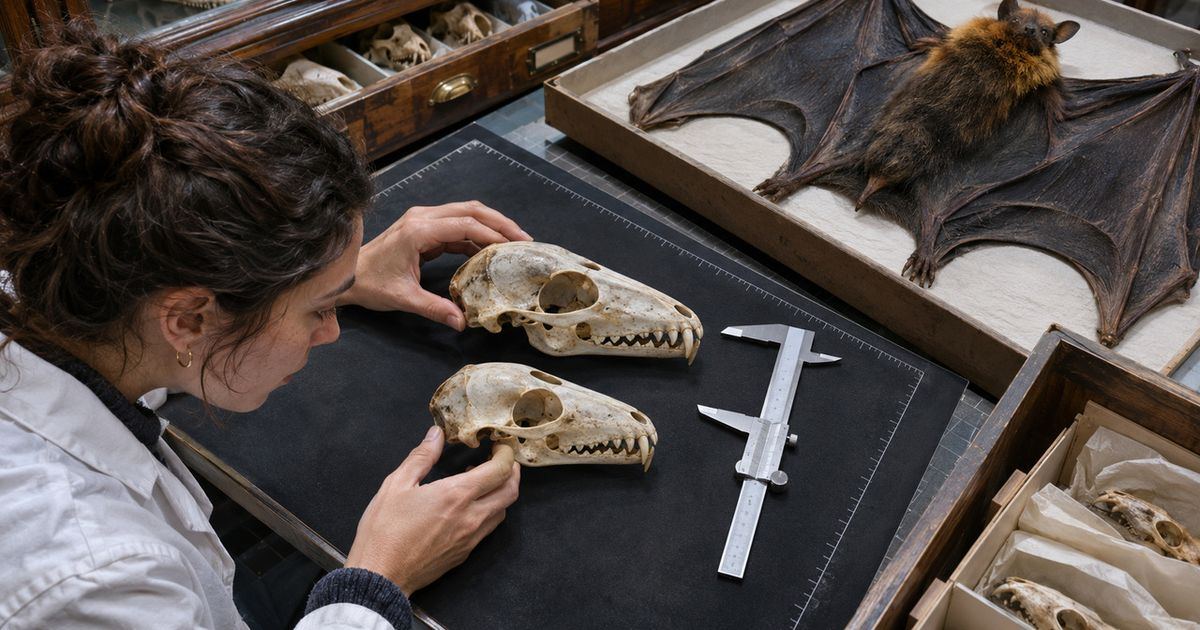
Researchers who compared 121 Madagascar fruit bats (Pteropus rufus) preserved in museum collections found that skulls of recent specimens are on average about 6% smaller than older ones, according to Catraca Livre. catracalivre.com.br
Catraca Livrecatracalivre.com.brOpen source ↗ Steven Goodman and colleagues assembled specimens from nine museums and examined twelve dimensions.
catracalivre.com.br
Catraca Livrecatracalivre.com.brOpen source ↗ Emily Cornelius Ruhs became interested in whether present-day animals differ from preserved ones.
Skulls of animals collected before the 1980s were on average about 6% longer than those collected later, the researchers reported. catracalivre.com.br
Catraca Livrecatracalivre.com.brOpen source ↗ This describes the groups examined, not each individual bat. The samples are historical specimens collected at different times and places, so they may not equally represent the whole island population.
What was measured
Pteropus rufus is a frugivorous fruit bat that takes part in seed dispersal. It is a bat, not a terrestrial fox. The comparison focused on the skull and teeth, which preserved specimens allow to be measured. The teeth did not change uniformly: some measures decreased and one moved in the other direction, so the whole body cannot be assumed to have shrunk in the same way. catracalivre.com.br
Catraca Livrecatracalivre.com.brOpen source ↗
Comparing adults and juveniles helped reduce the chance that the difference came only from more young animals in the recent period. The historical makeup of the collections nevertheless remains a methodological caveat. catracalivre.com.br
Catraca Livrecatracalivre.com.brOpen source ↗ A shorter skull also does not automatically mean an equal reduction in wingspan, mass or height. The study looked for consistency across several dimensions rather than relying on a single visual observation.
Hunting hypothesis and its limits
One hypothesis is that expanding commercial hunting could preferentially remove larger individuals, which are easier to notice or yield more meat. If this repeated over generations, the remaining population could change. catracalivre.com.br
Catraca Livrecatracalivre.com.brOpen source ↗ However, the study did not track births, mortality and inheritance of traits, so a time trend alone does not identify the mechanism.
catracalivre.com.br
Catraca Livrecatracalivre.com.brOpen source ↗
Habitat change, food availability and sample composition also need examination. Early collectors may have preferred exceptionally large animals or visited regions different from those sampled today. Effects on seed dispersal and forest regeneration were not measured directly. catracalivre.com.br
Catraca Livrecatracalivre.com.brOpen source ↗
Future measurements of living animals and genetic analyses could help separate heritable change from the effects of nutrition and environment. They could also show whether the trend seen in the collections continues today and whether it varies between regions of Madagascar. catracalivre.com.br
Catraca Livrecatracalivre.com.brOpen source ↗