INGV: Neapolitan Yellow Tuff eruption dated to 13,980 years ago, magma volume 16–20 km³
A study in Earth-Science Reviews puts the magma volume of the Campi Flegrei eruption at under half of earlier estimates and finds four separate reservoirs instead of one chamber.
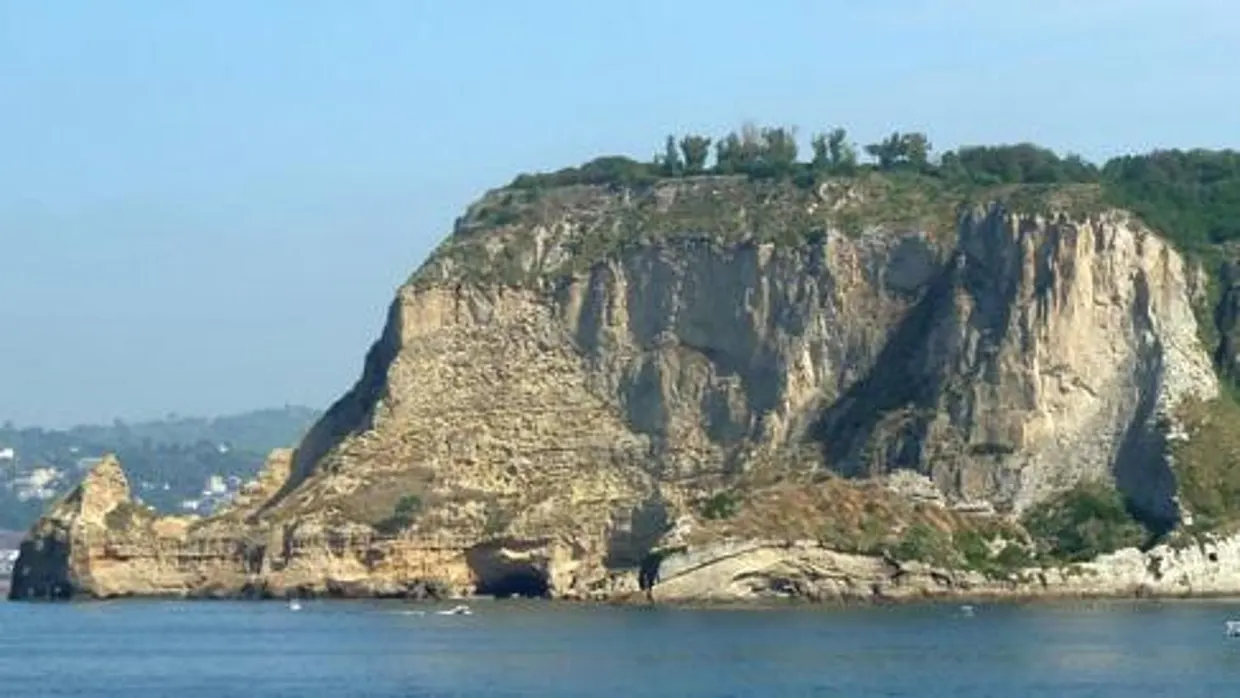
A team from the National Institute of Geophysics and Volcanology (INGV) and the University of Bari Aldo Moro has published a study on the Neapolitan Yellow Tuff eruption, one of the major volcanic events in the history of Campi Flegrei, according to Le Scienze. The work appeared in Earth-Science Reviews. Its authors report that the eruption was smaller than previously thought, but its dynamics were considerably more complex lescienze.it
Le Scienzelescienze.itOpen source ↗.
The researchers worked with CNR-IGAG, the universities of Bologna, Siena and Molise, and a consortium of French universities and laboratories (Paris-Saclay, LSCE, GEOPS).
New date, volume and magma sources
The analysis covered an area of 80 km, from inside the caldera to the most distant zones. It combined decades of earlier research with new stratigraphic and geochemical data.
The new age of the eruption is 13,980 years ago, with the margin of error reduced to 140 years. The estimated volume of emitted magma is 16 to 20 cubic kilometres, less than half of previous estimates lescienze.it
Le Scienzelescienze.itOpen source ↗.
The magma did not come from a single large chamber. According to the authors, it was fed by at least four distinct underground reservoirs that emptied one after another. First author Gino González, an INGV researcher, describes the eruption as a complex event made of many pulses and different magmas. INGV researcher Roberto Isaia adds that pre-existing fractures guided the opening of the eruptive vents.
Why these deposits matter
The deposits of this eruption, which occurred about 14,000 years ago, form the foundations of the city of Naples. Over time they turned into a soft rock that is easy to work. Since Roman times it has been used to build aqueducts, fortifications and the urban fabric of ancient cities such as Partenope, Pompeii and Herculaneum. Much of Naples still rests on these deposits, visible at Castel Sant'Elmo and the Ponti Rossi.
Roberto Sulpizio, professor at the University of Bari and INGV associate, says that understanding how large past eruptions unfolded, how much magma was emitted and how the caldera collapsed helps refine hazard scenarios for an area of about 400,000 inhabitants. Isaia notes that the Yellow Tuff is not necessarily representative of future eruptive scenarios, but gives a picture of processes typical of large calderas in unrest lescienze.it
Le Scienzelescienze.itOpen source ↗.
The authors state that the results offer a new international reference model for the behaviour of active calderas and for the processes accompanying medium and large eruptions.