BioPykrete: Hebrew University ice-cellulose composite shows 10x compressive strength of ice in tests
Hebrew University researchers added cellulose nanocrystals and an engineered protein to ice. The lab composite absorbs 70 times more energy before failure and breaks gradually.
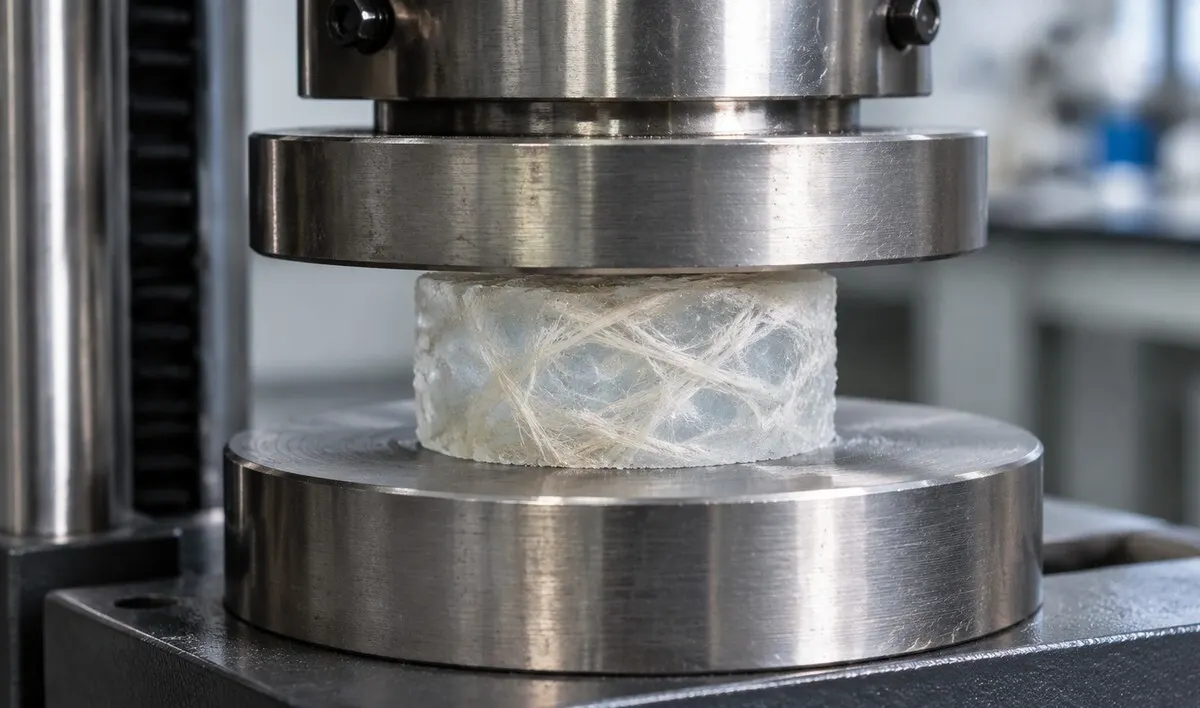
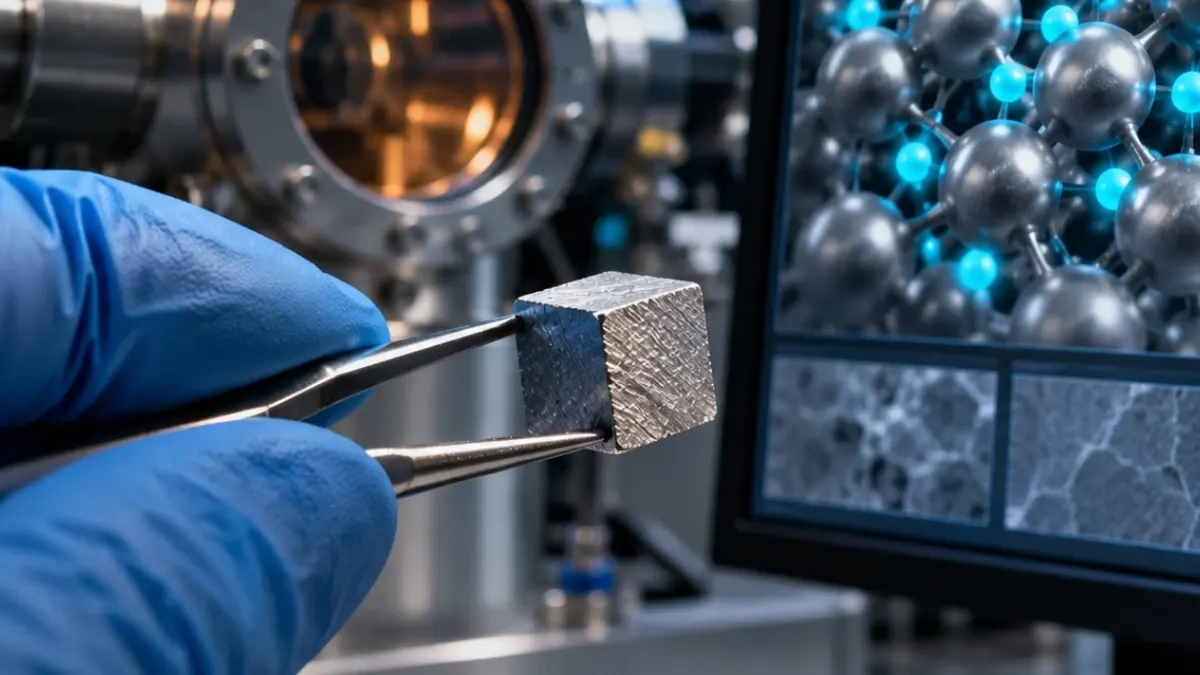
Researchers at the Hebrew University of Jerusalem, led by Ido Braslavsky, have developed BioPykrete, a composite of ice, cellulose nanocrystals (CNC) and an engineered chimeric protein. The work was published in Colloids and Surfaces B Biointerfaces. In unconfined compression tests the composite showed a 10-fold increase in compressive strength and a 70-fold increase in energy-to-failure compared with standard ice sciencedirect.com
Colloids and Surfaces B Biointerfacessciencedirect.comOpen source ↗. The authors report a compressive strength approaching that of concrete.
Chimeric protein and CNC network
The chimeric protein was made by genetically fusing the ice-binding protein AFPIII with the carbohydrate-binding module CBM3a. One domain binds to ice and the other to cellulose, so the protein acts as a molecular "bioadhesive" between the crystalline reinforcement and the ice matrix.
During controlled solidification of the suspension, the chimera is proposed to regulate the self-organisation of the CNC fibers. They form a reinforcing three-dimensional network that encloses ice within micro-scale cells. According to the authors, this structural hierarchy appears to arrest crack propagation at the pore level.
Gradual failure and open questions
Pure ice fails suddenly and in a brittle manner. BioPykrete instead failed progressively, in a ductile-like way, as shown by unconfined compression and fracture energy analysis sciencedirect.com
Colloids and Surfaces B Biointerfacessciencedirect.comOpen source ↗. Compared with an otherwise identical CNC-ice composite lacking the chimera, the version with the protein showed twice the strength and twice the energy-to-failure.
The authors describe BioPykrete as a proof-of-concept for a biodegradable, potentially low-carbon-footprint composite for Arctic environments, where traditional construction is economically and environmentally challenging. Its suitability for infrastructure has not been established. It will require further durability, freeze-thaw, creep and life-cycle testing. The results so far come from laboratory samples tested under controlled conditions.