ESA and Thales Alenia Space add a CNES quantum lab to the TeQuantS project
Two contract amendments open a new TeQuantS phase: a CNES lab will test entangled-photon, timing and detection equipment for satellite-to-ground quantum links.
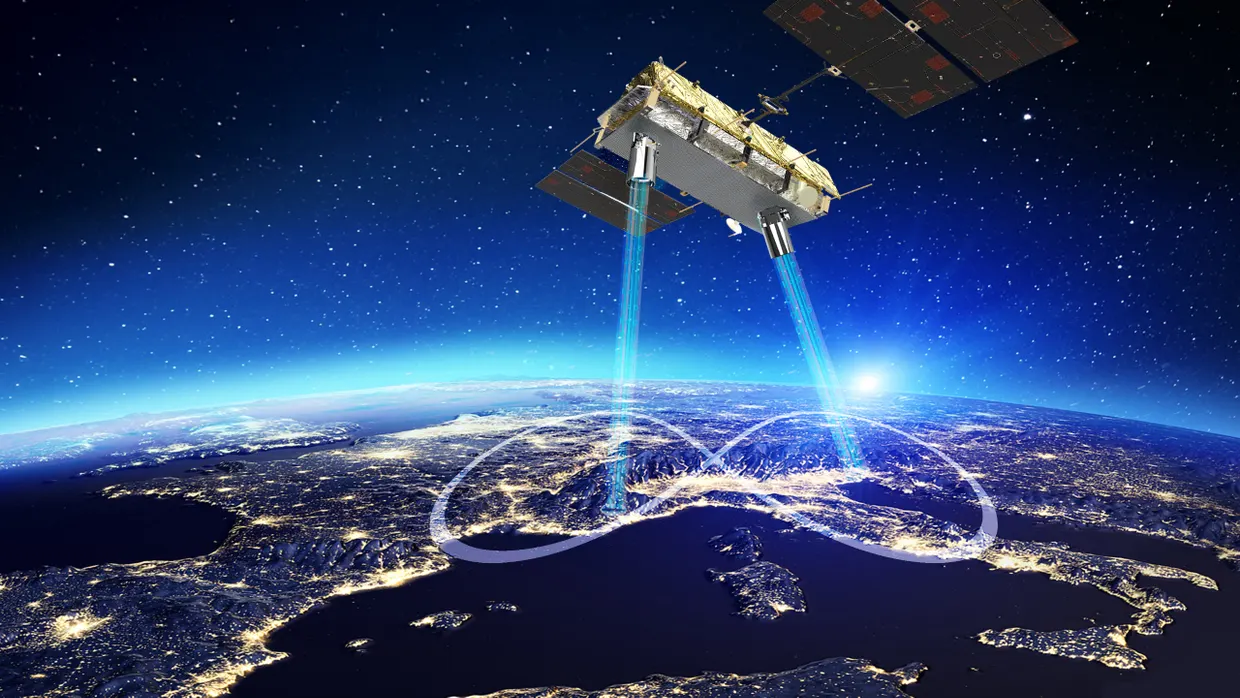
The European Space Agency (ESA) has signed two contract amendments with Thales Alenia Space for TeQuantS, a project on quantum communication technologies between space and Earth, with support from the French space agency CNES, according to resilience.esa.int resilience.esa.int
resilience.esa.intresilience.esa.intOpen source ↗. The project was first signed in 2023. It now enters a new phase with the creation of a quantum laboratory at CNES.
What the CNES laboratory will test
In the first phase, a consortium led by Thales Alenia Space developed a compact ground station prototype and the first engineering model of the quantum communications system. The planned CNES laboratory will test equipment by attempting to establish quantum links under real-world operating conditions.
The equipment includes an entangled photon source, time-synchronisation systems between satellite and ground stations, and ground station and detection systems. Thales Alenia Space is prime contractor for the new phase. The consortium includes Airbus Defence and Space, AUREA Technology, BERTIN ALPAO, BERTIN TECHNOLOGIES, OGS Technologies, SIGMAWORKS, LIP6 at Sorbonne Université and INPHYNI at Université Côte d'Azur/CNRS.
TeQuantS is an activity of ESA's ARTES 4.0 programme, within its Industrial Competitiveness line resilience.esa.int
resilience.esa.intresilience.esa.intOpen source ↗.
Why quantum links need satellites
The technologies are meant for long-distance quantum information networks. Because of the limits of optical fibres, intercontinental quantum communication between future quantum devices requires satellite-based alternatives. Such a network would exchange photonic qubits between quantum computers for distributed computing and connect interoperable quantum sensors to improve detection sensitivity.
A 2025 simulation by Thales researchers, published in the journal Entropy on November 18, 2025, gives a sense of the scale of the task. It modelled a satellite in a 600 km orbit linking ground stations at Paris and Nice. In a 331-second pass, about 90 entangled pairs reached the end users according to the abstract, while the body text of the paper gives 99. Fidelity reached at most 82%.
These are simulation results, not measurements from the laboratory. The model assumes clear sky and no entanglement purification, and relies on quantum memories that the authors call "very optimistic" and say have not been demonstrated.
Kasia Balakier, TeQuantS Technical Officer at ESA's ScyLight Programme, said the project gives French and European industry an opportunity to lead the definition of a quantum information network resilience.esa.int
resilience.esa.intresilience.esa.intOpen source ↗. Alcino De Sousa, Senior Vice President Telecommunications at Thales Alenia Space, said the company aims to demonstrate long-distance satellite quantum links with a clear operational objective.