NC State: IV morphine 0.2 mg/kg gave brief antinociception in 14 healthy cattle; butorphanol 0.02 mg/kg did not
In a crossover study at North Carolina State University in healthy cattle, IV morphine briefly raised the thermal threshold, while low-dose butorphanol did not. Drug exposure was short.
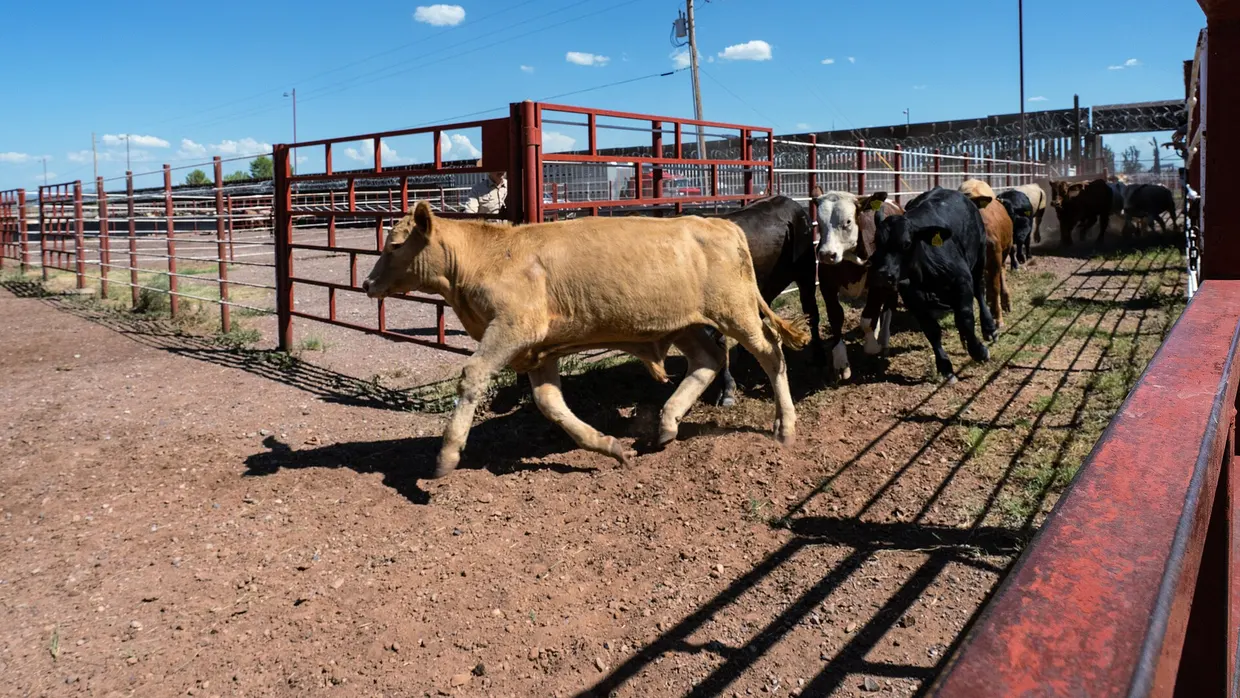
Researchers at North Carolina State University described the pharmacokinetics and short-term effects of intravenous morphine and butorphanol in 14 healthy Holstein-cross cattle (8 steers, 6 heifers). The work was published in Frontiers in Veterinary Science on 16 November 2026 and is available via doi.org. frontiersin.org
doi.orgfrontiersin.orgOpen source ↗ Morphine at 0.2 mg/kg produced brief antinociception, whereas butorphanol at 0.02 mg/kg did not.
Design and pharmacokinetics
The authors point to inconsistent use of systemic analgesia in cattle practice: in one castration survey, only 21% of respondents gave any. They also cite the scarcity of opioid pharmacokinetic and pharmacodynamic data as a factor limiting clinician confidence. The steers averaged six months of age and 115 kg, and the heifers twelve months and 295 kg.
The study was randomized, double-blinded and crossover. All animals received morphine 0.2 mg/kg (MH) and butorphanol 0.02 mg/kg (BL); steers also received morphine 0.1 mg/kg (ML) and butorphanol 0.1 mg/kg (BH). Plasma was sampled before dosing and from 0.04 to 72 h afterward. Morphine, its metabolites morphine-3-glucuronide (M3G) and morphine-6-glucuronide (M6G), and butorphanol were measured by validated UPLC–MS and analyzed noncompartmentally.
Concentrations fell rapidly and were below quantifiable limits by 48 h. Morphine estimates were comparable between the two doses; terminal half-lives were 4.86 h for MH and 3.24 h for ML. frontiersin.org
doi.orgfrontiersin.orgOpen source ↗ M3G and M6G peaked at 30–45 min, stayed elevated for about 4 h and then declined.
Sedation, excitation and thermal threshold
Heart rate, respiratory rate, rumen contractions, rectal temperature, sedation, excitation and cutaneous thermal threshold (TT) were recorded through 24 h. Inferential analyses focused on MH and BL. All cattle survived without lasting adverse effects.
BL raised respiratory rate above baseline at 0.25 and 0.5 h. From 0.25 to 1 h, BL produced greater excitation, while MH produced greater sedation. MH increased TT above baseline from 0.08 to 1.5 h, whereas BL decreased TT from 1 to 3 h.
The authors report that IV morphine and butorphanol produced limited measurable exposure. They conclude that such opioids may be best considered short-acting adjuncts within multimodal analgesic protocols. frontiersin.org
doi.orgfrontiersin.orgOpen source ↗ They also note the need for further pharmacokinetic and pharmacodynamic studies using clinically relevant pain models and multimodal regimens.