Fluorescence imaging of live Streptomyces aureofaciens cells ranks tetracycline-producing strains in lab tests
Researchers built a platform that shows intracellular tetracycline in living S. aureofaciens cells. Its strain ranking agreed with HPLC, without cell lysis or extraction.
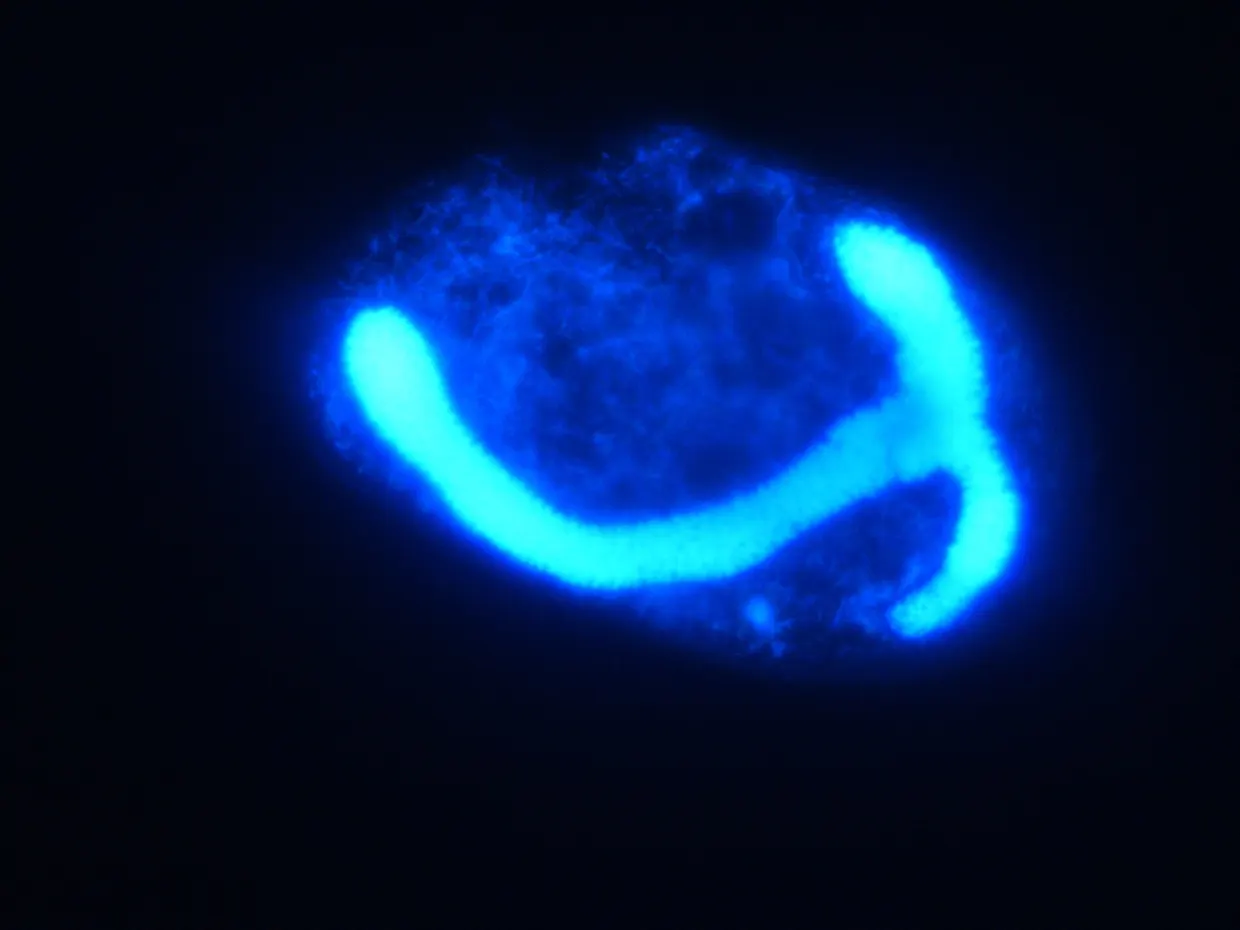
A research group led by H. Zhang and J. Huang has developed a live-cell metabolic phenotyping platform for rapid evaluation of tetracycline-producing Streptomyces aureofaciens strains. The work was published in Microbial Cell Factories in 2026, according to the paper at doi.org biomedcentral.com
doi.orgbiomedcentral.comOpen source ↗. The platform visualizes intracellular tetracycline by fluorescence imaging in intact living cells, without lysis or metabolite extraction.
The screening problem
Selecting high-producing strains is a key step in improving microbial cell factories, especially for industrial production of secondary metabolites. Conventional screening relies mainly on destructive fermentation sampling and chromatographic quantification. According to the authors, these methods are time-consuming and give limited information about the intracellular metabolic state of the cells.
The authors therefore sought a rapid, non-invasive approach that can follow metabolite accumulation at the single-cell level.
How the platform works
The platform combines a tetracycline-responsive molecular beacon with intracellular delivery assisted by cell-penetrating peptides. The peptides carry the beacon into living S. aureofaciens cells, where it produces a fluorescence response to tetracycline biomedcentral.com
doi.orgbiomedcentral.comOpen source ↗.
The fluorescence response correlated with tetracycline production in a concentration-dependent manner. It also reflected dynamic changes in intracellular antibiotic accumulation during fermentation.
The authors applied the imaging approach to several industrial S. aureofaciens strains. High-producing strains were distinguished by their intracellular fluorescence signatures. The strain ranking based on fluorescence agreed with HPLC quantification and was further validated in fermentation experiments.
What the authors conclude
The method converts intracellular metabolite accumulation into a measurable optical phenotype. The authors describe it as a source of cellular-level information that complements conventional analytical methods, and as a tool for phenotypic prioritization of industrial strains biomedcentral.com
doi.orgbiomedcentral.comOpen source ↗. The results come from laboratory experiments with S. aureofaciens strains; the material does not report throughput figures or test other producer organisms.