INRS C-BLIP imager records 3D shape of moving objects at 150,000 frames per second
Researchers at INRS in Quebec built a profilometry method that captures fast one-shot 3D events at up to 150,000 fps using LED illumination. The authors claim a record for the field.
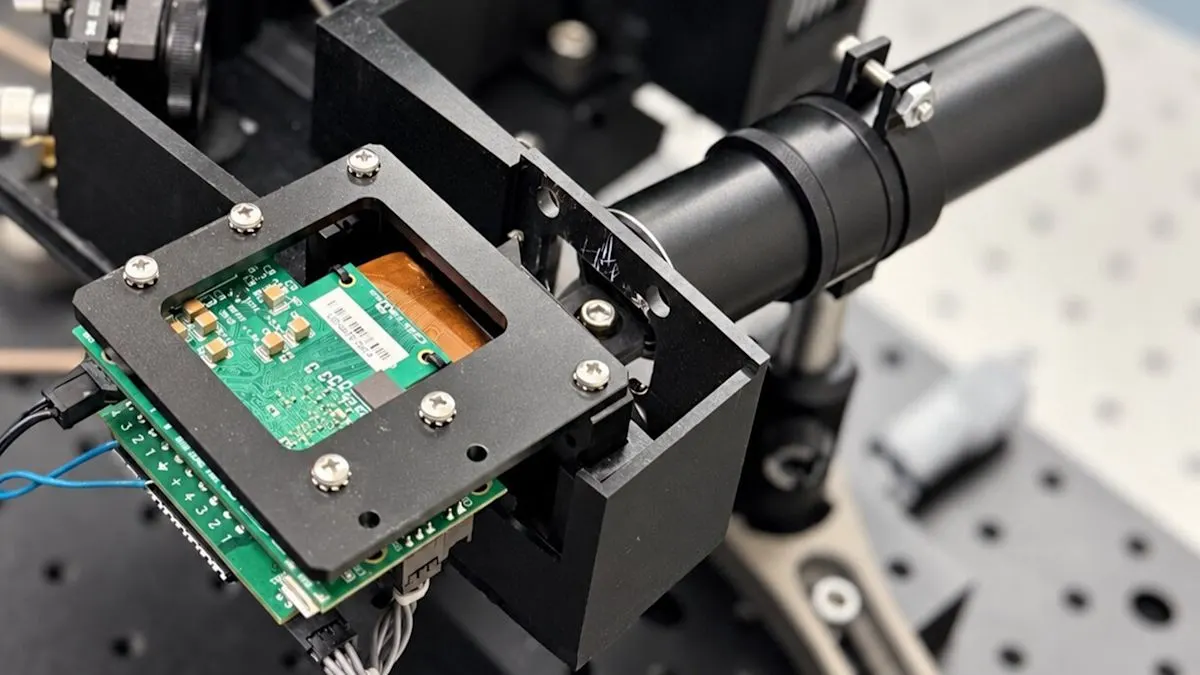
A team led by Jinyang Liang at the Institut National de la Recherche Scientifique (INRS) in Quebec has developed an imaging technique that records the 3D shape of a moving object at up to 150,000 frames per second, according to tech.yahoo.com. tech.yahoo.com
tech.yahoo.comtech.yahoo.comOpen source ↗ The method, called C-BLIP (chromatically band-limited illumination profilometry), was announced on Nov. 12. The authors say it sets a new world record in 3D profilometry.
How the method works
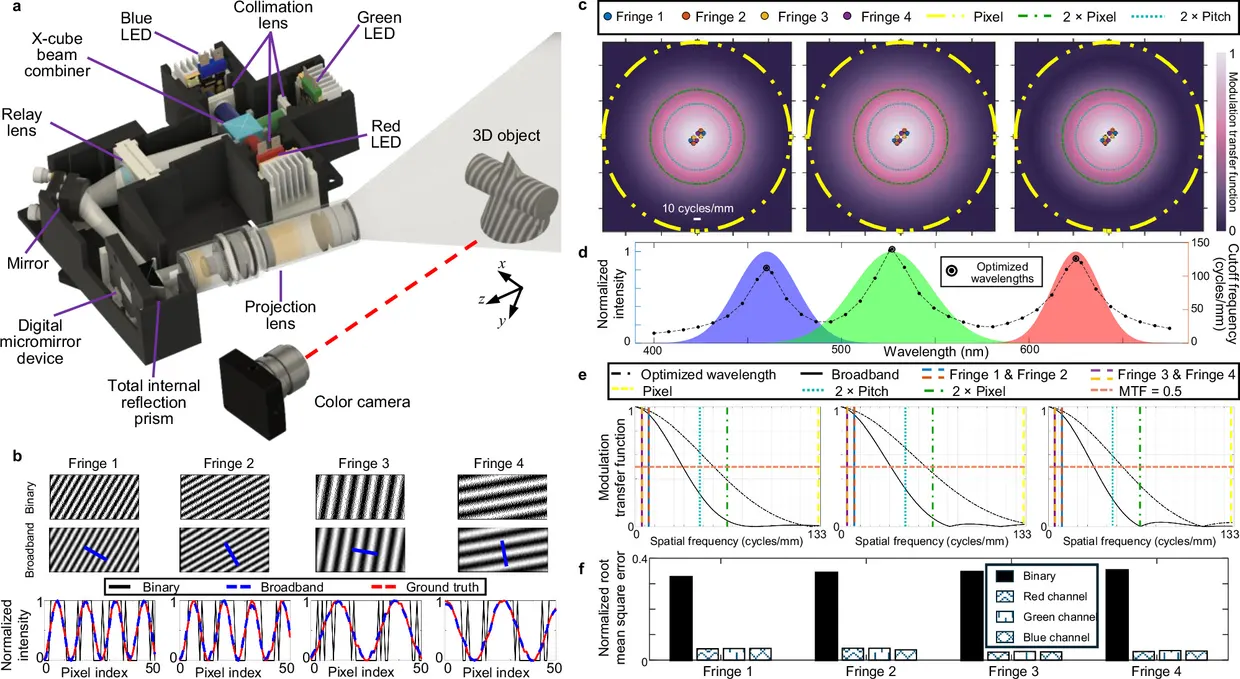
Profilometry measures an object's surface shape. Most 3D profilometry projects light patterns onto an object and reconstructs the shape from how the patterns distort. Researchers describing related systems note that this approach is limited by the speed of the projector and camera and by the number of patterns needed for each 3D frame.
Many fast events, such as collisions, cannot be repeated on demand, so each must be captured in a single take. The INRS team adds that existing ultrafast 3D systems are often held back by slow acquisition, computationally heavy image reconstruction or the high cost of specialized equipment.
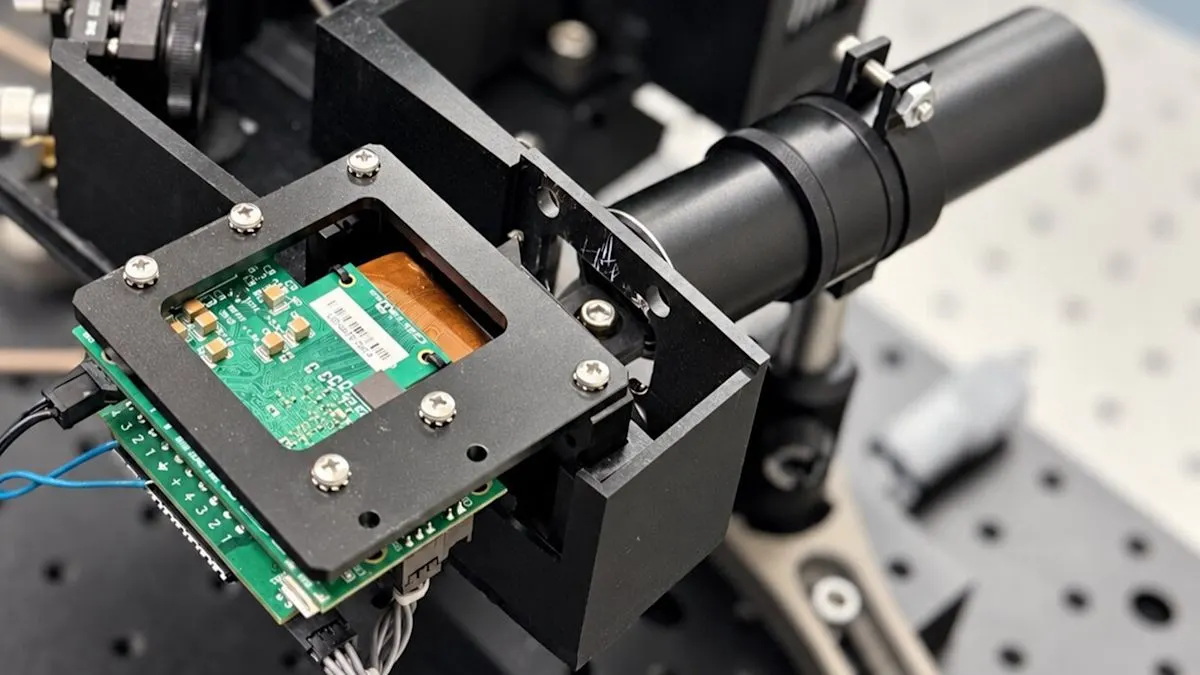
To get around these limits, the team combined a cost-effective optical design with eye-safe LED illumination and a lightweight reconstruction method. The researchers say this makes ultrafast 3D imaging more practical and accessible for a wide range of research environments, not only specialized labs. tech.yahoo.com
tech.yahoo.comtech.yahoo.comOpen source ↗
Experiments and the scope of the record
In experiments, C-BLIP recorded a projectile colliding with a turbofan blade, the aerodynamics of a falling maple samara (a winged seed that spins as it drops) and the vibrations of a loudspeaker membrane. The team also detected ultrasonic vibrations on an object's surface and extracted acoustic information from them, recovering a spoken message.
The record claim is specific to 3D profilometry. Earlier ultrahigh-speed systems in this field reported about 100,000 frames per second, including a previous band-limited illumination system presented by Liang and a 2025 approach from another group. Methods that capture light in flight run at billions or trillions of frames per second, but they do not measure surface shape the same way.
"With C-BLIP, we can continuously capture fast, nonrepeatable three-dimensional phenomena that were previously difficult to observe and quantify," said Liang, who holds the Canada Research Chair in Ultrafast Computational Imaging. The researchers see uses in mechanics and aerodynamics, microfluidics, high-rate material testing and additive manufacturing.
The team is now optimizing the system by adding GPU-accelerated processing, which could eventually allow real-time visualization of these fast events.