Fraunhofer plans StEnSea 2.0 seabed energy storage with 400-ton concrete spheres off California
Fraunhofer's StEnSea 2.0 stage will test concrete spheres at about 600 m depth off California; the system stores grid surplus via ocean pressure, aimed at offshore wind.
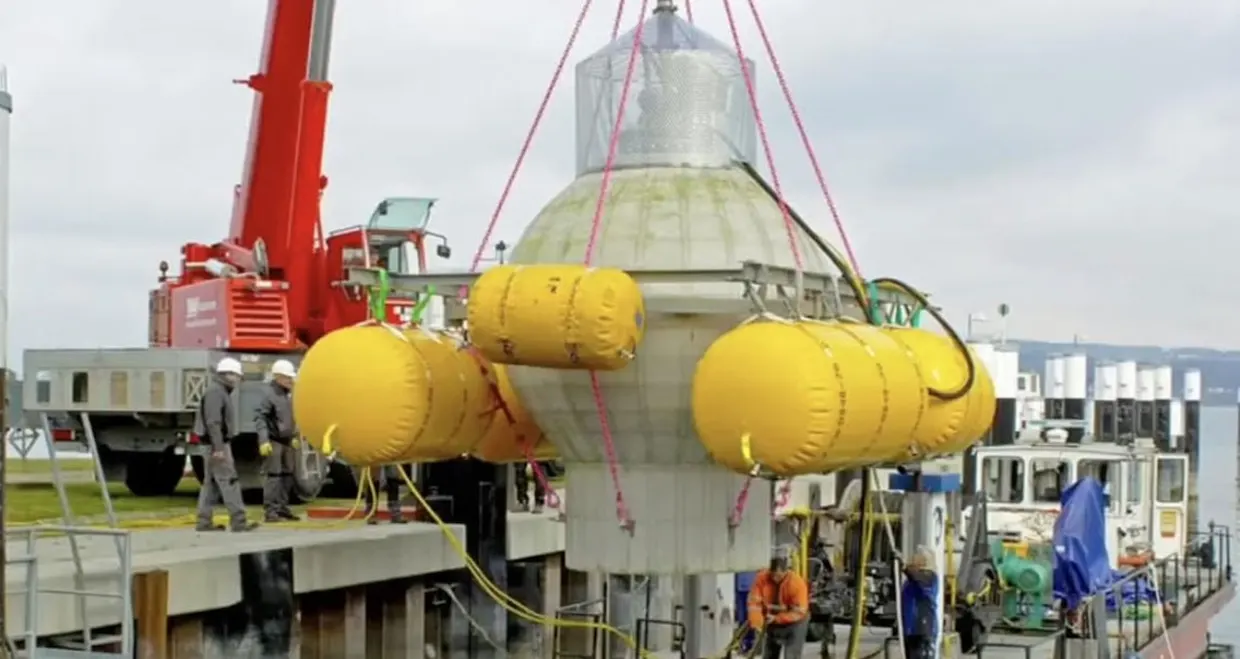
The Stored Energy in the Sea (StEnSea) technology, developed by Germany's Fraunhofer Institute in 2016, stores electricity in concrete spheres weighing hundreds of tons placed on the seabed. According to sozcu.com.tr, citing the technology portal GRYOnline.pl, its new stage, StEnSea 2.0, is to be launched off the coast of California. sozcu.com.tr
sozcu.com.trsozcu.com.trOpen source ↗ The project is planned to be implemented at the end of 2026.
How the spheres store energy
Surplus electricity from the grid is used to pump water out of the spheres. When demand rises, valves open, and the high ocean pressure makes water fill the sphere quickly and spin turbines, which generate electricity again. The method, developed 10 years ago, stores energy by the pressure-difference principle.
Sinking the spheres to the seabed saves space on land. The system is intended to solve the storage problem for offshore wind farms located far from the coast.
Test site and prototype spheres
The waters off California were chosen because the seabed drops off abruptly a short distance from the shore. Calibration of turbines and pumps at a depth of about 600 meters is continuing. sozcu.com.tr
sozcu.com.trsozcu.com.trOpen source ↗
The current stage uses prototype spheres produced by the company Sperra with 3D concrete printing. Each is 9 meters in diameter and weighs about 400 tons. In the final stage, the diameter of the concrete spheres is planned to increase to 30 meters.