Manchester researchers lock technetium-99 into minerals, removing 99% or more from solution in lab tests
Two laboratory methods from the University of Manchester immobilise technetium-99 in layered double hydroxides and hydroxyapatite, for liquid waste and groundwater at legacy nuclear sites.
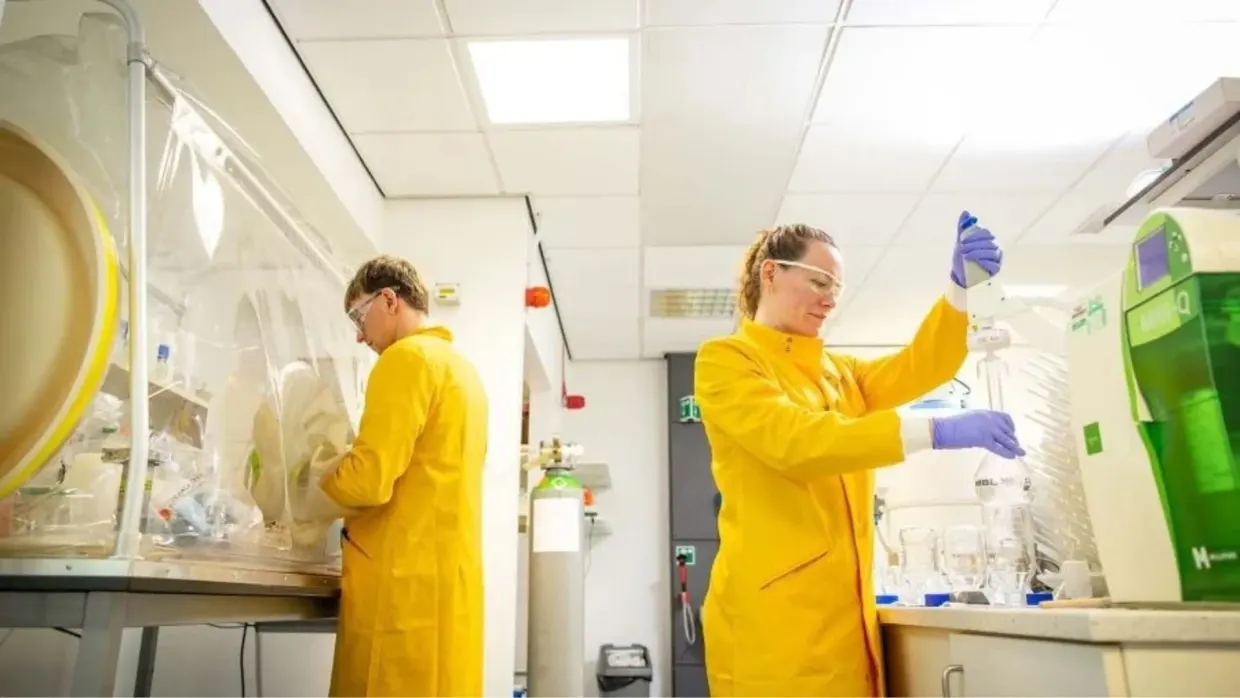
Researchers at the University of Manchester, working in the RADER National Nuclear User Facility, have developed two laboratory methods for capturing and immobilising technetium-99, according to manchester.ac.uk. In tests, one removed more than 99 per cent of the isotope from solution and the other up to 99 per cent manchester.ac.uk
manchester.ac.ukmanchester.ac.ukOpen source ↗. Technetium-99 is a long-lived by-product of nuclear fuel production and reprocessing. In many environments it forms a highly mobile chemical species that moves readily through water and soil, which makes it a priority contaminant at Sellafield in the UK and Hanford in the US.
Technetium in layered double hydroxides
The first study removes technetium from liquid waste streams by incorporating it into layered double hydroxides (LDHs), a class of engineered minerals used in environmental remediation. During mineral formation, dissolved technetium was removed from solution and chemically transformed into a less mobile form. More than 99 per cent of the contaminant was removed, even at elevated technetium concentrations.
X-ray analysis at the Diamond Light Source and microscopy showed that technetium becomes part of the mineral structure as the material forms. The authors report this as the first evidence of technetium incorporated into the octahedral layers of an LDH mineral. The result is a stable inorganic waste form for long-term management. Samuel Shaw said the team is working with Sellafield through the Game Changers programme to determine whether the tool can help with decommissioning of the site.
Hydroxyapatite and a nuclear medicine compound
The second study borrows from nuclear medicine. Methylene diphosphonic acid (MDP) is used in bone scans to bind technetium-99m to hydroxyapatite, the calcium phosphate mineral of bone. Earlier RADER work developed in-situ hydroxyapatite-based remediation for radionuclides such as uranium, but the high mobility of technetium-99 limited removal by this route manchester.ac.uk
manchester.ac.ukmanchester.ac.ukOpen source ↗.
With the Nuclear Medicine Department of The Christie NHS Foundation Trust and Pacific Northwest National Laboratory, the team used MDP to form a soluble complex with chemically reduced technetium-99. Hydroxyapatite then captured the complex under conditions representative of major nuclear legacy sites. Laboratory tests showed removal of up to 99 per cent from solution, and imaging experiments indicated that the approach also works under realistic flowing groundwater conditions.
The authors also report the first demonstration that microbes can help generate the technetium-MDP complex through biological reduction. Combined with phosphate mineral-forming remediation, the approach could allow targeted technetium removal from contaminated land. The work is published in Environmental Science & Technology.
The two methods address different settings: one treats contaminated liquid waste and yields a solid waste form, the other immobilises technetium in ground and groundwater using phosphate minerals manchester.ac.uk
manchester.ac.ukmanchester.ac.ukOpen source ↗.