Terabase Energy's Terafab V2 robotic platform to assemble solar units at 457-MW Texas project
Matrix Renewables will use Terabase's mobile robotic assembly line at the Tormes Solar project in Navarro County; the company says it can produce 20 MW of assembled units per week.
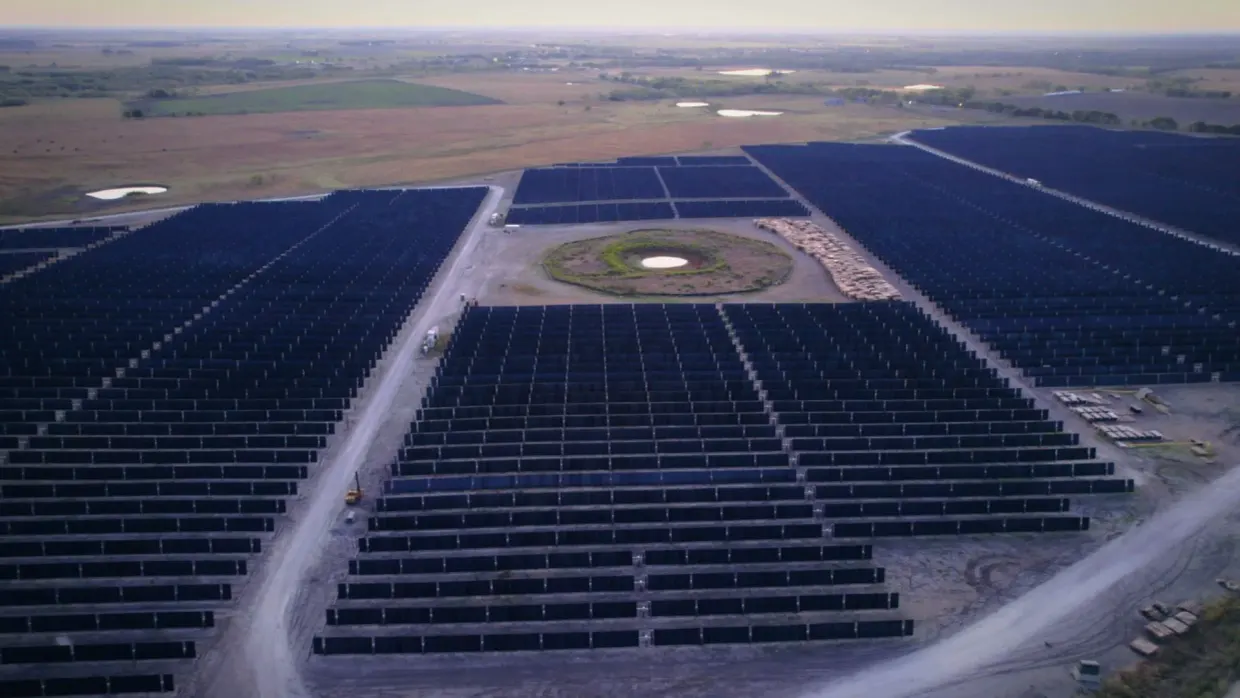
U.S.-based Terabase Energy will deploy its automated installation platform Terafab V2 at the 457 MW Tormes Solar project in Navarro County, Texas, Interesting Engineering reports. The project is run by the Spanish company Matrix Renewables. According to Terabase, the system can assemble one unit in about 2 minutes when operating continuously, which adds up to 20 MW of output in a week interestingengineering.com
Interesting Engineeringinterestingengineering.comOpen source ↗.
Terafab V2 was launched in April. It works as a portable modular robotic "factory" set up directly on the solar site, where it assembles components, checks quality and prepares units for placement. The upgraded platform has been field-tested and is currently optimized for First Solar Series 7 modules and Nextpower trackers.
How the on-site assembly line works
Solar panels and metal hardware, including tracker torque tubes, frames, brackets and mounts, are delivered to the site before assembly begins. The robots fasten the photovoltaic modules onto the tracker torque tubes, the steel tubes that let panels follow the sun.
After assembly, the system checks that everything is correctly placed. Automated vehicles called rovers then carry the finished units across the solar farm. Workers in the field remove the assembled panels and set them onto tracker supports that are already fixed in the ground interestingengineering.com
Interesting Engineeringinterestingengineering.comOpen source ↗.
The modules can be set up in approximately four hours and relocated as construction advances. Several assembly line modules can be created on a single project to raise production capacity, Terabase said.
Software layer and company claims
The platform pairs the robots with planning, material tracking and logistics software, along with a digital replica of the construction site. This lets managers monitor and coordinate the project.
The company claims that, compared with conventional utility-scale PV installation methods, its approach can double labor productivity. Actual output, it added, depends on project configuration, equipment utilization and site conditions interestingengineering.com
Interesting Engineeringinterestingengineering.comOpen source ↗.
Terabase said its first-generation Terafab platform, available since 2022, has been used to install about 40 MW of tracker-mounted solar capacity across several U.S. projects, including in Arizona and Texas.
The company plans to extend compatibility with other module and tracker technologies. It is also developing additional robots to automate the final installation step, which still requires workers.