Uern receives Brazilian patent for one-step softening of oilfield produced water with carbonate
The Rio Grande do Norte State University patented a method that softens produced water in a single stage using only a sodium or potassium carbonate solution.
The State University of Rio Grande do Norte (Uern) has obtained a patent from Brazil's National Institute of Industrial Property (INPI) for a method that treats water coming out of oil wells in a single stage with one type of reagent, Agora RN reports. The university announced it on Friday the 6th; it is its 11th invention patent. agorarn.com.br
Agora RNagorarn.com.brOpen source ↗ The process was developed in the Department of Chemistry in collaboration with PetroReconcavo, a company that operates onshore oil fields in the Potiguar Basin.
The patent is titled "Method of softening the hardness of oil produced water in a single stage using carbonates". The inventors are Vinícius Patrício Caldeira, Ana Laura Fernandes, Weslen Ismael de Miranda and Anne Gabriella Dias.
Why produced water needs softening
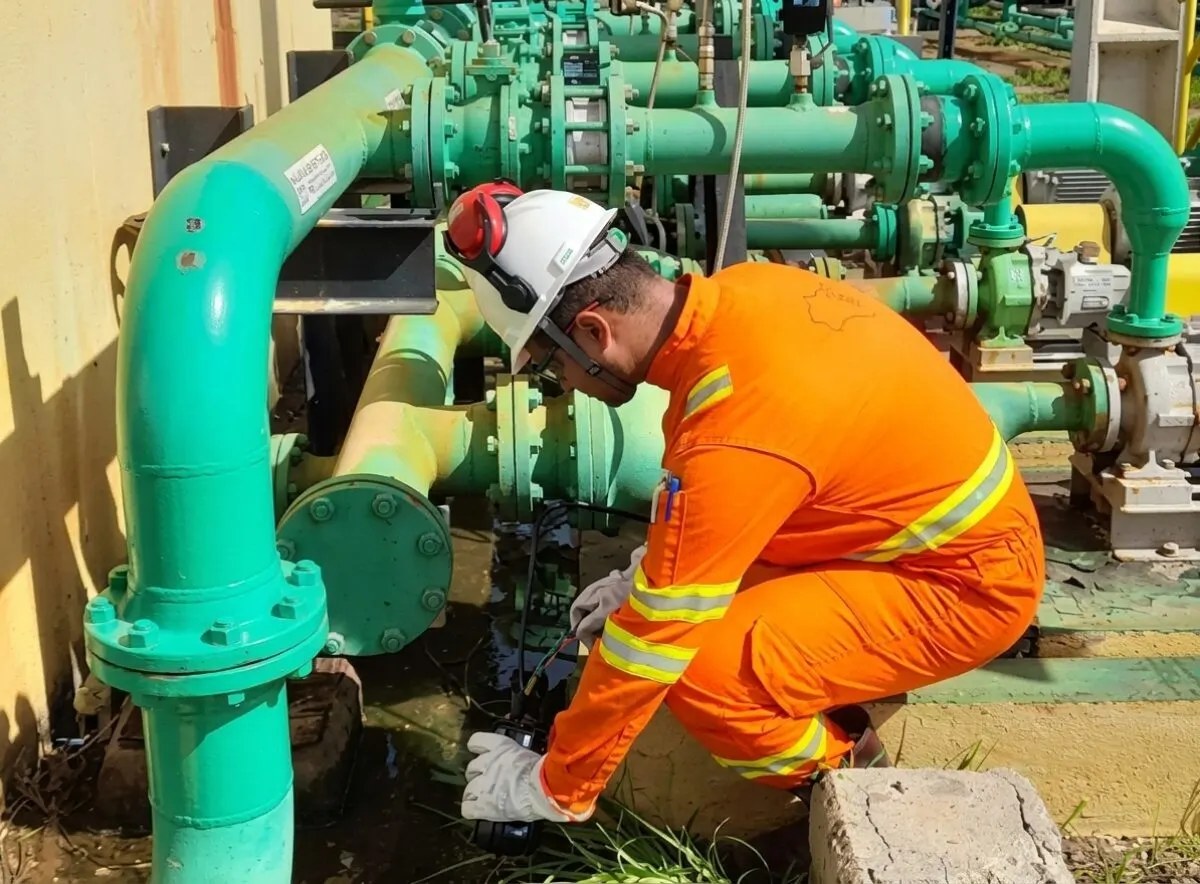
Produced water is the water that reaches the surface mixed with oil during extraction. In the oil sector it is usually "hard", with high levels of minerals such as calcium and magnesium. These minerals form scale in equipment and pipes, reduce efficiency and service life, accelerate corrosion, raise maintenance costs and can compromise the safety of operations. The water therefore has to be treated before it is reinjected into wells, a process known as softening.
According to Professor Caldeira, this chemical precipitation treatment usually takes two or more stages, combining two or more chemical agents or industrial units. He says the approach has economic and environmental drawbacks: it consumes expensive reagents and generates a large amount of heterogeneous solid waste with no proper disposal. agorarn.com.br
Agora RNagorarn.com.brOpen source ↗
Single-stage carbonate method
The patented method uses only a solution of sodium or potassium carbonate. Caldeira said that it yields, in one stage, a sufficiently treated effluent and a solid residue with well-defined characteristics, which can be used as an input for other industrial processes.
According to the university, the procedure reduces the number of treatment operations and delivers water suitable for reuse, either back into the well or for another purpose. The solid residue has a known chemical composition and can be sold as a raw material to the chemical industry, which the university says adds economic gain. Caldeira also stated that using carbonate as the only chemical agent makes large-scale implementation easier and produces fewer harmful products than conventional methods.