MIT built a snake-inspired robot enteroscope; in animals it moved about six and a half feet
The tethered soft robot carries a camera, drug sprayer and tissue clips; the authors are now improving navigation and testing further uses.
MIT engineers have designed a robotic enteroscope that moves through the narrow small intestine and can image it, deliver drugs and remove small polyps or tissue samples for biopsy, according to news.mit.edu. The study appears in Science Robotics. In animal studies the robot travelled about six and a half feet through the small intestine. mit.edu
news.mit.edunews.mit.eduOpen source ↗
Giovanni Traverso, professor of mechanical engineering at MIT, gastroenterologist at Brigham and Women's Hospital and senior author, says the device allows a biopsy or removal of a small polyp that is found. The lead authors are former MIT postdoc Binbin Ying, now an assistant professor at University of Texas Southwestern Medical Center, graduate student Ahmad Mujtaba Jebran and former research scientist Sahab Babaee.
Why the small intestine is hard to examine
The small intestine is more than 20 feet long and an inch in diameter, and it lies deep in the body, so it is harder to reach than the colon or stomach. The most common problems doctors evaluate there are bleeding, lesions and blockages.
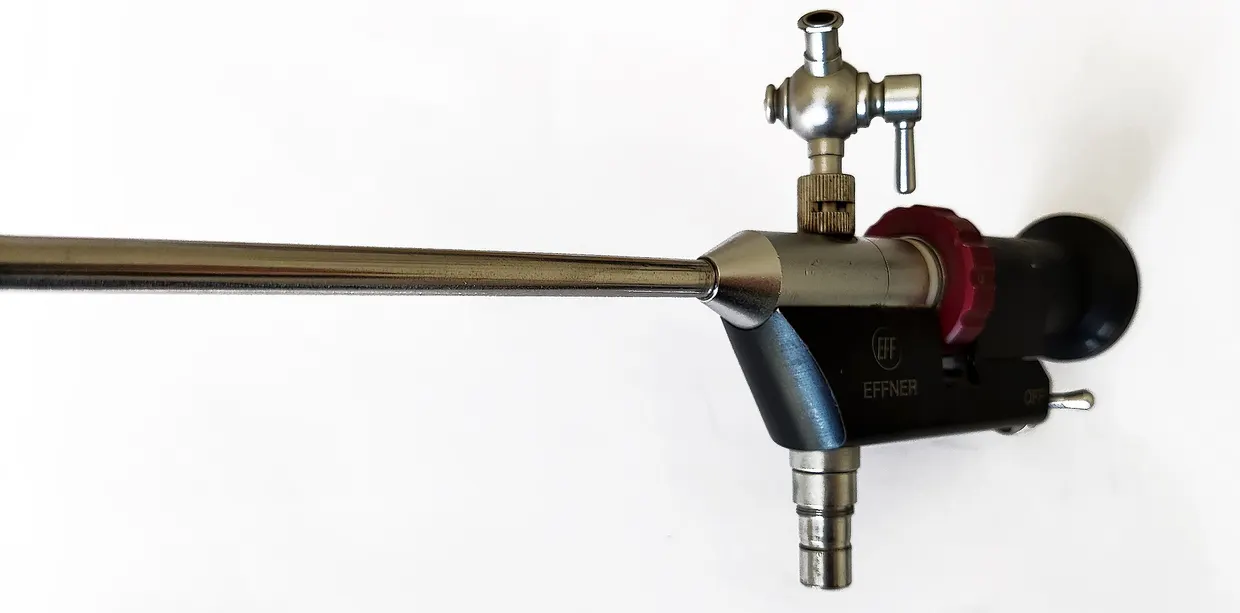
At present these are diagnosed only by double balloon enteroscopy, in which a health care worker alternately inflates and deflates two balloons to propel the enteroscope. The process is slow and laborious, so the team sought a device that is easier to control and moves faster. mit.edu
news.mit.edunews.mit.eduOpen source ↗
Snake-like motion and kirigami traction
The robot's multifunctional actuators each contain four chambers that can be inflated in different combinations, so the tube extends or bends in any direction. The head and tail segments carry anchoring balloons that inflate and deflate in turns to move the robot forward.
These segments are covered with sleeves patterned on kirigami. The sleeves lie flat until the balloon stretches them, and then three-dimensional needles pop out, giving traction on the slippery intestinal lining, much like snake scales. Jebran says this lets the robot gain traction without excessive stretching of the delicate tissue.
The soft robot is tethered by a cable to external controllers and is designed to enter through either the mouth or the rectum. It carries a camera, a sprayer for drug delivery and clips for biopsies or polyp removal. In animal studies the researchers also demonstrated the sprayer, the clips and the camera. The team is now improving the navigation systems and testing the approach for additional applications in the small intestine. mit.edu
news.mit.edunews.mit.eduOpen source ↗