Cornell: tame silver foxes have fewer estrogen-receptor neurons in the hypothalamus than aggressive ones
A study of nine fox brains found fewer estrogen-receptor neurons in animals bred for tameness; the link to behavior is an association only.

Researchers from Cornell University and the University of Illinois Urbana-Champaign, together with the Institute of Cytology and Genetics of the Russian Academy of Sciences in Novosibirsk, reported in Current Biology on 2 November that silver foxes (Vulpes vulpes) selected for tameness have fewer neurons expressing the estrogen receptor than foxes selected for aggression, according to science-et-vie.com science-et-vie.com
science-et-vie.comscience-et-vie.comOpen source ↗. The work was based on nine brains.
Where the difference was found
The difference appeared in the ventrolateral part of the ventromedial hypothalamus, a region at the base of the brain. These cells belong to a circuit known to be involved in aggression in mice. The authors describe a candidate neuron type, not a final explanation of tameness.
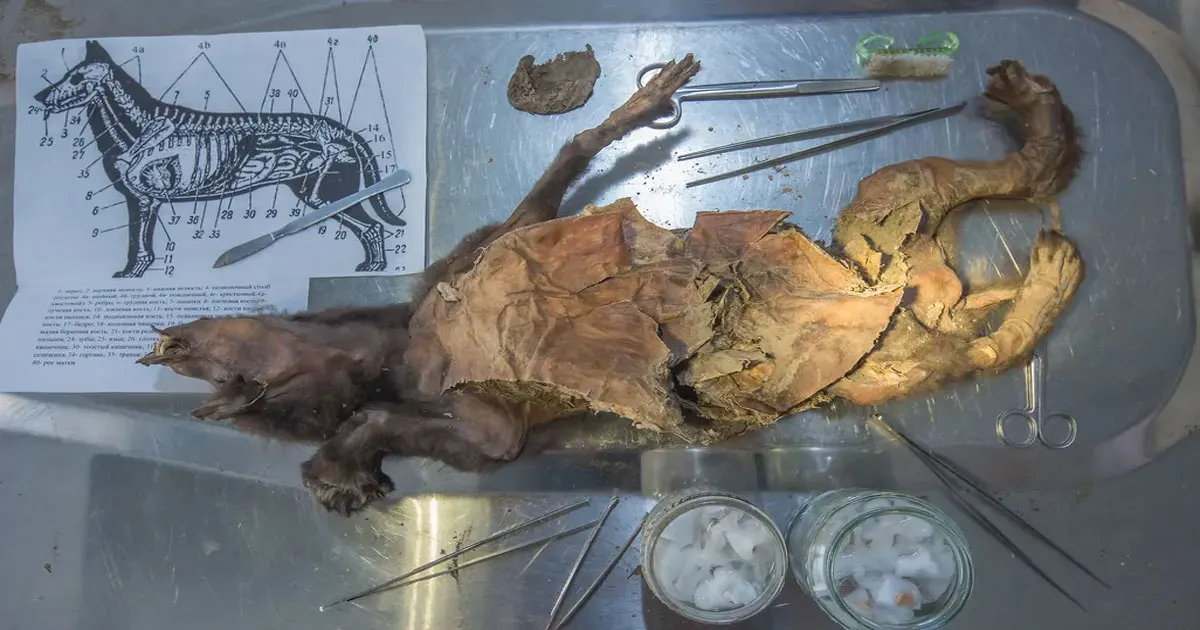
Russian scientists who run the fox colony supplied the brains: three from animals selected for tameness, three from animals selected for aggression and three from wild foxes. The brains were cut into very thin slices, and fluorescent labeling of RNA revealed the cell types present in the region.
The hypothesis came from optogenetic experiments by other groups, in which targeted neurons are activated with light. In mice, activating these estrogen receptor alpha cells makes the animal attack another mouse immediately, said Eirene Markenscoff-Papadimitriou, assistant professor at Cornell, who led the study science-et-vie.com
science-et-vie.comscience-et-vie.comOpen source ↗. This test was not carried out on foxes, so the link with attack is established only in rodents.
Fox lines and limits of the data
The foxes come from a well-known domestication experiment that began on silver fox farms in Siberia in the late 1950s. Russian geneticists noticed that some animals were friendly toward keepers and others more aggressive, and bred the most sociable ones together. After six generations, litters of pups already interacted with humans. Floppy ears and shortened muzzles, typical of domestic animals, also appeared.
The study describes an association in a very small number of animals; it does not show that the lower neuron count causes tameness. The team wants to understand why domestication comes with such changes in a region that has been little studied. Co-author Anna Kukekova of the University of Illinois could study how mutations influence the development of these neurons.
According to Markenscoff-Papadimitriou, the findings may concern any environmental pressure capable of changing brain structure over a short time.