Limonene-Based Cold Rejuvenator Restores Aged Asphalt to 96% of Virgin Performance in 10 Minutes
A laboratory cold recycling rejuvenator with limonene brought aged asphalt to 96% of virgin performance in 10 minutes at 25 ℃, without heating.
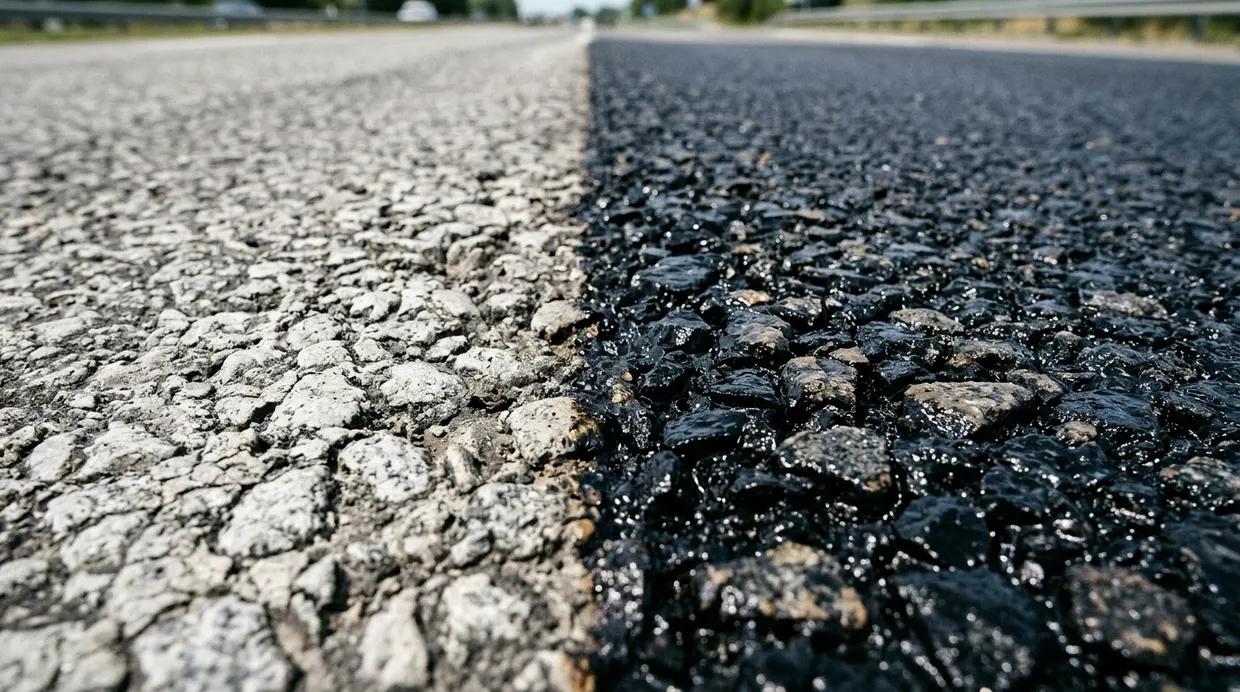
A new cold recycling rejuvenator (CRR) designed for ambient temperatures restored 96% of the performance of virgin asphalt to aged asphalt after only 10 minutes of rejuvenation, according to a study in Low-carbon Materials and Green Construction springer.com
Low-carbon Materials and Green Constructionspringer.comOpen source ↗. The work was done at the laboratory level on binder from reclaimed asphalt pavement, and the key diffusion tests were run at 25 ℃.
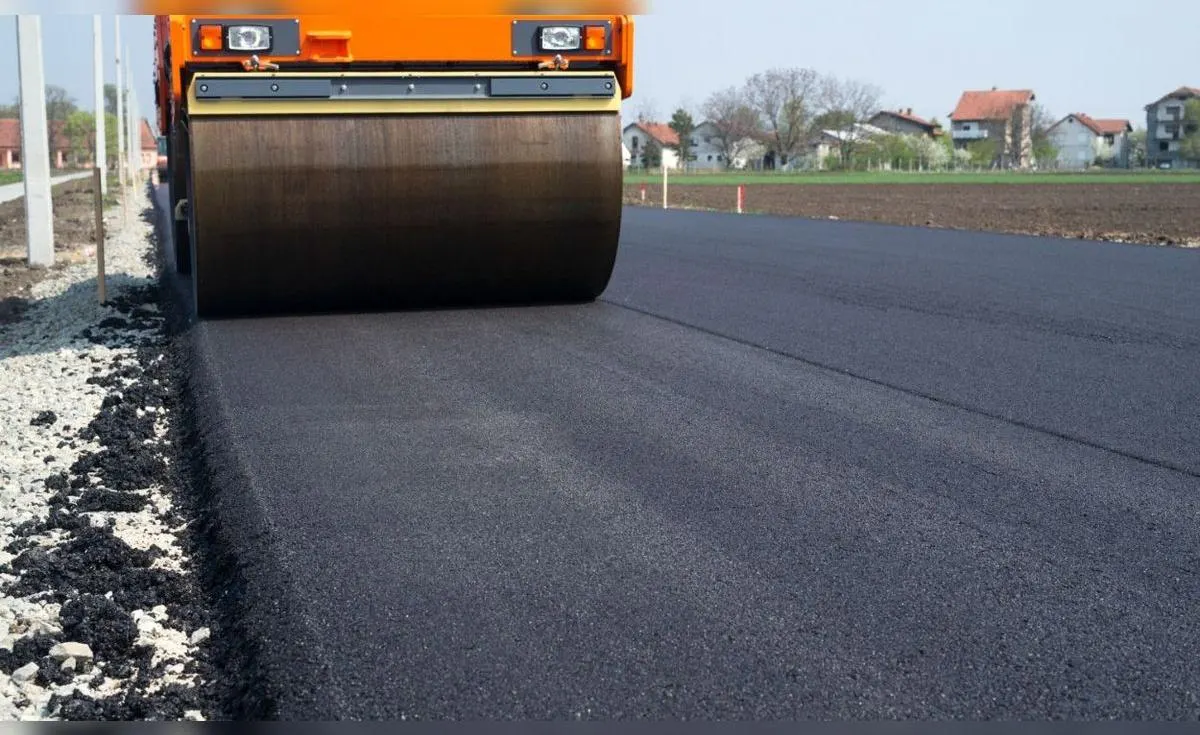
The authors set out to solve two problems of cold recycling of reclaimed asphalt pavement: low utilization efficiency and weak adhesion. Aged binder is a dense, highly viscous material, and conventional recycling agents penetrate it poorly without heating. Hot recycling overcomes this with thermal energy, while cold recycling works without heating but has been limited by shallow treatment depth.
Screening of penetrants and composition
The search for components was guided by molecular dynamics (MD) simulations. The researchers screened penetrants with asphalt dissolution tests and determined the optimal CRR dosage and regeneration time by dynamic shear rheometry. In the dissolution tests, limonene, kerosene and turpentine were compared. Kerosene and turpentine dissolved the binder more sluggishly, while limonene penetrated it steadily; in the simulations it also showed the highest diffusion coefficient of the three.
The rejuvenator combines aromatic oil, a penetrant, an antioxidant and an anti-stripping agent. According to the authors, CRR composition and dosage significantly affect diffusion behavior at 25 ℃, and limonene plays the dominant role in the process springer.com
Low-carbon Materials and Green Constructionspringer.comOpen source ↗. The RA3 formulation achieved optimal diffusion at a 12% dosage. A control with aromatic oil alone, without limonene, gave recovery close to zero.
Mechanism of recovery
Diffusion was analyzed with MD-derived metrics, including diffusion coefficients and interaction energies, and validated with fluorescence microscopy. The simulations showed that CRR reduced interactions between asphaltene molecules, which improved molecular dispersion and partially restored the colloidal structure of the asphalt.
The result is a laboratory demonstration of binder rejuvenation at ambient temperature: after 10 minutes the aged asphalt recovered 96% of the performance of virgin asphalt. The abstract does not report tests on full-scale pavement.
Sources · 2
Found a mistake?Read also